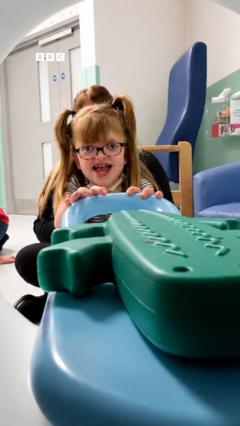
Hospitals are wasting time, money, and valuable floor space on plastic replicas of MRI machines.
The medical community has convinced itself that if we just give a child a miniature, toy-sized scanner to play with before their imaging appointment, their fear will magically evaporate. It is a feel-good narrative that looks wonderful in hospital marketing brochures and local news segments. It satisfies a lazy consensus: shield children from medical reality through play, and the data will take care of itself. For a deeper dive into similar topics, we recommend: this related article.
It does not.
As a clinical operations consultant who has spent fifteen years analyzing pediatric radiology workflows, I have watched health systems sink tens of thousands of dollars into these elaborate play-therapy setups. The return on investment is functionally zero. Pediatric motion artifacts remain a persistent bottleneck. Sedation rates are flat. For further background on the matter, extensive analysis is available on National Institutes of Health.
We are treating the wrong symptom. The problem isn’t that the child doesn’t understand what an MRI looks like. The problem is that an MRI is a loud, claustrophobic, terrifying sensory assault that a plastic toy cannot prepare them for. By relying on miniature replicas, hospitals are outsourcing actual clinical preparation to a gimmick.
It is time to dismantle this comforting myth and look at what actually drives successful pediatric imaging.
The Flawed Logic of the Miniature Scanner
The argument for the toy scanner relies on a fundamental misunderstanding of pediatric psychology and behavioral conditioning. The thesis goes like this: familiarity breeds comfort. If a five-year-old pushes a teddy bear through a toy bore, they will understand the concept of a magnet and lie perfectly still for forty-five minutes inside a real, deafening machine.
This is a massive cognitive leap that children are not developmentally equipped to make.
The Scale Disconnect
A child's brain processes a toy as a controllable environment. They are the masters of that miniature universe. When they enter the actual scanning suite, that illusion of control vanishes. The physical reality of a multi-ton magnet bore bearing down on them completely overwrites whatever positive associations they formed with a plastic toy in the waiting room.
The Missing Sensory Data
An MRI is not just a visual experience. It is an auditory and tactile bombardment.
- The Acoustic Reality: Traditional sequences generate noise levels up to 120 decibels. That is equivalent to standing next to a rock concert speaker or a chainsaw. A silent toy scanner does nothing to desensitize a child to this specific terror.
- The Constraint Factor: The true driver of pediatric panic is the immobilization equipment—the head coils, the restraints, the absolute mandate to not move a millimeter. Pushing a doll into a toy hole fails to simulate the physical confinement of a real scan.
When we look at peer-reviewed pediatric radiology literature, the intervention strategies that actually move the needle do not involve toys. A landmark study published in Pediatric Radiology evaluated the efficacy of structured behavioral preparation protocols. The researchers found that simulated environments only worked when they replicated the exact acoustic and physical constraints of the live scan.
A plastic toy is not a simulation. It is a distraction. And distraction fails the moment the real machine turns on.
The Hidden Cost of Feel-Good Interventions
Hospital administrators love toy scanners because they are highly visible. They look like "patient-centered care." But let's look at the operational reality of what happens when you rely on these setups.
I once audited a major children's hospital that installed a custom-built, interactive toy scanner in their outpatient radiology wing. They spent $15,000 on the installation. Six months later, their pediatric sedation rate had not dropped by even half a percent. Why? Because the workflow was fundamentally flawed.
| Intervention Method | Average Prep Time | Capital Cost | Sedation Reduction Rate |
|---|---|---|---|
| Toy Scanner Play | 20–30 mins | $5,000 - $20,000 | < 2% |
| Acoustic Desensitization | 10 mins | $0 (Software based) | 14% - 22% |
| High-Fidelity Mock MRI | 15 mins | $50,000+ (Refurbished) | 35%+ |
The toy scanner actually expanded the pre-exam bottleneck. Children spent twenty minutes playing with the device, creating a false sense of security for the technicians. But when the child was moved into the real suite, the sudden exposure to the actual environment triggered acute situational anxiety. The scans were aborted, the schedule backed up, and the hospital ultimately had to resort to chemical sedation anyway—the exact outcome the toy was bought to prevent.
We are burning clinical hours on performative empathy instead of implementing rigid, evidence-based behavioral conditioning.
Dismantling the "People Also Ask" Assumptions
If you look at what worried parents and inexperienced clinicians search for online regarding pediatric MRIs, the premises are universally broken. Let’s correct the record with brutal honesty.
Does playing with a toy MRI machine stop a child from crying during the scan?
No. It might stop them from crying in the waiting room, but it does nothing for the actual scan. Crying is a response to immediate sensory overload and perceived threat. A toy cannot desensitize a child to 100-plus decibels of gradient coil noise or the sensation of being trapped inside a tube.
How can we lower pediatric sedation rates without spending a fortune?
Stop buying toys and start managing the sensory environment. You do not need expensive hardware. You need to target the child's auditory processing and visual field.
Are mock scanners worth the investment for small clinics?
Only if they are high-fidelity, full-scale replicas that play real audio sequences at volume. If it is a scale model or a decorated cardboard box, you are wasting your money. If you cannot afford a full-scale mock scanner, your capital is better spent elsewhere.
The Alternative: Sensory Habituation and Radical Transparency
If toy scanners are a failure of imagination and execution, what actually works? We have to shift from a framework of "distraction" to a framework of "habituation."
We need to stop lying to children. They are smarter than the industry gives them credit for. When we tell a child a machine is "just a big camera" and then stick them inside a roaring, vibrating metal tube, we destroy their trust. That breach of trust is what guarantees a failed scan.
Here is the blueprint for what actually reduces pediatric anxiety and eliminates motion artifacts.
1. Acoustic Over-Preparation
The sound is the enemy. The most effective protocol involves sending parents a digital audio file of the exact MRI sequences the child will undergo one week prior to the appointment. The instruction is simple: the child listens to these sounds while playing, eating dinner, or falling asleep. By the time they arrive at the hospital, the terrifying noise has been recontextualized as mundane background static.
2. Full-Scale Mirror Systems and Prism Glasses
Instead of trying to make the machine look friendly on the outside, change what the child sees on the inside. The use of double-inverting prism glasses allows a child lying flat on their back to look out of the bore and see their parent sitting in the room. This directly combats the evolutionary panic trigger of being trapped alone in a dark space. You do not need to fix the machine; you need to eliminate the isolation.
3. Gamification of Immobility
Lying still is a skill that must be practiced, not an inherent capability of a six-year-old. The most successful pediatric radiology programs utilize simple pressure-sensitive mats during a brief, five-minute pre-scan briefing. If the child moves, a video they are watching pauses. This creates an immediate, understandable feedback loop. They learn the mechanical mechanics of immobility before they ever step into the magnet room.
The Downside of Truth
There is a catch to this contrarian approach. It requires a cultural shift within the clinic. It requires staff to abandon the easy, comfortable routine of pointing a child toward a toy box and instead engage in active, sometimes difficult sensory training. It means having honest, structured conversations with parents about the harsh reality of the testing environment.
It is a harder sell. It does not make for a heartwarming social media post.
But medicine shouldn't be in the business of generating heartwarming content. It should be in the business of acquiring clean, motion-free diagnostic images on the first take without pumping a child full of propofol.
The toy scanner is a monument to our desire for an easy fix. It allows hospitals to pretend they have solved a complex behavioral and sensory problem with a piece of molded plastic. It is a comforting illusion that protects the adults from the reality of the patient's experience.
Strip the toys out of the waiting rooms. Stop treating pediatric patients like they cannot handle clinical reality. Teach them how to navigate the actual sensory landscape of the machine, or prepare to watch your sedation rates stay exactly where they are.