Washington is obsessed with the wrong problem.
Every time a government shutdown looms, the same tired script plays out. Lawmakers rush to the microphones, clutching their pearls over the "heroic" TSA agents and FAA controllers working without pay. They introduce the same desperate bills to "guarantee" backpay or carve out specific protections for aviation workers. These bills stall, the media laments the gridlock, and the cycle repeats.
The "lazy consensus" is that we need more legislation to protect these workers from political theater.
The reality? These workers shouldn't be government employees in the first place.
If we actually cared about the stability of the national airspace, we would stop trying to patch a leaking government bucket and start moving toward a model where a politician's inability to pass a budget doesn't ground a $1.3 trillion industry.
The FAA is an Innovation Anchor
The Federal Aviation Administration is currently trapped in a conflict of interest that would be illegal in any other industry. It is both the regulator and the service provider. It writes the rules for safety and then operates the Air Traffic Control (ATC) system.
When a shutdown hits, the "essential" personnel keep working while the "non-essential" ones—often the very people responsible for modernizing the system—go home. This isn't just a pay issue; it’s a technological disaster.
We are flying in a world of 2026 tech using an ATC backbone that feels like it’s held together by duct tape and 1990s server architecture. The "NextGen" modernization program has been a rolling catastrophe of delays and budget overruns for decades. Why? Because you cannot innovate when your entire capital budget is subject to the whims of a Congressional subcommittee that thinks "the cloud" is something you see out of a cockpit window.
Canada did it. The UK did it. Over 60 countries have moved their ATC systems out of the direct control of the government. NAV CANADA is a private, non-profit corporation. It doesn't rely on tax dollars. It charges user fees. When the Canadian government has a political spat, the controllers keep getting paid, the radars keep spinning, and the tech keeps getting upgraded.
By keeping the FAA under the thumb of the Treasury, we are choosing fragility. We are choosing to let 535 people in D.C. hold the safety of 2.9 million daily passengers hostage for a headline.
The TSA is Security Theater with a Union Problem
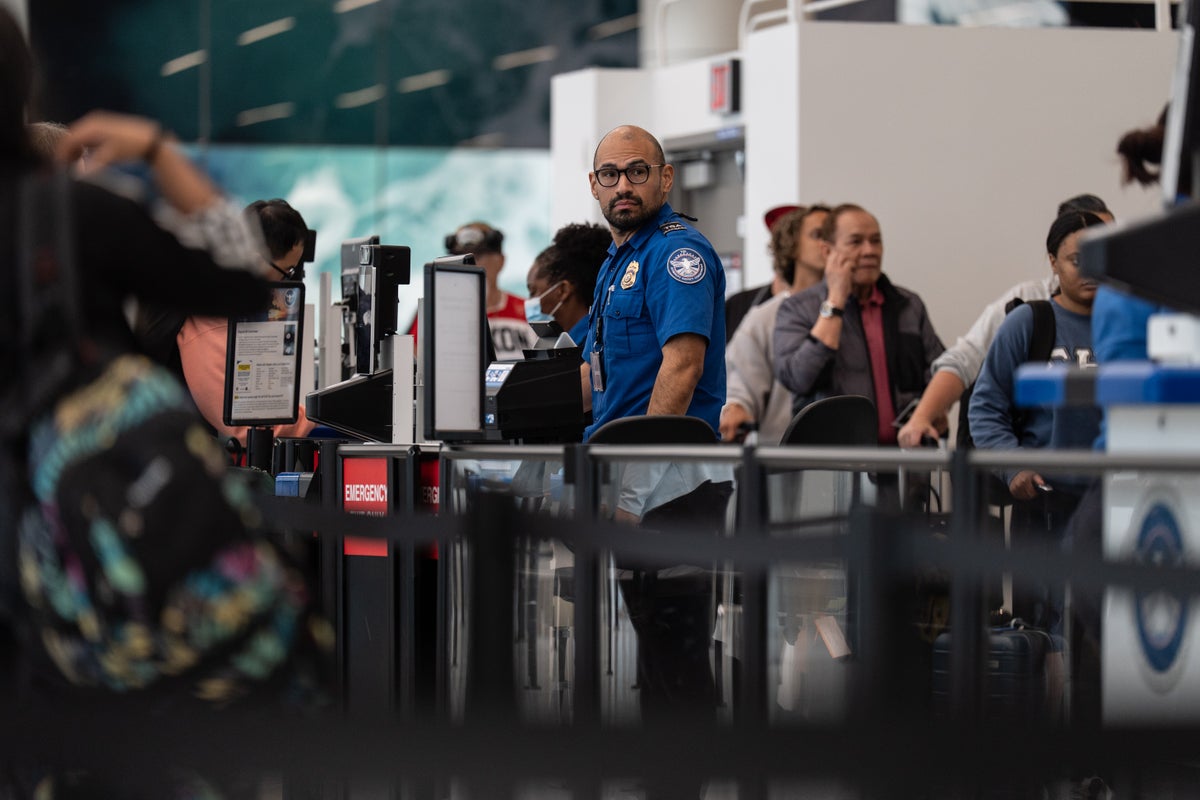
Let’s talk about the TSA. The standard argument is that these "frontline defenders" deserve the same pay scale as the rest of the federal workforce (the General Schedule). The "stalling" bills in Congress often focus on this parity.
But giving TSA agents better federal benefits is like putting a silk tablecloth on a cardboard box.
The TSA has a turnover rate that would bankrupt a McDonald's. In some years, the attrition rate for full-time screeners has hovered around 20%. For part-timers, it’s even worse. Why? Because the job is soul-crushing, the management is a bureaucratic nightmare, and the mission is more about optics than actual defense.
The red-teaming data—where undercover agents try to sneak weapons past security—has historically shown failure rates that should make every traveler's blood run cold. In 2015, the failure rate was a staggering 95%. Even as they "improve," the fundamental flaw remains: a massive, centralized government agency is incapable of the agility required for modern security.
Instead of fighting over how to pay them during a shutdown, we should be expanding the Screening Partnership Program (SPP). This allows airports to opt-out of federal screeners and hire private security firms that follow TSA standards.
When a private firm runs security at San Francisco International (SFO), those employees don't care if Congress is fighting over a border wall or a debt ceiling. They have a contract. They have a budget. They have a job to do.
The Myth of the "Essential" Worker
The term "essential worker" is a linguistic trick used by the state to justify involuntary servitude.
During a shutdown, we tell air traffic controllers they are too important to stay home, but not important enough to be paid on time. We expect them to maintain the highest levels of cognitive focus while wondering if they can cover their mortgage or childcare.
If a private company tried this, it would be a class-action lawsuit and a PR execution. But when the government does it, it’s "public service."
This creates a massive "brain drain" that the competitor articles never mention. I’ve seen some of the brightest minds in aviation—data scientists, safety engineers, and veteran controllers—exit for the private sector because they are tired of being pawns. They move to startups, defense contractors, or tech giants where their compensation isn't a bargaining chip for a Senator from a state they’ve never visited.
Follow the Money: The Airport and Airway Trust Fund
Here is the part that really stings: The money is already there.
The Airport and Airway Trust Fund (AATF) is funded by you—the passenger. Every time you buy a ticket, you pay a 7.5% excise tax, plus segment fees, plus international arrival/departure fees. This fund is designed to pay for the system.
In a sane world, this would be a "fenced" fund. The money comes in from flyers, and it goes out to the people running the flights.
Instead, the AATF is part of the unified federal budget. This is a deliberate accounting trick. By keeping aviation revenue inside the general budget, the government can use those billions to offset other deficits on paper.
The bills that "keep stalling" in Congress are often just attempts to unlock the money that travelers have already paid. It’s a ransom note for our own cash.
The contrarian solution isn't to pass a bill that says "pay them anyway." The solution is to de-link the AATF from the federal budget entirely. Move the money to an independent, federally chartered corporation.
The Pushback: "But Safety!"
The moment you mention "privatization," the critics scream about safety. They want you to believe that only a government employee with a badge cares if planes crash.
This is a logical fallacy.
Does Boeing (despite its recent, well-documented struggles) want its planes to fall out of the sky? Does Delta want to lose a $200 million airframe? The private sector has a massive, profit-driven incentive to stay safe. A single crash can wipe out years of earnings and destroy a brand.
Meanwhile, what is the "punishment" for the FAA when they miss a safety trend or fail to upgrade a system? A slightly more uncomfortable Congressional hearing and another decade of "study."
In a privatized or "corporatized" ATC model, safety regulation remains with the government, but operations move to a private entity. The regulator (the FAA) would finally be able to do its job: being a skeptical, hard-nosed overseer of the operator, rather than being the operator itself.
The Thought Experiment: The Shutdown-Proof Sky
Imagine a scenario where tomorrow, the FAA's operational wing is spun off into "Aero-USA," a non-profit corporation owned by a consortium of airlines, general aviation groups, and employee unions.
- Funding: Guaranteed by the user fees already being collected.
- Paychecks: Issued by a corporation with a bank account that doesn't disappear when a budget resolution fails.
- Tech: Upgraded based on necessity and ROI, not whether it fits into a "continuing resolution."
In this scenario, a government shutdown happens. The news shows empty hallways at the Department of Education. But at the airport? Business as usual. No "sick-outs" from stressed-out screeners. No controllers working a side job at Uber to pay the rent.
The competitor's article wants you to feel bad for the workers and mad at "Congress." That’s a low-resolution view of the world.
Congress isn't the problem; the structure of the system is the problem. As long as the aviation backbone of the United States is treated like a branch of the DMV, it will be broken.
Stop asking why the bills to pay federal workers are stalling. Start asking why we are still using a 1950s government-ownership model to run a 21st-century sky.
If you want to protect aviation workers, stop making them work for the government.
Go demand the total separation of the FAA’s operation from the federal budget. Write to your representative and tell them to stop "protecting" paychecks and start liberating the industry.
Anything else is just rearranging deck chairs on a flight that’s perpetually delayed.