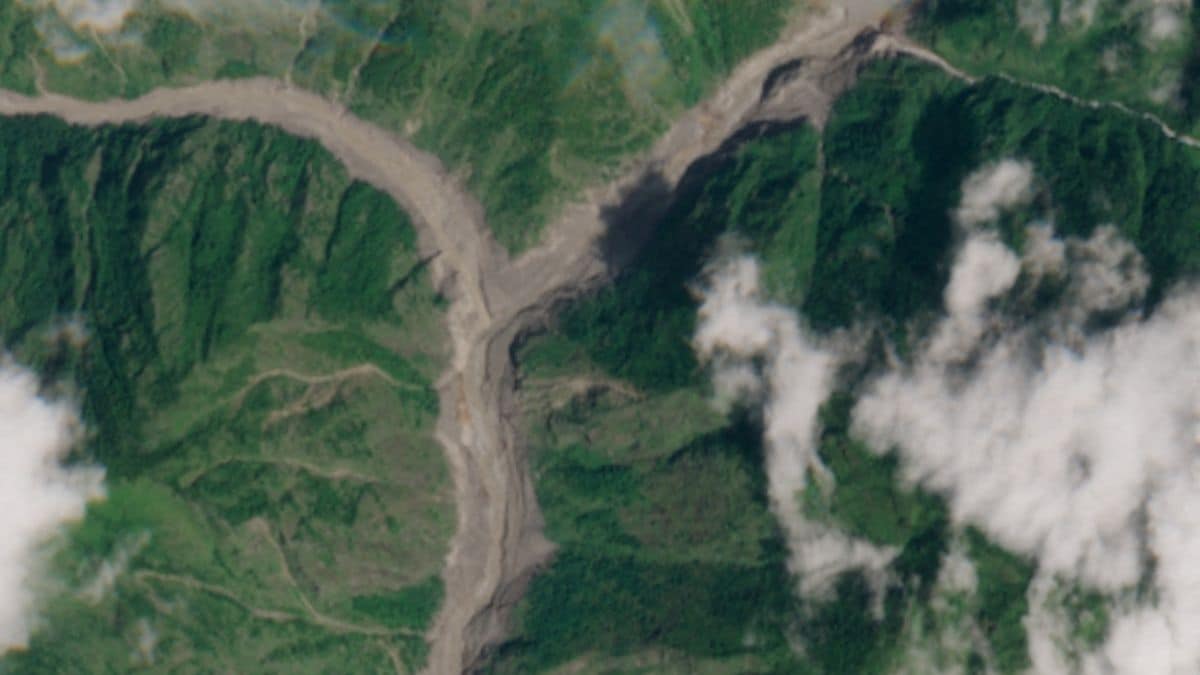
Every few months, a breathless dispatch crosses my desk wringing its hands over the Third Pole. The lazy consensus goes like this: Tibet is an untouched ecological black box, a pristine water tower feeding billions, and humanity must lock it in glass, keep out the engineers, and pray the glaciers don't melt. Conservationists scream about vanishing ice. Diplomats panic over transboundary geopolitics.
They are all missing the plot.
Tibet is not a fragile crystal ornament waiting to shatter. It is a massive, highly dynamic thermodynamic engine. Treating it as a static museum piece does not save water; it hoards misery. While well-meaning activists demand absolute preservation, populations downstream are living through wild climate whiplash—floods one decade, dust bowls the next. The real scandal is not that we know too little about the plateau's ecology, but that we refuse to deploy hard engineering and pragmatic infrastructure because it offends romantic Western notions of Shangri-La.
Let us dismantle the mythology.
The Myth of the Pristine Void
Walk into any policy seminar in Geneva or Washington and you will hear Tibet described as Asia’s pristine life-support system. It is a lovely soundbite for fundraising brochures. It is also dangerously wrong.
The Tibetan Plateau has never been a static wilderness. It is an active geological crucible shaped by intense tectonic forces and thousands of years of human intervention, pastoralism, and resource use. When commentators call it an ecological black box, they are confessing to their own ignorance, not highlighting a mystery of nature. Hydrologists and climatologists have mapped the mechanics of the plateau for decades. We know the monsoon pathways. We track the jet stream split. We understand how black carbon from industrial South Asia settles on snowpack, accelerating melt rates far faster than global atmospheric warming alone can manage.
Yet, public discourse remains trapped in pastoral nostalgia. We pretend that leaving the roof of the world completely untouched will somehow freeze 1950s baseline conditions in place. That is not conservation. That is climate illiteracy.
The Water Wars Fallacy
Look at the drumbeat of panic regarding downstream water security. Headlines warn of coming water wars between nuclear-armed neighbors over the Mekong, the Brahmaputra, and the Indus. Think tanks churn out breathless reports about dam construction, suggesting that whoever controls the headwaters holds a chokehold on half the globe.
It makes for great geopolitical thrillers, but the physical reality is far more mundane and far more stubborn. Glacial meltwater actually accounts for a relatively small percentage of the total annual flow for most major Asian river systems during peak agricultural seasons. The heavy lifting is done by monsoon precipitation and seasonal snowmelt.
The real threat to Asia's water security is not upstream extraction or infrastructure development; it is abysmal distribution efficiency and agricultural waste. Megacities downstream are leaking up to fifty percent of their treated municipal water into leaky pipes while farmers still flood-irrigate arid soils with archaic techniques. Blaming Tibet for downstream water scarcity is a convenient political sleight of hand. It allows corrupt or incompetent regional ministries to point a finger at the mountains instead of fixing their own crumbling municipal grids.
Engineering Reality Over Eco-Romance
If we want to secure Asia's hydrological future, we have to stop treating hard infrastructure as a dirty word.
For years, I have watched investors throw money at soft, feel-good community adaptation projects that achieve nothing beyond producing glossy annual reports. Meanwhile, the region desperately requires hardheaded, large-scale hydrological management. We need advanced sediment-traps, high-altitude reservoir optimization, and smart watershed engineering that can buffer the extreme volatility of monsoon cycles.
Yes, construction on the plateau carries severe environmental risks. Permafrost degradation is real. Ecosystem fragmentation is permanent if done stupidly. But refusing to build out of fear is a luxury only the downstream rich can afford. The subsistence farmers watching their topsoil wash away in a sudden flash flood do not care about the pristine aesthetic of a pristine valley. They care about flow control, flood early-warning systems, and resilient irrigation networks.
We need to abandon the paternalistic fantasy that local populations and regional governments cannot manage their own environments without Western NGOs acting as moral guardians. The people living and working on the plateau understand its rhythms better than any visiting academic with a grant and a drone.
The Cost of Inaction
Clinging to the ecological black box narrative has a body count. When we stall necessary infrastructure projects under the banner of preservation, we guarantee that vulnerable communities remain defenseless against extreme weather events.
The trade-offs are brutal. Every major engineering intervention carries a cost to local habitats. But the alternative—doing nothing while climate volatility accelerates—guarantees catastrophic human displacement on a scale the region has never seen.
Stop looking at Tibet as a postcard from Eden. It is a high-altitude industrial and ecological frontier that demands rigorous science, heavy engineering, and cold, clear-eyed realism.
The ice is melting. Get over the romance and start building the defenses.