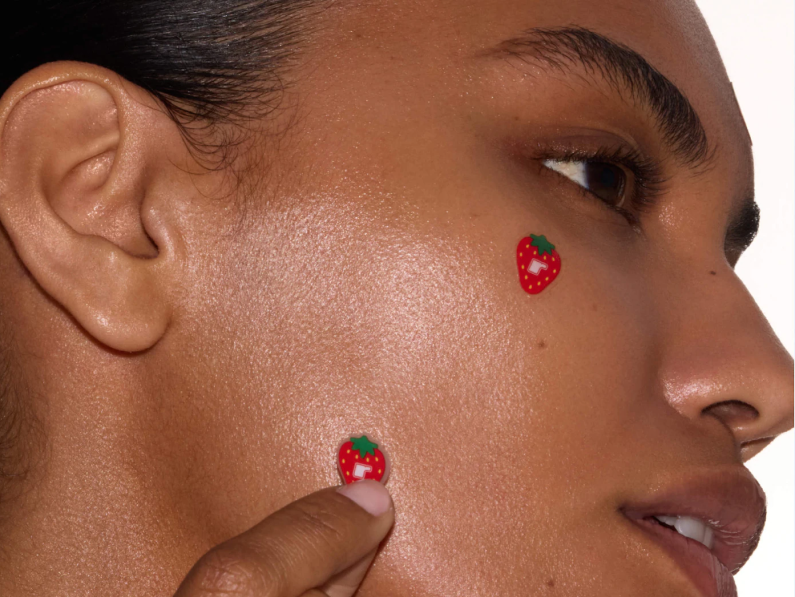
Every beauty aisle in the country is currently drowning in stars, hearts, and transparent circles of hydrocolloid. Walk into any drugstore and you will find brightly colored tins promising overnight miracles. Slap a cute little sticker on your blemish, go to sleep, and wake up with flawless skin. It is the lazy skincare routine of the decade. The marketing machine tells you these little polymeric dressings draw out impurities, absorb fluid, and accelerate healing like miniature medical miracles.
The industry loves this narrative. They have successfully convinced millions of consumers that a micro-sized bandage can reverse an inflammatory immune response happening deep inside your dermis.
Here is the dirty secret the skincare conglomerates refuse to whisper. Hydrocolloid patches do not cure acne. They are glorified scabs. They manage the aftermath of your skin's inflammatory failure, but they do nothing to stop the factory line producing the damage in the first place. If you are relying on sticky plastic dots to keep your complexion clear, you are mopping the floor while the plumbing pipe overhead has burst.
Let us look at how these things actually operate. Hydrocolloid works by creating a moist wound-healing environment. Originally designed for chronic ulcers and surgical sites, these dressings absorb exudate through a gel-forming agent like sodium carboxymethylcellulose. When applied to an open, oozing lesion—meaning a popped zit or a superficial pustule that has ruptured—the material swells into a white bubble as it sucks up interstitial fluid.
That white spot on the patch when you peel it off in the morning? It is not pulled sebum or evacuated root infection material. It is mostly wound exudate, lymph fluid, and trapped moisture mixed with the gelling agent. If you put a clean patch on a completely unblemished patch of oily skin and press it down firmly, it will still turn white if it traps enough sweat and surface moisture.
Dermatologists will tell you that patches prevent picking. That is their true superpower. They act as a physical barrier against your own fingernails, stopping you from turning a minor inflammatory bump into a hyperpigmented scar or a raging secondary bacterial infection. For chronic skin pickers, this mechanical deterrence is genuinely valuable. But let us call it what it is: behavioral management, not cellular treatment.
The mainstream narrative treats acne as a surface-level debris problem. Scrub it, dry it, patch it, peel it. This is flat-out wrong. Acne vulgaris is a multi-factorial disorder driven by androgen-stimulated sebum overproduction, abnormal follicular keratinization, and the proliferation of Cutibacterium acnes bacteria inside an oxygen-starved pore.
When you stick a hydrocolloid film over an uncompromised, closed comedone or a deep, cystic nodule under the skin, absolutely nothing happens except trapping heat and localized humidity. Sometimes, that trapped environment encourages bacterial flourishing rather than halting it. If the lesion has not breached the surface, the patch is a piece of expensive stationary. You are paying a premium for medical-grade tape stamped into a neon star.
I have watched beauty brands scale from garage startups to nine-figure acquisitions by selling colored plastic to teenagers and adults alike, wrapping basic wound care in dopamine-inducing packaging. They have monetized a chemical band-aid.
If you want actual results, you have to stop treating symptoms with stickers and start addressing the micro-comedone cycle before a lesion ever forms. That means looking at keratolytic agents like salicylic acid to dissolve the cellular glue binding dead skin cells inside the pore lining. It means regulating sebum production through retinoids that normalize cellular turnover at the follicular level.
Do hydrocolloid patches have a place in a rational routine? Yes, exactly one. Use them exclusively on superficial pustules that have already ruptured or been accidentally compromised, specifically to protect the exposed tissue from environmental bacteria and to stop your fingers from gouging the dermis. Treat them as emergency first-aid gear for a self-inflicted wound, not as a proactive acne treatment.
Throw away the star-shaped tins. Stop treating your face like a sticker book. Fix your chemistry inside the pore, leave the skin barrier alone, and stop paying luxury prices for medical tape.