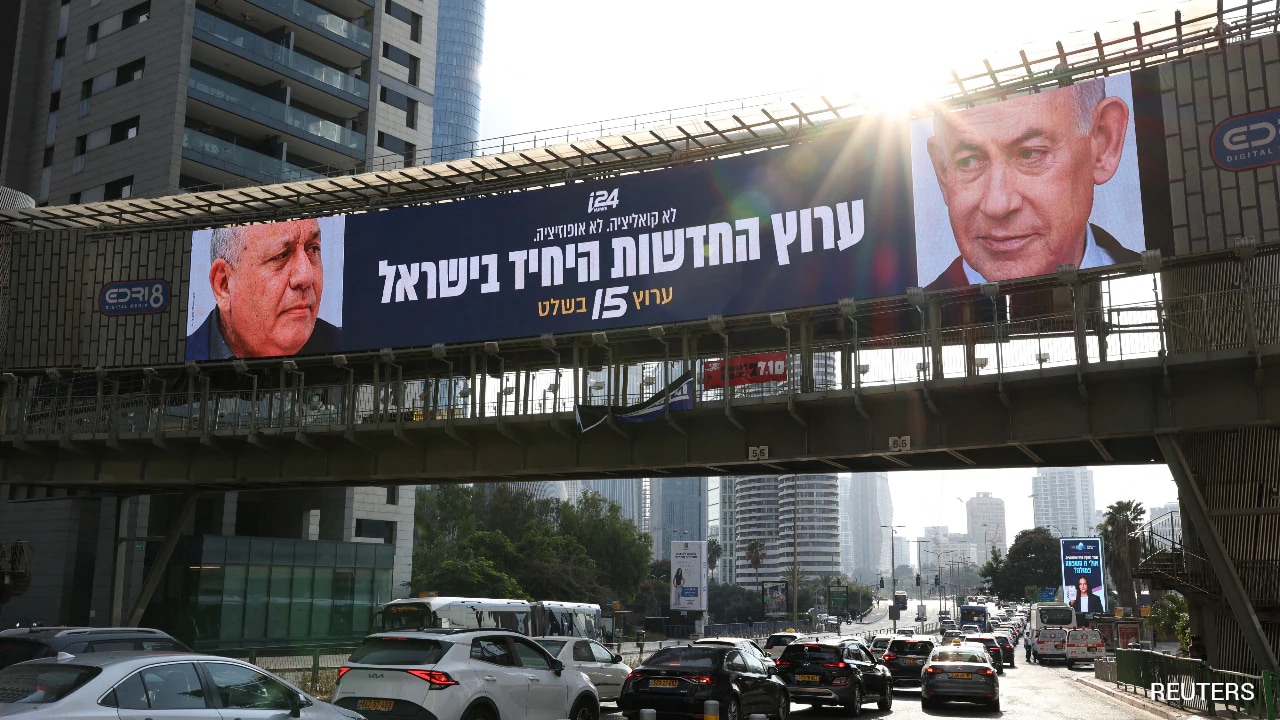
Every major news outlet is currently running the exact same lazy horse-race story. They line up the usual suspects—Benjamin Netanyahu, Benny Gantz, Yair Lapid, Naftali Bennett, Avigdor Liberman—like racehorses at a starting gate, slap a few polling averages underneath their headshots, and ask who will lead Israel next.
It is the single most misleading framing in Middle Eastern political journalism.
If you are watching the Knesset polling averages to predict Israel’s trajectory over the next decade, you are staring at the wrong scoreboard. You are analyzing the hood ornament while ignoring the engine. The Western press treats Israeli elections like an American presidential race, obsessing over the personality, charisma, and polling bumps of individual party leaders. That framework fails completely when applied to a pure proportional representation parliamentary system fractured along deep demographic, religious, and ideological fault lines.
The question isn't who sits in the Prime Minister’s chair on Balfour Street. The question is which coalition math traps them once they get there. In Israeli politics, the person holding the gavel is rarely the person driving the bus. The real power belongs to the kingmakers—the mid-sized sectoral parties and ideological bloc brokers who hold a razor-thin majority hostage from day one.
The Myth of the Israeli Strongman
I have spent years watching foreign diplomats, think-tank analysts, and institutional investors burn millions in political capital and misallocate billions in regional risk assessments because they bought into the "strongman" illusion. They look at Benjamin Netanyahu’s longevity—the longest-serving prime minister in the nation’s history—and assume the office itself carries imperial weight.
It doesn't. Netanyahu didn't survive for over a decade and a half because he was an omnipotent autocrat. He survived because he was a master mathematician of coalition survival, constantly trading ministerial portfolios, budget allocations, and legislative vetoes to keep a fragile 61-seat Knesset majority from imploding. The moment he lost the ability to satisfy those smaller factions, he was out—replaced in 2021 by Naftali Bennett, a prime minister whose own party held a pathetic seven seats out of 120.
Think about that number. Seven seats. Less than six percent of the parliament. Yet Bennett became Prime Minister because the arithmetic of the anti-Netanyahu bloc required him as the bridge between the secular left, the Arab Ra'am party, and the ideological right. And the moment two members of his own tiny faction defected, his government collapsed.
When mainstream articles profile the "main candidates" for the next election, they fundamentally misunderstand how Israel is governed. A Prime Minister in Jerusalem is not a CEO. They are the managing partner of a volatile, hostile law firm where any junior partner can burn the building down if they don't get the corner office.
Dismantling the Candidate Lineup
Let’s look at the actual names the pundits keep recycling, and strip away the public relations gloss to expose the structural traps waiting for each of them.
Benjamin Netanyahu: The Survivor Trapped by His Own Bloc
The conventional wisdom says Netanyahu is either politically dead after the catastrophic intelligence and security failures of October 7, 2023, or he is an immortal political Houdini who will claw his way back. Both takes miss the point. Netanyahu’s political survival no longer depends on winning back the Israeli center. That bridge is burned to ash. His sole path to power runs through total dependency on the ultra-Orthodox (Haredi) parties—Shas and United Torah Judaism—and the ultranationalist Religious Zionist faction led by Bezalel Smotrich and Itamar Ben-Gvir.
If Netanyahu stays or returns, he is not leading a Likud government. He is executing the policy agenda of his junior partners. On judicial overhaul, West Bank settlement expansion, and Haredi military conscription exemptions, Netanyahu has zero room to maneuver. His coalition partners hold the detonator to his government, and they know it.
Benny Gantz: The Default Option with No Theory of Victory
Whenever the Israeli public gets exhausted by political chaos, they temporarily park their votes with Benny Gantz and his National Unity party. He projects calm, military gravitas, and centrist decency. Foreign editorial boards love him because he sounds like a standard Western statesman.
Here is the brutal truth: Gantz is a political mirage. His polling numbers are built entirely on protest votes against the current government, not on a coherent ideological movement. Every time Gantz gets close to actual power, he faces an impossible mathematical wall. To form a government without Netanyahu, Gantz needs a majority of 61 seats. He cannot get there with the secular center-left alone. He either has to court the ultra-Orthodox parties—which alienates his secular base the second he compromises on military draft laws—or he has to rely on Arab parties, which political realities in post-October 7 Israel make virtually impossible for a mainstream Zionist coalition. Gantz looks great in a hypothetical one-on-one poll, and completely stuck on a coalition spreadsheet.
Naftali Bennett: The Comeback Kid Without a Party
Pollsters love throwing Naftali Bennett back into the mix as the "right-wing alternative" who isn't Netanyahu. On paper, he checks every box: former tech entrepreneur, former elite commando, former prime minister, fluent in American media spin, and unburdened by the baggage of the current cabinet.
The flaw? Bennett has no institutional machine. In Israeli politics, individual popularity without a deeply rooted party apparatus is vapor. Building a new party from scratch requires surviving the brutal vetting of candidate lists, surviving the Israeli press cycle, and stealing votes directly from Gantz, Yair Lapid, and Avigdor Liberman—all while fighting off a ruthless smear campaign from the Likud political machine. Bennett can certainly siphon 15 to 20 seats from the anti-Netanyahu camp, which doesn't grow the bloc at all. It just reshuffles the same deck chairs on the same ship.
Yair Lapid and Avigdor Liberman: The Ceiling Problem
Yair Lapid, the opposition leader and head of Yesh Atid, possesses the strongest organizational ground game in the center-left. Yet Lapid has hit a hard demographic ceiling. Right-wing voters—even those who despise Netanyahu—refuse to pull the lever for a Tel Aviv secularist they view as culturally detached from traditional Israeli society. Meanwhile, Avigdor Liberman, the hardline secular nationalist leading Yisrael Beiteinu, thrives as an opposition attack dog. His uncompromising stance on forcing ultra-Orthodox men into the IDF resonates deeply with a war-weary public. Still, his rigid red lines make him nearly impossible to sit with in a broad unity government. He is a brilliant wrecking ball, not an architect.
The Real Kingmakers Nobody Profiles
If you want to know what Israel’s next government will actually do—on Gaza, on Lebanon, on Iran, on judicial reform, and on the domestic economy—stop reading profiles of Gantz and Bennett. Start tracking the leverage points of the players who never run for Prime Minister.
Look at Aryeh Deri, the leader of the Sephardic ultra-Orthodox party Shas. Deri is arguably the most consequential political operator in Israel over the last thirty years. Despite criminal convictions that barred him from holding formal ministerial office, he sits in the inner sanctums of power, dictating billions in state budget allocations and holding veto power over war cabinet decisions. Whether the next prime minister comes from the right or the center, they will quietly make a pilgrimage to Deri’s doorstep to negotiate terms.
Look at Bezalel Smotrich and Itamar Ben-Gvir. Western commentators dismiss them as fringe extremists. That is a catastrophic misreading of Israeli institutional power. By securing the Finance Ministry and the National Security Ministry, they didn't just win cabinet seats; they embedded their ideological allies deep within the civil service, the police force, and the administrative bodies governing the West Bank. Even if a centrist coalition wins the next election, dismantling the bureaucratic reality Smotrich and Ben-Gvir have constructed on the ground will take years—if it can be done at all.
What People Actually Get Wrong About Israeli Elections
When observers outside the region search for answers about Israel's political future, they usually ask three fundamentally broken questions. Let's fix them.
1. "When is the next Israeli election, and will it bring stability?"
By law, the current Knesset term runs until October 2026, though snap elections are a constant threat in a system where a handful of backbenchers can topple a government over a single budget line item. More importantly, elections in Israel no longer produce stability. Between 2019 and 2022, Israel held five national elections in less than four years. Why? Because the electorate is locked in a demographic and ideological stalemate. Until the electoral threshold is raised significantly—or the country shifts away from pure nationwide proportional representation toward regional districts—no election will deliver a decisive mandate. Expect chronic coalition paralysis regardless of who wins.
2. "Will a change in Prime Minister change Israel's security doctrine?"
Western policymakers desperately want to believe that replacing Netanyahu with Gantz or Bennett will suddenly unlock a smooth diplomatic path toward a Palestinian state and regional normalization. That is pure fantasy. The trauma of October 7 shifted the entire Israeli political spectrum sharply to the right on national security. Across the mainstream Zionist parties—from Likud to National Unity to Yesh Atid—there is an overwhelming consensus against unilateral withdrawals, an intense skepticism toward international security guarantees, and a commitment to maintaining long-term Israeli operational security control over Gaza. A centrist Prime Minister will use polite, diplomatic English in Washington and Brussels, and will stop picking pointless public fights with the White House. Their core military doctrine, however, will look remarkably similar to their predecessor's.
3. "Is the Israeli public moving left or right?"
Neither. The old "left versus right" framework—historically defined by attitudes toward the Oslo Accords and territorial compromise—is dead. The real cleavage in modern Israel is Institutionalists versus Populists, overlaid onto a fierce demographic war over the Burden of Service. The defining political issue of the next decade is whether the rapidly growing ultra-Orthodox sector will finally be drafted into the military and integrated into the modern tax-paying workforce, or whether the secular and national-religious middle class will continue to carry the entire military and economic weight of the state on their backs. Whoever solves—or weaponizes—that fissure owns the future of Israeli politics.
The Uncomfortable Truth About Betting Against the Status Quo
Let’s be intellectually honest about the downside of ignoring the individual candidates. Personalities do matter at the margins, especially in moments of acute crisis. A Prime Minister controls the cabinet agenda, manages direct communications with the President of the United States, and sets the psychological tone for a traumatized nation. Having a disciplined, strategic communicator in the chair instead of a leader fighting for personal political survival changes how Israel is perceived globally and how efficiently its ministries function during wartime.
Furthermore, a broad centrist-nationalist unity government—say, an alliance of Gantz, Bennett, Lapid, and Liberman—would immediately strip the far-right and ultra-Orthodox factions of their extortion leverage. For the first time in years, a government could pass a state budget without funneling billions into non-core religious education systems or isolated ideological settlements. That would be a massive structural shift for Israel’s credit rating, tech sector confidence, and domestic social cohesion.
Still, assuming that simply swapping out the person at the top fixes the system is a rookie mistake.
How to Actually Read the Next Israeli Election
If you want to understand what is really happening before the rest of the market catches up, throw away the standard candidate profiles and track three specific metrics instead:
- The Bloc Math, Not the Party Lead: Never look at which party finishes first. In Israel, finishing first means nothing. Look exclusively at whether the anti-Netanyahu Zionist bloc can hit 61 seats without needing the Arab parties and without needing the ultra-Orthodox. If they sit at 58 or 59 seats, the country is headed straight back into coalition gridlock or a messy compromise with Shas.
- The Haredi Draft Legislation: Watch how every major candidate talks about universal conscription. Any centrist or right-wing challenger who uses vague, lawyerly language about "gradual integration" is quietly keeping the door open to cut a coalition deal with the ultra-Orthodox parties after the election. Anyone who commits to immediate, uncompromising financial sanctions on draft dodgers is signaling they are going for a purely secular-nationalist coalition.
- Voter Turnout in the Arab Sector and the Secular Center: Netanyahu’s bloc has a remarkably disciplined, high-turnout floor. They show up every single time. The opposition’s numbers fluctuate wildly based on exhaustion and cynicism. If Arab-Israeli turnout drops below 45 percent, or if disillusioned secular Tel Aviv voters stay home, the right-wing religious bloc wins by default—no matter how poorly their leaders poll six months out.
Stop asking who will be Israel's next Prime Minister. Start asking who holds the 61st seat, what price they are demanding for their vote, and whether the person sitting in the big chair has the spine to tell them no.


