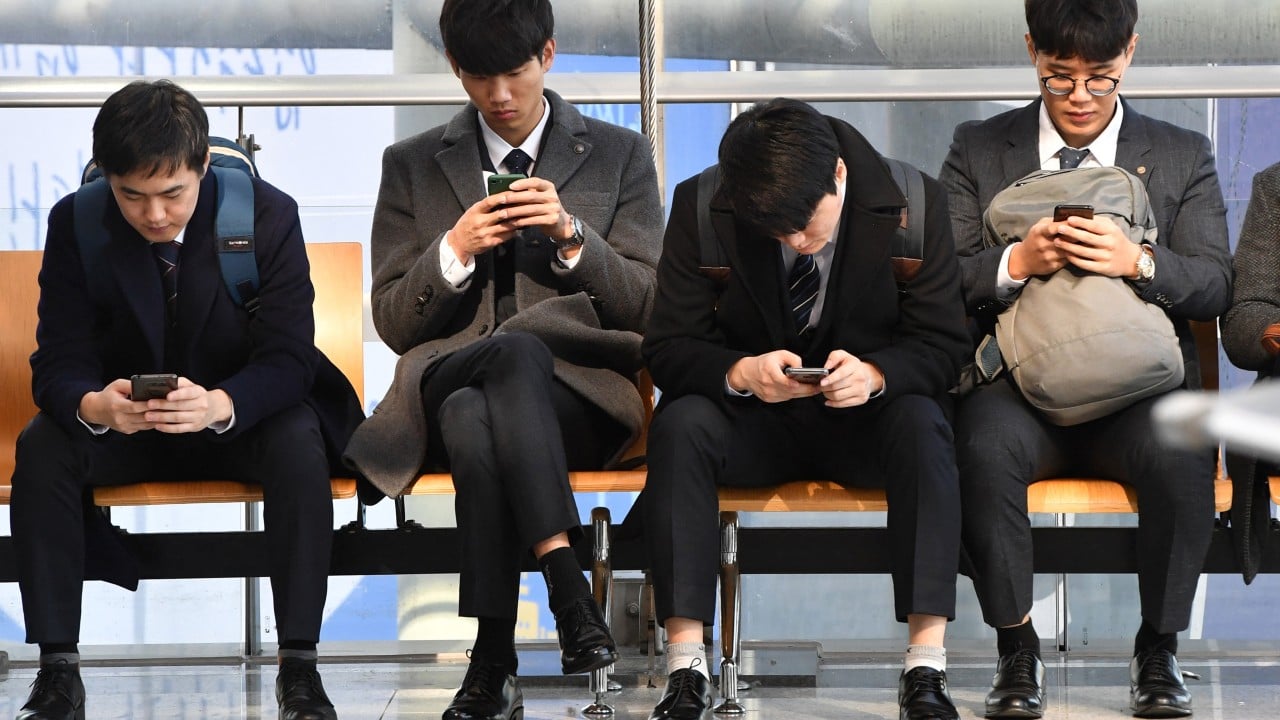
Western media outlets love a predictable narrative. Whenever a democratic state in Asia attempts to regulate the chaotic flow of online information, the reaction from global pundits is instantaneous, uniform, and entirely unoriginal. They sound the alarm over creeping authoritarianism, wax poetic about the sanctity of uninhibited expression, and paint a grim picture of a dystopian surveillance state.
This is exactly what happened when South Korea intensified its regulatory focus on digital disinformation. The collective groan from international civil liberties groups was loud enough to echo across the Pacific. They claimed that the country's moves to penalize targeted disinformation campaigns would destroy the democratic fabric of Seoul.
They are completely wrong.
The conventional wisdom surrounding digital speech regulation is built on a foundational myth. This myth states that the marketplace of ideas is a self-correcting mechanism where truth inevitably defeats falsehood. That concept was conceived in the era of the printing press, a time when publishing required capital, infrastructure, and a basic adherence to editorial standards. Applying that 18th-century philosophy to a world governed by algorithmically optimized rage loops is not just naive. It is dangerous.
South Korea is not stumbling into censorship. It is wrestling with the realities of asymmetric information warfare. It is acknowledging an uncomfortable truth that the West is too paralyzed by ideological purity to admit: an unregulated digital ecosystem is completely incompatible with a functioning democracy.
The Marketplace of Ideas Is Dead
We need to stop pretending that every voice on the internet carries the same weight or intent. The classic defense of free expression relies on the assumption that bad ideas are defeated by better arguments. If someone spreads a lie, you counter it with the truth.
This model fails when the infrastructure distributing those ideas profits directly from the chaos they cause.
Modern digital platforms do not curate content based on accuracy, nuance, or social value. They optimize for engagement. Engagement is driven by high-arousal emotions like fear, tribal hatred, and moral outrage. A fabricated story claiming a politician took bribes from a foreign adversary will travel six times faster than a meticulous, data-driven correction.
I have watched policy teams at major tech platforms scramble behind closed doors to address coordinated inauthentic behavior. They know their systems are broken. They know that the sheer volume of synthetic content, deepfakes, and state-sponsored trolling operations makes organic correction impossible. Expecting the average citizen to navigate this polluted ecosystem without state intervention is like telling people to check their own drinking water for heavy metals after a factory chemical spill.
South Korea understands this because it lives on the front line of a relentless, gray-zone psychological conflict. The country is a prime target for foreign influence campaigns designed to destabilize its elections, inflame regional tensions, and undermine trust in public institutions. For Seoul, regulating fake news is not an academic debate about philosophical liberties. It is a matter of national survival.
The Double Standard of Western Critiques
When Western commentators criticize South Korea's regulatory framework, they conveniently ignore their own domestic realities. The European Union has already implemented its Digital Services Act, which imposes massive fines on platforms that fail to curb systemic risks, including disinformation. The United Kingdom has pushed forward with its Online Safety Act. In the United States, congressional hearings regularly feature lawmakers screaming at technology executives to police their platforms more aggressively.
Yet, when a nation like South Korea creates a legal mechanism to hold bad actors accountable, it is labeled as a threat to global democracy. This double standard stems from a refusal to examine the mechanics of South Korea's legal history.
South Korea has never operated under an American-style First Amendment framework. Its constitution explicitly balances freedom of speech with the protection of public morals, social ethics, and individual reputation. The country’s civil and criminal codes already include strict defamation laws where truth is not an absolute defense if the publication was intended solely to harm someone's reputation.
[Traditional Free Speech Model]
Idea Generation -> Unregulated Distribution -> Organic Debunking -> Truth Wins

[Modern Algorithmic Reality]
Fake News Creation -> Algorithmic Amplification -> Tribal Isolation -> Truth Extinguished
The new regulatory efforts are an evolution of this legal tradition, tailored for an era where a single viral lie can spark a market panic or trigger civil unrest. To demand that South Korea abandon these mechanisms in favor of a Western model that is currently failing to protect Western democracies from polarization is the height of arrogance.
Deconstructing the Censorship Panic
The primary argument against South Korea's anti-disinformation measures is that the definition of what constitutes a lie is inherently subjective. Critics ask a familiar question: Who decides what is true? If the government decides, then the government can label any critical reporting as fake news to protect its own political interests.
This argument sounds convincing on paper, but it falls apart when you look at how modern disinformation actually operates. We are not talking about matters of political opinion, editorial bias, or interpretation of economic data. We are talking about verifiable, weaponized fabrications.
Consider these scenarios that require clear, legal intervention:
- The dissemination of deepfake videos showing election officials destroying ballots days before a national vote.
- The coordinated coordination of bots spreading false claims about a banking liquidity crisis to induce a run on the financial system.
- The fabrication of health crises, such as claiming a localized water supply is poisoned, to induce public panic and civil disorder.
These are not ideological debates. They are malicious actions executed with the specific intent to cause tangible, real-world harm. Treating these campaigns as protected speech is a failure of governance.
A state that lacks the tools to penalize the deliberate fabrication of reality has effectively surrendered its sovereignty to anonymous bad actors and foreign intelligence agencies. South Korea’s approach recognizes that malice and intent can be legally parsed, just as courts have parsed intent in fraud, insider trading, and perjury cases for centuries.
The Financial Necessity of Deterrence
Voluntary content moderation by technology platforms is a complete failure. Platforms view safety teams as a cost center. When economic downturns hit, these are the very teams that face immediate layoffs. Tech companies will never willingly spend the resources necessary to police localized language variants and cultural nuances unless the financial penalties for failing to do so exceed the profits generated by the engagement those lies create.
South Korea’s regulatory push alters this economic calculus. By establishing clear legal liabilities for platforms that refuse to remove verified, coordinated disinformation campaigns, the state forces these companies to invest in local moderation infrastructure.
Is there a risk of regulatory overreach? Absolutely. Every law that grants the state authority to oversee information carries the potential for abuse. The solution, however, is not to discard the law entirely and embrace informational anarchy. The solution is to build rigorous judicial oversight into the enforcement mechanism.
South Korea's independent regulatory bodies, such as the Korea Communications Standards Commission, must be subjected to intense public scrutiny and structural independence to ensure they do not become tools of the ruling party. But dismissing the entire regulatory framework because it requires careful management is an incredibly lazy intellectual position.
The Ultimate Cost of Doing Nothing
Let us look at the alternative. If South Korea, or any democracy, decides that regulating digital information is too difficult or too risky, what happens next?
The information ecosystem becomes completely unlivable. Trust in journalism collapses entirely because the public can no longer distinguish between an investigative report and an AI-generated smear campaign. Elections turn into chaotic battles won by whoever possesses the most sophisticated botnets and the most convincing deepfakes. Polarization reaches a point where shared reality ceases to exist, making collective governance impossible.
The West is currently drifting toward this reality, paralyzed by a stubborn refusal to update its legal doctrines for the digital century. South Korea is choosing a different path. It is choosing to act as a laboratory for democratic survival.
The country's regulatory framework is an admission that the digital commons cannot govern itself. It is a assertion that a democracy has the right, and the obligation, to defend its informational borders from degradation. The critics who weep for the loss of a chaotic, unregulated internet are not defending liberty. They are defending the very environment that will destroy it. Stop treating information regulation as a symptom of tyranny, and start viewing it as the prerequisite for a stable society.