The Non-Event of the Century
A machine glides. A human flinches. The media screams "Arrest."
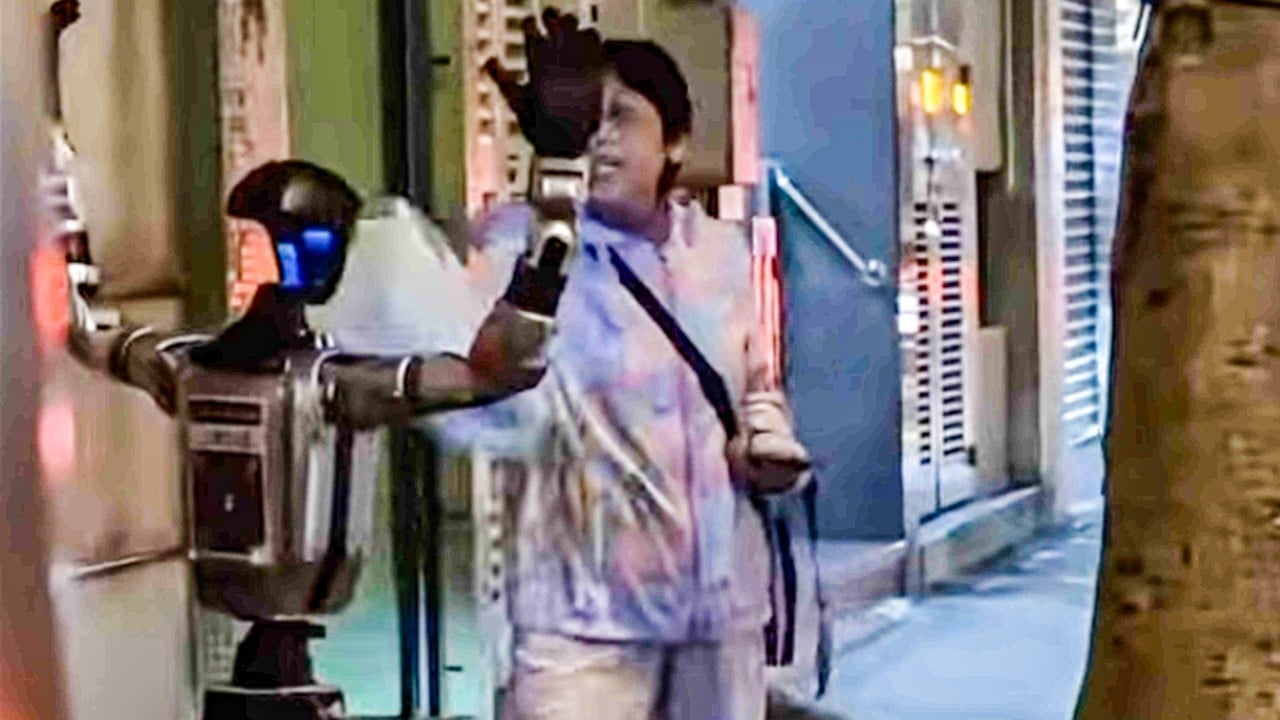
The recent circus in Macau involving a service robot and an elderly woman is a masterclass in anthropomorphic delusion. We are witnessing a collective psychological break where we treat a glorified Roomba with a tablet attached to it like a fugitive from a Philip K. Dick novel. The headlines are clickbait; the "arrest" is a bureaucratic joke; the reality is far more boring—and far more dangerous if we keep ignoring the physics of the situation.
Sensationalist rags want you to believe a robot "startled" a woman into the hospital, implying intent, malice, or a failure of artificial morality. This is nonsense. Machines don't startle people. People startle themselves when they fail to understand their environment. If the woman had tripped over a stationary wet-floor sign, we wouldn't be discussing the sign's "hostile intent." Because it has wheels and a blinking light, we suddenly demand it stand trial.
The Lazy Consensus of Robot Liability
The "lazy consensus" currently dominating the tech press suggests that as robots enter public spaces, we need "Robot Laws" or "AI Ethics Boards" to prevent these "clashes." This is a distraction for the legally illiterate.
We don't need new laws. We have physics. We have tort law. We have premises liability.
When a service robot in a Macau casino or hotel lobby makes contact—or even just proximity—with a pedestrian, the industry immediate screams about "algorithmic bias" or "proximity sensor calibration." I have spent a decade auditing automated systems in high-traffic environments. Do you know what the actual problem usually is? It’s not the code. It’s the floor. It’s the lighting. It’s the human tendency to treat a 300-pound hunk of steel and lithium like a friendly puppy.
The Macau "arrest" wasn't a criminal proceeding against a machine. It was a standard impounding of evidence following a personal injury report. Calling it an "arrest" serves the tech-fear narrative, but it obscures the uncomfortable truth: humans are the unpredictable variables in the automation equation.
The Physics of Fear
Let’s dismantle the "startle" factor. In high-density urban environments like Macau, the sensory load is astronomical. You have bells, whistles, flashing lights, and thousands of moving parts. A service robot is designed to be predictable. It follows a path. It uses LiDAR to map its surroundings. It operates on a logic of $v = \frac{d}{t}$.
If a human is "startled" by a machine moving at three miles per hour, the failure isn't in the machine’s navigation system. The failure is in the integration. We are trying to force high-mass autonomous objects into spaces designed for the erratic, non-linear movement of biological entities.
- The Proximity Paradox: Robots are programmed to stop within a safety buffer.
- The Human Response: Humans don't just stop; they recoil, pivot, or freeze.
- The Result: The human trips over their own feet or a nearby architectural feature, and the robot gets blamed for "causing" the fall.
Imagine a scenario where a self-driving luggage carrier stops two feet away from a guest. The guest, distracted by their phone, looks up, panics, and falls backward. In the eyes of the Macau police and the hysterical press, the robot is the aggressor. In the eyes of anyone with a basic grasp of kinetic energy, the robot did exactly what it was supposed to do: it ceased motion to avoid impact.
The High Cost of Soft Science
The competitor articles on this topic love to quote "ethics experts" who talk about the "social contract" between humans and machines. I’ve seen companies blow millions on these consultants. They want to give robots "expressive eyes" or "apologetic voices" to make them more palatable.
This is a catastrophic waste of capital.
Making a machine look more human only increases the Uncanny Valley effect and raises the stakes of every interaction. If a machine looks like a tool, we treat it with the caution we afford a forklift. If it looks like a character from a Pixar movie, we let our guard down. When that "character" then behaves like a cold, calculating machine, the psychological whiplash causes the very "startle" reactions that lead to hospital visits.
Stop Trying to Fix the Robots
The industry is currently obsessed with "human-aware" navigation. They want the robot to predict where you are going to walk.
This is a fool’s errand. Humans are irrational. We change direction for no reason. We stop to tie shoes. We backtrack for forgotten keys. Trying to program a machine to predict human irrationality is like trying to calculate the trajectory of a falling leaf in a hurricane.
Instead of making robots "smarter," we need to make the environment more structured.
- Dedicated Transit Corridors: Stop mixing high-mass autonomous carts with distracted tourists in narrow hallways.
- Haptic Warnings: Use floor vibrations or directional sound that triggers the human "awareness" system without triggering the "panic" system.
- Liability Transparency: Shift the burden. If you walk into the path of a clearly marked, slow-moving industrial tool, the responsibility is yours.
The Macau Precedent is a Warning
If we allow the narrative of the "Robot Arrest" to take hold, we are setting a precedent that will stifle the deployment of useful technology for decades. We are essentially saying that if a human feels uncomfortable around a machine, the machine is legally liable for that discomfort.
That is a death knell for efficiency.
I’ve sat in rooms with insurance adjusters who are terrified of this exact scenario. They don't care about the tech; they care about the "optics." If "Robot Arrests" become a recurring news trope, premiums will skyrocket, not because the tech is failing, but because the legal system is entertaining the fantasy that machines have agency.
The Brutal Reality of Public Space
People ask: "How can we make robots safer for the elderly?"
The honest, brutal answer? We can't—unless we change how the elderly (and everyone else) interact with the space.
Safety is not an inherent property of a machine; it is a property of the system. If a Macau hotel wants to use robots, they need to stop treating them like "cool gadgets" and start treating them like the heavy machinery they are. That means floor markings. That means guest education. That means stopping the "arrest" theater and acknowledging that sometimes, people fall down.
The woman in Macau was sent to the hospital. That is an unfortunate accident. But turning it into a "Man vs. Machine" legal drama is a cynical play for views that ignores the engineering reality.
The machine didn't break the law. It didn't break the woman. It broke the illusion that we can haphazardly throw automation into a chaotic human world without changing a single thing about how we navigate our own lives.
Treat the robot like a tool, or don't use it at all. Everything else is just noise.
Stop looking for a soul in the circuit board. It’s not there. What's there is a motor, a sensor, and a set of instructions that don't care about your feelings, your hospital bills, or your local police department’s handcuffs.
Clear the path or get out of the way.