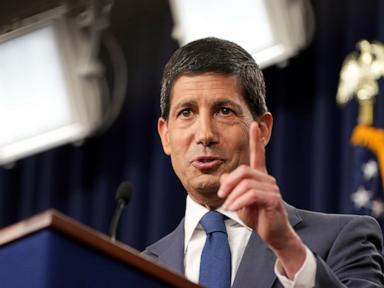
Wall Street is having a collective panic attack over Kevin Warsh hinting at further monetary tightening. Financial media pundits are frantically updating their spreadsheets, warning that higher borrowing costs will break the back of economic expansion. Everyone is obsessing over whether the central bank will bump the federal funds rate another quarter point this winter.
They are asking the wrong question entirely.
The lazy consensus treats the Federal Reserve as an all-powerful economic puppeteer, pulling levers that instantly dictate the reality of corporate finance and consumer spending. This view is wildly outdated. I have watched institutional portfolios hemorrhage capital because managers trade headline pronouncements instead of looking at structural balance sheets. The truth is much more cynical: the real economy decoupled from central bank policy years ago, and obsessing over the next rate move is a fool's errand.
To understand why the current panic misses the mark, we need to dismantle how monetary transmission actually works today versus how economics textbooks pretend it works.
The Transmission Mechanism Is Broken
Traditional economic theory dictates a tidy sequence. The central bank raises rates, commercial banks tighten lending standards, businesses curb capital expenditures, consumer demand cools, and inflation drops. It is a neat, mechanical worldview designed to comfort people who like charts.
It also bears zero resemblance to the current market environment.
Look at what happened during the recent rounds of restrictive policy. Large corporations spent the ultra-low rate era locking in long-term fixed debt at historic lows. They are sitting on mountains of cash or yielding high returns in money market funds. When the central bank pushes short-term rates higher, corporate cash piles earn more interest, effectively subsidizing the exact balance sheets policymakers are trying to restrict.
Imagine a scenario where a mid-sized technology firm needs capital for an infrastructure buildout. If they locked in debt at three percent back in 2021, raising the benchmark rate to four or five percent today does not impact their existing cost of capital one bit. They shrug off the policy shift entirely.
The burden of high interest rates no longer falls evenly across the productive economy. Instead, it hits a very narrow slice of unhedged borrowers, consumer credit card holders, and real estate developers who got caught overleveraged. Meanwhile, the broader corporate engine keeps churning, fueled by structural tailwinds like massive enterprise investments in artificial intelligence hardware and data centers. When the underlying engine is driven by secular technological shifts rather than cyclical credit expansion, traditional monetary brakes fail.
Why Inflation Persists Despite Tight Money
The primary justification for potential hikes is sticky inflation. Bureau of Labor Statistics data shows core price pressures hovering well above the institutional two percent target. Central bankers look at this and assume demand is simply too high, meaning they need to crush it with tighter policy.
This diagnosis is fundamentally flawed.
Current price stickiness is structural, supply-driven, and fiscal in nature. It stems from geopolitical fragmentation, global supply chain rewiring, ongoing tariff adjustments, and massive structural spending on energy transitions and tech infrastructure. Raising the cost of borrowing money does not magically open up new semiconductor fabrication plants, stop conflicts affecting global shipping lanes, or reverse demographic labor shortages.
Treating supply-side structural inflation with demand-side monetary tightening is like prescribing blood pressure medication for a broken leg. It inflicts pain on the patient without addressing the injury. When Warsh points to strong consumer spending and insists rates may need to go higher, he is fighting a ghost. Consumers are spending because nominal wage gains in select sectors have adapted to higher living costs, and wealth effects from asset holders remain insulated.
The Political Trap of Central Bank Independence
Another factor missing from the standard commentary is the impossible political corner the central bank has painted itself into. The executive branch openly clamors for looser policy to juice growth, while bond vigilantes threaten to spike long-term yields if inflation expectations unanchor.
Central bankers are desperate to project hawkish resolve to maintain credibility. Signaling potential hikes is often less about mechanical economic control and more about jawboning market participants to keep long-term inflation expectations anchored. It is a psychological game. If the central bank sounds too relaxed, bond markets sell off, pushing long-term yields up anyway.
Therefore, every tough-talking speech at economic symposiums must be parsed through this lens of institutional self-preservation. They are managing market psychology, not executing a precise mathematical formula.
What You Should Do Instead of Trading Fed Speeches
If you are running a business or managing an investment portfolio based on predicting the exact timing of the next rate hike, you are gambling. Stop trying to outguess a committee reacting to lagging economic indicators.
Focus on structural resilience instead of cyclical interest rate bets.
- Audit your debt maturity profile immediately. If you have floating-rate liabilities maturing in the next twenty-four months, restructure them now. Do not wait for a pivot that might take years to materialize.
- Evaluate pricing power over balance sheet leverage. Companies that can pass input costs directly to end consumers without destroying volume will thrive regardless of whether the benchmark rate is three percent or six percent. Commodities, specialized enterprise software, and critical infrastructure assets offer far better protection against structural inflation than cash equivalents.
- Ignore the dot plot and the meeting minutes. They are backward-looking artifacts generated by committee members who are just as surprised by economic data shifts as everyone else.
The era of easy central bank predictability is dead. The sooner you stop waiting for the monetary cavalry to save or sink the economy, the faster you can adapt to the chaotic reality of modern markets.