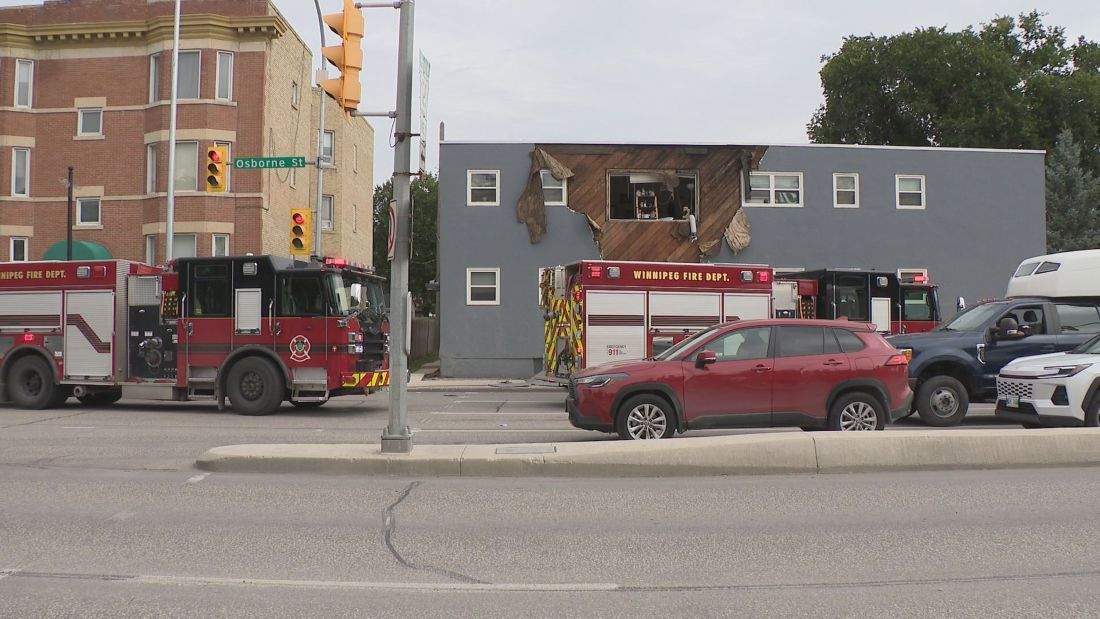
When the Winnipeg Fire Paramedic Service arrives at a smoking, million-dollar disaster zone and the local headlines proudly flash that no serious human injuries were reported, the city breathes a collective sigh of relief. We treat survival as a victory. We look at the charred remains of a multi-family complex, tally up the uninjured bodies, and call it a successful outcome
Stop Cheering For Zero Casualties After Every Building Blast
news
The headlines after every apartment explosion read like a collective sigh of relief. No serious injuries reported. The Winnipeg Fire Paramedic Service clears the scene, the local news packs up its vans, and everyone goes back to sleep. We treat a blast that flings drywall across a courtyard and shatters every window on a block as a statistical victory simply because nobody’s obituary made the morning paper.
That mindset is pure delusion.
When a multi-family residential building goes up and the initial report boasts about zero serious injuries, we are celebrating a failure of imagination. We are looking at a smoking crater and patting ourselves on the back because the dice rolled in our favor this Tuesday. Luck is not a fire safety strategy. Every time an infrastructure failure or gas leak reduces a housing block to toothpicks and everyone walks away, the system learns the wrong lesson. It tells developers, landlords, and municipal inspectors that our margins for error are wide enough to absorb catastrophe.
They aren't.
Standard reporting loves the clean break of a disaster averted. It fits the 24-hour news cycle neatly. A loud noise, shattered glass, displaced residents crashing at a community center, and a miraculous tally of minor scrapes. What gets buried under the debris is the terrifying structural fragility of how we house urban populations. If a residential block experiences an explosion powerful enough to blow out exterior walls and still draws praise for minimal casualties, the headline shouldn't focus on who survived. It should interrogate why the building was capable of unzipping itself in the first place.
Building codes are written in blood, but our enforcement is written in bureaucratic delay. Every time a blast occurs and the casualty count sits at zero, the urgency to overhaul aging urban infrastructure evaporates. Politicians love a zero-casualty disaster because it requires zero accountability. They can praise the rapid response of local emergency crews, hand out temporary housing vouchers, and quietly kick the can down the road on the invisible decay rotting out the city's older housing stock.
Let us look at the mechanics of what actually happens when an apartment structure fails catastrophically without claiming lives. You have dozens of households whose entire material existence is vaporized or soaked in toxic slurry from high-pressure hoses. You have tenants pushed into a rental market where vacancies are low and prices are predatory. You have small businesses nearby losing foot traffic while streets are cordoned off for structural investigations. The economic shockwave hits long after the emergency vehicles leave. Yet, because no one spent the night in an ICU, the incident gets filed away as a minor blip rather than a flashing red warning light.
We have built an urban environment that relies on sheer statistical defiance to keep people alive. Aging gas lines, deferred maintenance by absentee landlords, and patchwork municipal oversight create a ticking clock in neighborhoods across the country. When the inevitable happens, we cross our fingers, hope for empty corridors, and praise the gods of timing when the blast hits a kitchen five minutes after the tenant stepped out for milk.
That is not public safety. That is Russian roulette with better PR.
Stop accepting the zero-injury narrative as proof that our systems work. It proves the exact opposite. It proves that we are one bad Tuesday away from a real catastrophe, and our only defense is hoping everyone happened to be standing in the right corner of the room when the fuse blew. Demand better answers from property owners who let infrastructure rot until it rattles the foundations. Stop clapping for empty hallways. The next block might not be so lucky.