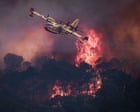
Every December, legacy media outlets publish the exact same disaster porn obituary for the calendar year. They string together dramatic adjectives—choking fires, deadly heat, devastating floods—and package human misery into a tidy, fatalistic narrative where nature is an unstoppable villain and humanity is a helpless bystander.
They did it again for 2026. And they missed the entire story.
When a river overflows its banks and wipes out a three-billion-dollar logistics hub, or when an August heatwave knocks out a regional power grid and leaves vulnerable residents baking in high-rise apartments, calling it an "extreme weather tragedy" is an act of journalistic cowardice. Weather is a meteorological event. A disaster is a zoning, engineering, and capital-allocation failure.
By framing 2026 strictly through the lens of atmospheric drama, mainstream coverage lets mayors, utility executives, insurance regulators, and real estate developers off the hook. It turns preventable structural negligence into an act of God.
The Fatalism Trap in Modern Climate Reporting
Look closely at the standard 2026 weather roundup. The formula never changes. Start with a terrifying statistic about wildfire acreage or wet-bulb temperatures, interview a grieving homeowner standing in front of concrete rubble, and close with a vague plea for global systemic change by 2050.
That narrative is comforting to the people in charge because it moves accountability into the distant future and onto an abstract global stage. If the problem is simply "the atmosphere," then local officials do not have to answer why they approved high-density residential permits inside a known alluvial flood plain three years ago. Utility boards do not have to explain why they spent billions on stock buybacks instead of burying transmission lines in high-wind corridors.
I have sat in boardrooms with municipal planners and infrastructure funds who quietly love disaster journalism. Every time a headline blames a catastrophic flood solely on historic rainfall totals, a city engineer breathes a sigh of relief because nobody is asking why the storm drains were still sized for 1970s runoff models. Nobody is pulling the records on the wetlands that were paved over to build a tax-subsidized retail park.
Hazard is not risk. In actuarial science and catastrophe modeling, this distinction is elementary, yet reporters obliterate it every single week. Hazard is the physical event—the wind speed, the millimeter count of rain, the ambient temperature. Risk is what happens when that physical event collides with human exposure and structural vulnerability. You cannot control a stalled low-pressure system over Central Europe or a Santa Ana wind event in Southern California. You have absolute control over whether you build wooden structures in a chaparral fire corridor without defensible space.
Why "Unprecedented" Is the Most Dangerous Word in News
If you read the coverage of 2026's floods and heatwaves, you would think meteorologists were blindsided by physics. The word "unprecedented" gets thrown around like confetti.
It is almost always a lie.
When hydrologists examine paleo-flood records—sediment layers, tree rings, and historical archives stretching back centuries—they routinely find that the "once-in-a-millennium" floods wrecking modern cities have happened repeatedly throughout history. What is unprecedented is not the water. What is unprecedented is the amount of impermeable asphalt we have poured over watersheds, eliminating the soil's natural sponge capacity and funneling every drop of rain into concrete channels at record velocity.
The same intellectual laziness infects heatwave coverage. Yes, ambient summer temperatures are climbing. But when a heat dome parks over a major metro area and triggers mass hospitalizations, the killer is rarely the regional climate alone. It is the urban heat island effect—a self-inflicted wound caused by dark roofs, treeless asphalt expanses, and waste heat from poorly insulated buildings. Two neighborhoods five miles apart in the exact same city can experience a ten-degree Fahrenheit temperature gap during peak afternoon heat purely based on canopy cover and building materials. One neighborhood sees elevated air conditioning bills; the other sees ambulances. Calling both outcomes "extreme weather" erases the design choices that killed people.
Even wildfire reporting suffers from this blind spot. For decades, land management agencies practiced total fire suppression, extinguishing every spark immediately and allowing dead underbrush, ladder fuels, and dense timber to accumulate to unnatural, explosive levels. When a dry windstorm hits a forest choked with eighty years of unburned fuel, the resulting megafire is not just a weather event. It is the inevitable debt collection on a century of ecological mismanagement.
Dismantling the Wrong Questions
When readers search for information about 2026's weather disasters, they are conditioned to ask helpless questions. Breaking down the most common queries reveals just how thoroughly the public has been misled about where the real leverage lies.
Are extreme weather events becoming completely unstoppable?
You cannot stop a hurricane, a heat dome, or an atmospheric river, and pretending that municipal policy can control global atmospheric circulation is delusional. However, damage from these events is entirely stoppable. Look at earthquake engineering in Tokyo versus Port-au-Prince. The tectonic plates do not care about GDP, yet identical seismic magnitudes produce radically different body counts because one city enforced brutal, uncompromising building codes and the other did not. Weather is no different. When a Category 4 storm hits a coastline where structures are anchored to bedrock, elevated above storm surge, and powered by underground microgrids, it becomes an expensive inconvenience rather than a humanitarian catastrophe.
Why are home insurance premiums skyrocketing in 2026?
Mainstream articles blame "climate risk" as if insurance companies suddenly discovered meteorology last Tuesday. The real culprit is regulatory price distortion colliding with unbridled development in high-hazard zones. For years, state regulators capped insurance rate increases to keep voters happy, artificially suppressing the true cost of living in floodplains and wildland-urban interfaces. That distorted price signal acted like a subsidy, encouraging millions of people to build expensive homes in places that nature regularly burns or drowns. Reinsurers—the massive global firms like Munich Re and Swiss Re that insure the insurers—finally stopped subsidizing the fantasy. When primary carriers reprice policies in 2026 to reflect actual replacement costs and actuarial reality, homeowners experience sticker shock. The premiums are not broken; the previous decades of artificially cheap insurance were the lie.
Should we focus on cutting emissions or adapting our cities?
This is a false binary pushed by ideologues on both sides, and falling for it gets people killed. Decarbonization operates on a multi-decade global timeline; pouring concrete sea walls, upgrading electrical substations, and rewriting zoning laws operate on a two-to-five-year local timeline. Even if global emissions dropped to zero tomorrow morning, the thermal inertia already locked into the oceans guarantees decades of volatile weather. Treating adaptation as a distraction from mitigation is like refusing to buy a fire extinguisher because you are campaigning for stricter arson laws. You need both, and right now, adaptation is starving for capital while trillions chase press-release-friendly green tech.
Follow the Capital Not the Clouds
If you want to understand what actually happened in 2026, stop watching satellite loops and start reading municipal bond prospectuses and reinsurance treaties.
I have watched institutional investors blow hundreds of millions of dollars on coastal real estate and sunbelt industrial parks over the past five years because their financial models assumed historical infrastructure performance would hold forever. They looked at a 100-year flood map drawn by a government agency in 1998, checked a compliance box, and closed the deal. When the water arrived in 2026, those maps proved worthless—not just because rainfall patterns shifted, but because upstream suburban sprawl had completely altered the basin's drainage physics.
The real story of 2026 is the violent repricing of physical assets.
- The Death of Static Risk Maps: Backward-looking hazard maps are dead. Forward-looking catastrophe models now incorporate dynamic hydrological shifts, soil saturation rates, and local grid fragility. Any asset priced on legacy assumptions is currently sitting on a balance-sheet time bomb.
- Grid Fragility as the Primary Multiplier: Heatwaves and winter freezes do not kill modern populations directly; power outages do. When extreme temperatures spike electricity demand simultaneously across an entire region, aging transformers fail, thermal power plants derate because cooling water is too warm, and transmission lines sag into vegetation. A twelve-hour blackout during a 105-degree heatwave turns glass-walled apartment towers into vertical greenhouses.
- The Retreat of Private Capital: Where governments refuse to enforce sensible land-use rules, private capital is doing it for them. When banks refuse to issue thirty-year mortgages because a property cannot secure private flood or fire coverage, property values collapse overnight. This market-driven retreat is already redrawing the economic map faster than any legislative mandate ever could.
The Uncomfortable Downsides of Hardening Our World
Taking an infrastructure-first approach to extreme weather is not a painless utopia, and pretending otherwise would be dishonest. Aggressive adaptation carries massive economic and social trade-offs that politicians hate admitting out loud.
First, hardening infrastructure is brutally expensive and deeply regressive in the short term. Requiring hurricane-rated glazing, ember-resistant vents, elevated foundations, and heat-pump cooling systems drives up construction costs immediately. In cities already suffocating under housing shortages, stricter resilience codes price working-class buyers out of the market unless paired with massive public subsidies or sweeping deregulation of density limits in safe zones.
Second, managed retreat destroys generational wealth. Telling a coastal community or a mountain town that the state will no longer rebuild their roads, subsidize their flood insurance, or extend water lines is political suicide. For families whose entire net worth is tied up in a home sitting inside a high-risk floodplain, actuarial honesty looks indistinguishable from financial ruin.
Third, engineering solutions create moral hazard. Build a massive levee around a low-lying floodplain, and developers will immediately fill the protected zone with billions of dollars of new real estate. The levee eliminates small, frequent floods, lulling residents into a false sense of security until an event exceeds the wall's design limit—turning a manageable flood into a catastrophic basin-wide drowning. Engineers call this the levee effect, and history is littered with cities that trusted concrete walls right up until the water overtopped them.
What Needs to Happen Before the Next Storm Hits
Stop waiting for international climate summits to save your city's power grid or protect your neighborhood from flash flooding. The levers that actually prevent mass casualties and economic ruin sit at the local, corporate, and individual levels.
- Abolish Subsidized Risk Immediately: Governments must stop using taxpayer money to underwrite insurance in areas that repeatedly flood or burn. Let insurance rates float to their true actuarial cost. When living in a high-risk zone costs what it actually costs, sprawl stops overnight, and capital flows naturally toward safer ground.
- Mandate Decentralized Microgrids for Critical Infrastructure: Hospitals, water treatment plants, telecom hubs, and cooling centers cannot rely on vulnerable long-distance transmission lines. Require on-site generation, battery storage, and islanding capabilities so critical facilities stay powered when the regional grid trips.
- Rip Up Dead Asphalt and Restore Natural Sponges: Cities need aggressive permeability mandates. Replace non-essential parking lots with bioswales, restore upstream wetlands, and widen river corridors so floodwaters have somewhere to go besides downtown basements.
- Enforce Brutal Building Codes in Fire and Heat Zones: Ban combustible roofing and unscreened vents in wildland-urban interfaces. Mandate high-albedo cool roofs, exterior shading, and passive cooling standards in urban cores so buildings remain survivable even during prolonged grid failures.
The weather in 2026 did not ambush us. Every flooded highway, burned suburb, and overheated hospital ward was the predictable output of systems designed for a world that no longer exists, maintained by leaders who preferred cheap headlines over expensive engineering.
Nature is going to keep throwing punches. Stop writing tragic poems about the weather and start reinforcing the jaw.