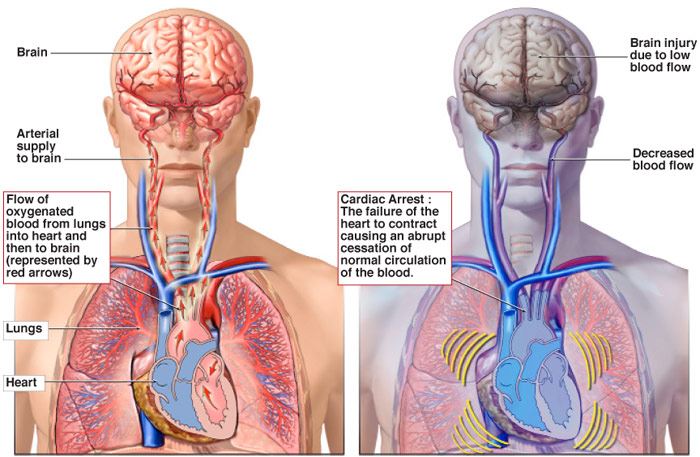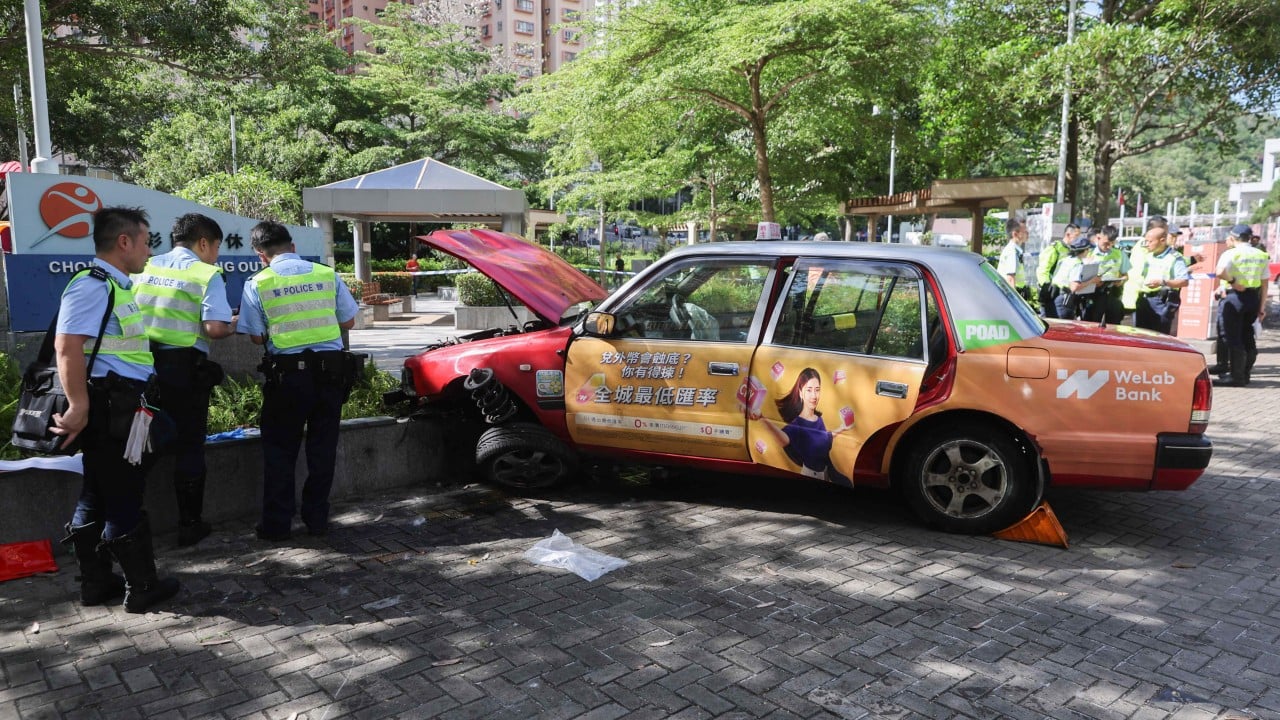
Another headline. Another tragedy. A taxi driver in his 70s plows into a planter. One woman is dead. Another is fighting for her life in a hospital bed.
The immediate reaction from the armchair experts is as predictable as it is lazy. They call for mandatory license revocations at 65. They scream about "diminished reflexes." They want to treat every grandmother with a car key like a ticking time bomb.
It is a comforting narrative because it gives us a villain. It lets us point at a specific demographic and say, "If we just remove them, the streets will be safe."
They are wrong.
The focus on chronological age is a red herring that masks a much deeper, more systemic failure in how we design urban transit and manage risk. If we want to stop people from dying in planters, we have to stop obsessing over the birth date on a driver's license and start looking at the catastrophic design of our "for-hire" ecosystems and the physical geometry of our streets.
The Reflex Myth and the Cognitive Trap
Every time a senior is involved in a crash, the media treats it as a biological inevitability. But let’s look at the data before we start the ageist purge.
According to the Insurance Institute for Highway Safety (IIHS), while older drivers do have higher rates of fatal crashes per mile driven compared to middle-aged drivers, they are significantly less likely to be involved in police-reported crashes than drivers under 25. Young drivers are impulsive, distracted, and prone to risk-taking. Seniors are generally the opposite. They self-regulate. They stay off highways at night. They drive slower.
The "lazy consensus" ignores the fact that a 72-year-old taxi driver isn't crashing because he forgot how to drive. He is crashing because our urban environments have become high-stakes obstacle courses that demand fighter-pilot reaction times to compensate for poor engineering.
We have built a world where a three-second lapse in attention results in a fatality. That isn't a "senior" problem; that is a design problem. If a system fails because one human being—of any age—made a single error, the system was broken long before the car hit the planter.
The Economic Meat Grinder
Why was a man in his 70s driving a taxi in the first place?
This is the question no one wants to touch. We live in a gig-economy hellscape where "retirement" is a luxury many cannot afford. In major urban centers, the taxi industry is propped up by a workforce that is aging out of every other sector.
These drivers are working 12-hour shifts. They are fighting against algorithmic dispatching, surging traffic, and the physical toll of sitting in a cockpit for half a day. Fatigue is a greater impairment than age, yet we rarely see headlines screaming about "The Lethal Dangers of 14-Hour Shifts."
We have created an economic incentive for the most vulnerable people to spend the most time on the road. We then act shocked when their bodies or minds hit a breaking point. If you want to reduce senior-related accidents, you don't need more DMV tests; you need a social safety net that doesn't force a grandfather to drive a 4,000-pound kinetic weapon just to pay rent.
The Planter is the Problem
Look at the crime scene. A car hit a planter.
In urban planning, we call these "fixed objects." In a sane world, a sidewalk is a protected sanctuary for pedestrians. In our world, the only thing separating a mother and child from a speeding taxi is a decorative box of petunias or a six-inch curb.
We are obsessed with "forgiving" road design for drivers, but we offer zero forgiveness for pedestrians. We widen lanes so drivers feel comfortable going 45 mph in a 25 mph zone. This is known as the Peltzman Effect: when you make a task feel safer (wider roads, better brakes), people take more risks.
By making roads "easy" to drive, we have made them incredibly dangerous to live near.
If that taxi had been driving on a street designed with Road Diets—narrower lanes, physical bollards, and "chicanes" that force slower speeds—the impact with the planter would have been a fender bender, not a funeral. Instead, we build urban drag strips and then wonder why the elderly, the tired, or the distracted occasionally lose control.
The Technology Delusion
The tech bros will tell you that Autonomous Vehicles (AVs) are the silver bullet. They claim that by removing the human element, we solve the "senior driver" issue overnight.
I’ve seen enough "beta" software failures to know that we are decades away from a car that can navigate a chaotic urban construction zone better than a human. Relying on a future tech savior is a convenient way to avoid doing the hard work today.
The hard work involves passive safety. It involves steel bollards that can stop a truck. It involves raised crosswalks that act as speed bumps. It involves a fundamental shift from "How do we move cars faster?" to "How do we keep people alive?"
Stop the Mandatory Testing Charade
Politicians love to propose "mandatory re-testing for seniors" because it costs nothing and looks like "action."
But re-testing is a theater of safety. A 20-minute drive around the block with an instructor doesn't catch the momentary micro-sleep caused by sleep apnea. It doesn't catch the sudden medication interaction. It certainly doesn't fix the fact that the driver is exhausted from a 70-hour work week.
It also ignores the "transportation death spiral." When you take away a senior’s license without providing a robust, high-frequency public transit alternative, you kill them anyway. Social isolation and the inability to reach medical appointments are silent killers that claim more lives than taxi crashes ever will.
The Brutal Reality of Risk
We have accepted a certain number of "acceptable deaths" in exchange for the convenience of the private automobile.
When a young person crashes, it’s a "tragic accident."
When a senior crashes, it’s a "symptom of aging."
This double standard protects the status quo. It protects the car manufacturers, the road engineers, and the city planners who failed to build a safe environment. By blaming the driver's age, we absolve the people who designed the theater where the tragedy took place.
If we actually cared about the woman who died in that crash, we wouldn't be talking about DMV age limits. We would be talking about:
- Hardened Infrastructure: Installing crash-rated bollards at every high-traffic pedestrian corner.
- Labor Reform: Capping driving hours for taxi and rideshare operators with zero exceptions.
- Automated Speed Enforcement: Using cameras to make it physically and financially impossible to speed in residential areas.
- Universal Basic Income: Ensuring no 75-year-old is forced to drive for a living.
But those solutions are expensive. They require political courage. They require us to admit that our entire car-centric culture is a failed experiment.
It is much easier to just blame a man for getting old.
The driver in his 70s isn't the glitch in the system. He is the predictable outcome of a system that prioritizes velocity over Vitality and corporate profit over human life. We can keep banning grandfathers, or we can start building cities that don't require every citizen to be an elite athlete just to cross the street.
Choose one. You can't have both.