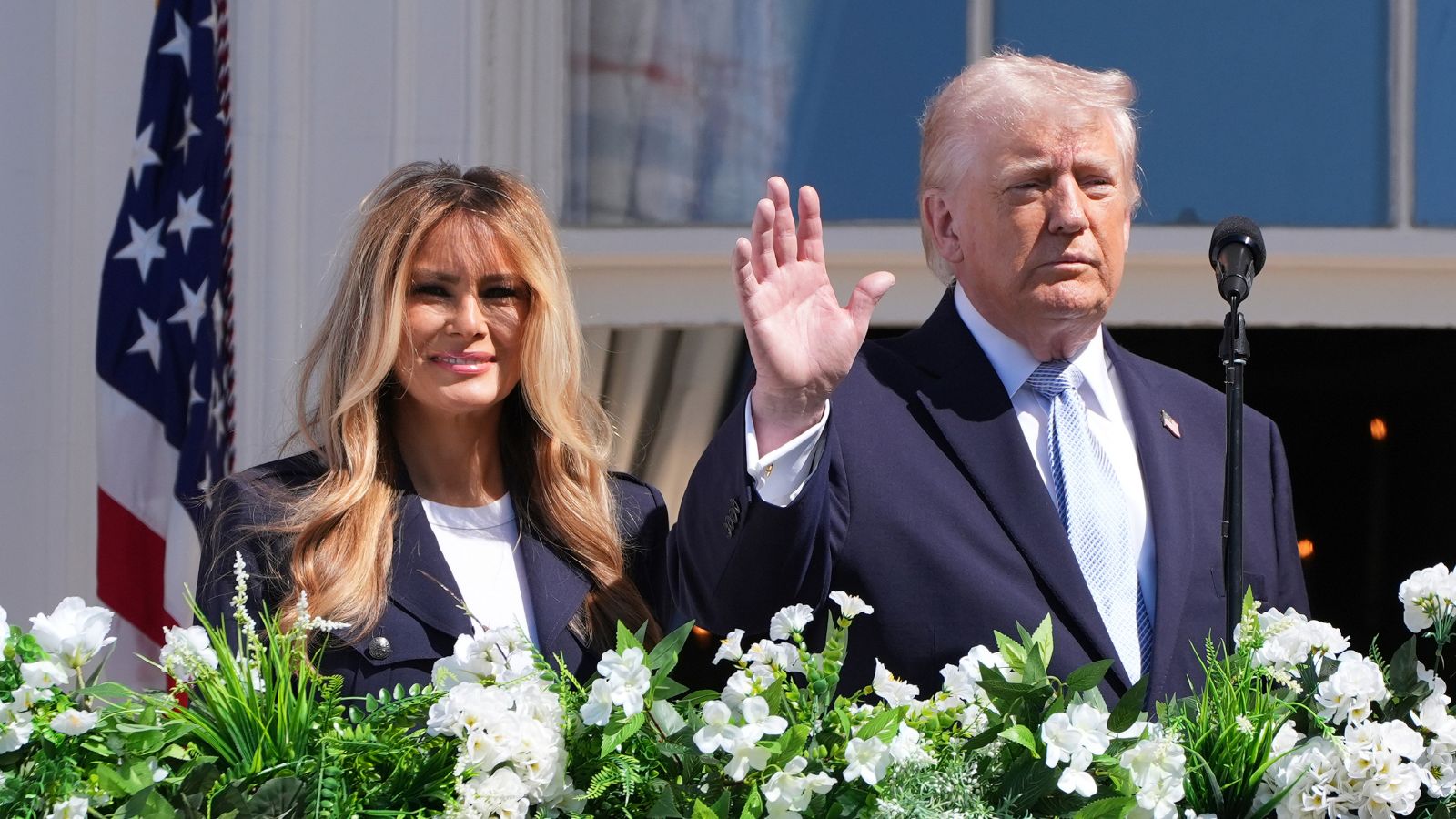
The media wants you to believe a palace soap opera is running the West Wing. The lazy consensus dominating airwaves and gossip columns claims Melania Trump is staging a cold war against Natalie Harp, the president's ultra-loyal executive assistant. Commentators spin breathless narratives about a catfight for proximity, pointing to sparse public appearances as proof of a high-stakes turf war over an eighty-year-old principal.
It is a comforting, tabloid-friendly delusion. It reduces institutional politics to high school drama. And it is entirely wrong.
Look past the glossy headlines and you find a much simpler, transactional reality. Melania Trump has never cared about day-to-day West Wing operations. Former staffers have noted that during the first administration, whole tiers of the communications team went years without ever laying eyes on her. She treats public wifely duties as a negotiated contract, not a vocation. Blaming Natalie Harp for an absence that predates Harp’s entire political career requires a willful ignorance of history.
The Myth of the Interloper
To understand why the Harp narrative falls apart, examine how proximity actually functions in modern executive politics. Natalie Harp is not a policy architect or a cabinet secretary blocking the First Lady's path to power. She is an information concierge. Armed with a portable printer and an unyielding stream of digital validation, Harp serves a very specific mechanical function for Donald Trump: she feeds the feedback loop.
Insiders love to hyperventilate over Harp's intense devotion, her adoring letters, and her round-the-clock presence. Critics frame this as an anomaly. It is not. Every executive in high-stakes environments eventually surrounds themselves with acolytes who prioritize emotional reinforcement over institutional pushback. Trump values absolute fealty. Harp provides it with industrial efficiency.
Imagining a scenario where Melania suddenly decides to step back because a 35-year-old aide prints out favorable social media posts assumes the First Lady ever wanted to spend her Tuesdays in the West Wing. That assumption collapses under the weight of basic data. Melania’s public calendar has always been ruthlessly curated and sparse. Her primary residence of choice has historically been anywhere outside Washington. To suggest she is boycotting her own husband's administration over an executive assistant is to project normal marital dynamics onto a couple that has operated via independent corporate arrangements for decades.
The Real Power Struggle Nobody Is Discussing
The obsession with Harp masks a much deeper structural vulnerability inside the administration. The real story is not about who shares a golf cart; it is about information hygiene.
When an executive assistant acts as a primary gatekeeper while bypassing standard security clearance protocols, the crisis is not relational. It is operational. In any high-functioning corporate or political hierarchy, the person who controls the physical distribution of data holds outsized sway. Harp does not need to fight Melania for territory because Melania has voluntarily abdicated that territory. The First Lady’s absence creates a vacuum, and vacuums in executive offices are always filled by the person willing to work twenty-hour days.
We have seen this movie before. I have watched corporate boards completely implode because leadership outsourced reality-checking to hyper-loyal assistants who only delivered good news. When the principal relies on an unvetted pipeline of curated flattery, the danger is not a jealous spouse. The danger is institutional blindness.
The Uncomfortable Truth About Transactional Marriages
Public shock over paid campaign appearances or calculated public relations scheduling exposes a profound naivety about high-society arrangements. Political partnerships at this level are frequently corporate mergers. Melania occupies a specific brand space centered on sovereignty, privacy, and select philanthropic initiatives like Fostering the Future. Her periodic retreats from the public eye are not emotional tantrums; they are brand protection maneuvers.
When tension leaks out—such as the recent viral moments captured by sharp-eyed observers at public events—watchers rush to blame the nearest female scapegoat. It is a tired trope. Women in the orbit of powerful men are almost always pitted against each other in public imagination, transforming structural indifference into personal rivalry.
Natalie Harp didn't push Melania out of the White House. Melania left of her own accord long before Harp ever picked up a portable printer. Stop looking for a soap opera where you should be looking at an organizational failure.