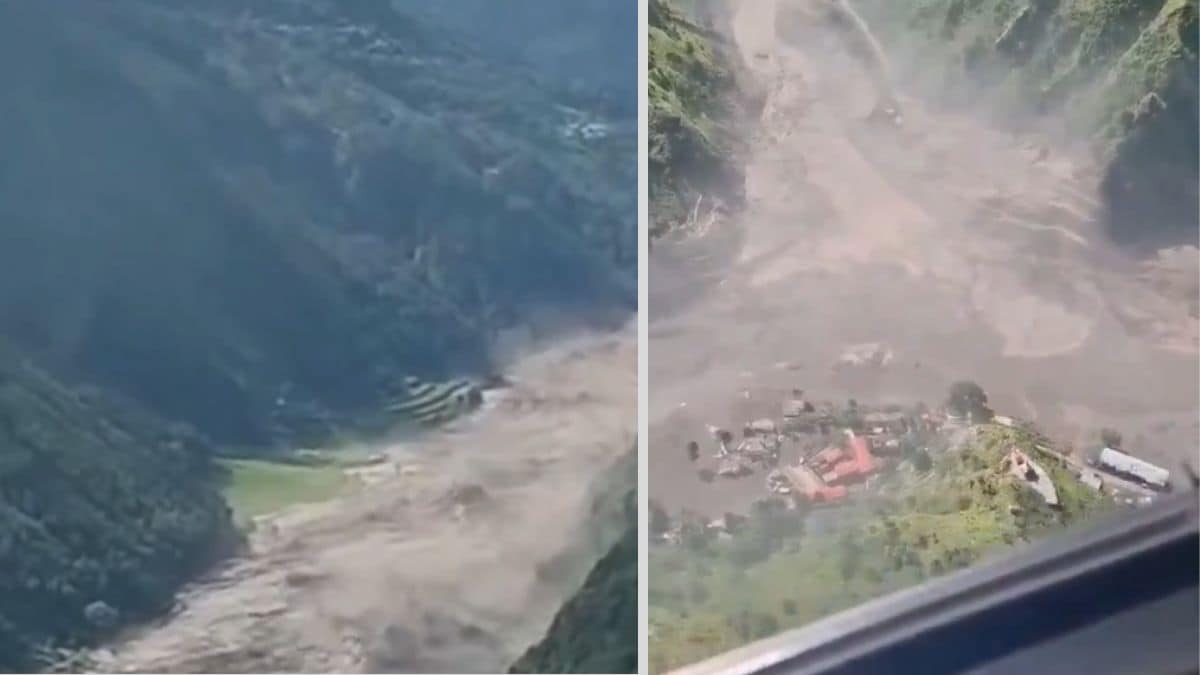
Every single headline covering the recent disaster in Rasuwa points the finger at the usual suspects. Media outlets drone on about freak weather, shifting monsoon patterns, and glacial lake outbursts triggered by global temperature anomalies. It is a lazy narrative designed to comfort us with a sense of cosmic inevitability. If the sky itself is angry, nobody is responsible.
That framing is a dangerous delusion.
The village near the Tibet border did not vanish because the weather gods lost their temper. It vanished because decades of unbridled, poorly engineered infrastructure development, systemic regulatory apathy, and a total disregard for basic hydrological science turned a standard high-altitude weather event into a predictable catastrophe. We are watching human hubris crash down mountainsides, and we keep calling it an act of God.
The Lazy Consensus on Himalayan Disasters
The standard media script follows a rigid formula. Heavy rain falls, a river swells, a debris flow obliterates settlements, and experts wheel out generic soundbites about extreme weather events.
This lazy consensus ignores the mechanical reality of how these mountain ecosystems actually function. The Himalayas are young, fragile, and hyper-active geologic formations. They erode naturally at astonishing rates. But nature alone rarely moves with the devastating, instantaneous precision of a modern flash flood without a little human acceleration.
When we examine the Rasuwa disaster through an unfiltered lens, the physical evidence points away from simple meteorological bad luck and straight toward structural mismanagement.
- Unregulated road cuts destabilize fragile toe slopes across the border regions.
- Loose spoil tips are dumped directly into narrow gorges, creating artificial ticking time bombs of sediment.
- Encroachment on historical floodplains shrinks natural discharge channels, turning minor rises in water levels into high-velocity battering rams.
Blaming climate change for every flash flood is a convenient deflection. It shields local planners, corrupt contractors, and negligent oversight bodies from facing the consequences of their engineering choices.
The Mechanics of a Man Made Deluge
To understand why the Rasuwa disaster played out with such terrifying force, you have to look at how water moves through constrained alpine corridors. This is not about mysterious cloudbursts or unfathomable atmospheric rivers. It is basic physics.
Imagine a scenario where thousands of tons of loose earth, excavated during poorly planned construction projects, sit precariously on a steep mountain gradient just waiting for lubrication. When seasonal precipitation hits saturation point, that loose material does not just slide; it liquifies. It forms a high-density hyper-concentrated flow that behaves less like water and more like wet concrete moving at highway speeds.
I have walked these valleys after disasters. I have seen million-dollar containment walls punched through like wet cardboard because designers calculated water loads while completely ignoring the destructive mass of moving debris.
When upstream blockages temporarily dam a narrow gorge, the resulting breach creates a sudden surge wave. The water level does not rise gradually. It drops like an executioner's axe. No amount of traditional weather forecasting saves a settlement built in the direct path of an artificially amplified debris torrent.
Dismantling the Myths
Let us address the common questions people ask after a tragedy like this strikes the northern borderlands.
Was this flood unpredictable?
Only if you refuse to read the landscape. Geological hazard mapping for this region has warned about unstable slopes and high landslide susceptibility for decades. The hazard was mapped. The vulnerability was documented. The disaster was simply ignored until it demanded attention.
Did climate change cause the breach?
Warmer temperatures certainly influence glacial melt dynamics, but attributing a localized high-velocity flash flood entirely to macro-level climate trends ignores the immediate local triggers. Heavy rain on unstable, human-altered terrain causes floods, regardless of global carbon parts per million.
Can we engineer our way out of this?
Stop looking for silver bullets. Hard engineering solutions like concrete check dams and gabion baskets often fail because they give communities a false sense of security while encouraging denser settlement in high-risk zones. The only real solution is strategic retreat from active hazard corridors.
The Real Cost of Institutional Blindness
We have a systemic problem with how mountain regions are developed. Agencies approve tourism infrastructure, hydropower projects, and cross-border trade routes with aggressive timelines and minimal environmental safeguards.
When projects go over budget or face delays, safety margins are the first things cut. Slopes are steeper, drainage is narrower, and monitoring systems are non-existent.
The people living near the Tibet border pay the price for this institutional blindness with their lives and livelihoods. Meanwhile, the experts retreat to air-conditioned offices in capital cities to issue recycled talking points about changing global weather patterns.
We do not need another committee to study the resilience of Himalayan villages. We need an honest reckoning with how our own construction methods tear mountains apart from the inside out.
Stop waiting for the climate to calm down. Start fixing how we build.