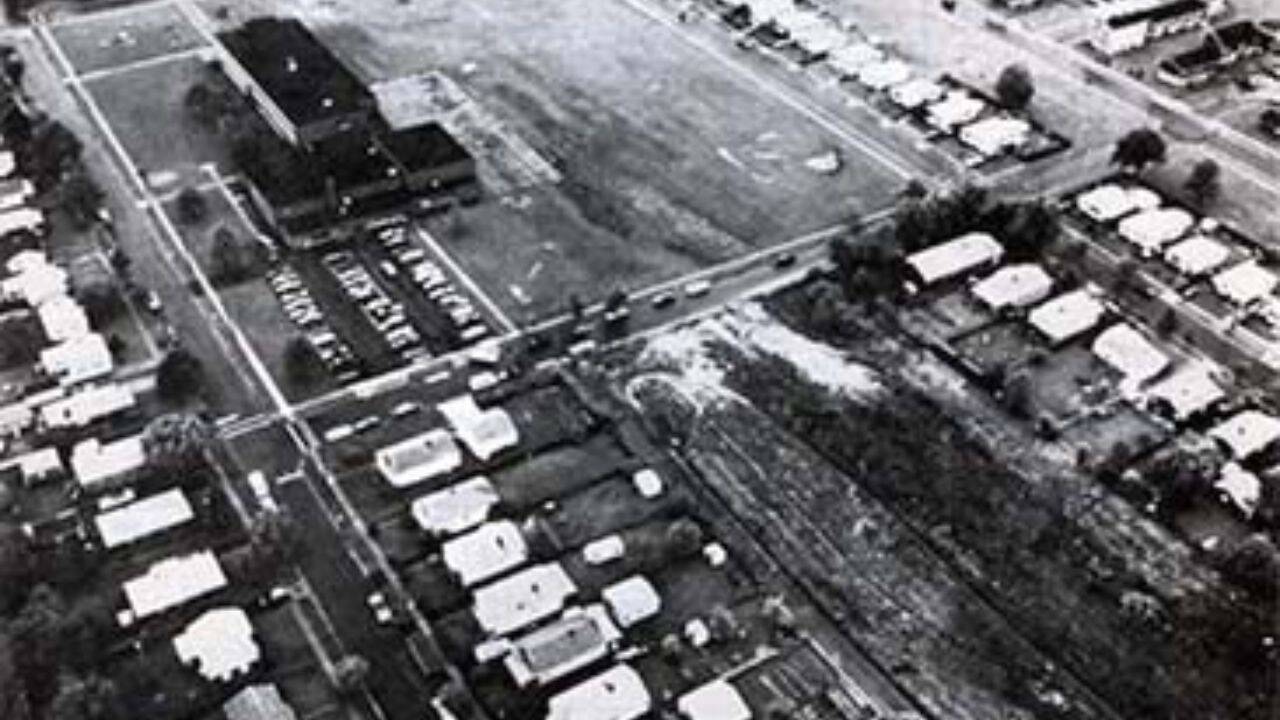
Every time a neighbourhood sitting on top of industrial leftovers hits the news cycle, the script writes itself. The media rolls out the sepia-toned photos, activists gather with megaphones, and internet commenters scream about corporate malice. The narrative is always identical. Innocent families placed onto a ticking chemical time bomb by mustache-twirling villains who knew better and did it anyway.
It makes for great television. It also completely misses why modern environmental management actually fails. Read more on a connected subject: this related article.
I have spent two decades walking industrial brownfields, reading toxic tort filings, and watching municipal planners try to balance municipal budgets against geological realities. I have seen cities blow millions on panic-driven remediation that achieved nothing except enriching environmental engineering contractors.
The lazy consensus says that burying industrial waste is an unforgivable sin that must always be dug up and hauled away at any cost. That perspective sounds righteous. It is also an engineering and economic disaster. Additional journalism by Al Jazeera delves into similar views on this issue.
The Myth Of Total Eradication
Let us look at the case of neighborhoods built over massive historical waste sites, such as the infamous Hooker Chemical dumping grounds in Love Canal or similar twentieth-century industrial footprints. The popular belief is that we can return a polluted site to pristine pre-industrial nature if we just throw enough money and excavators at it.
This is a childish fantasy.
Nature does not reset to factory settings just because you shovel ten million cubic yards of dirt into trucks and haul it three counties over. When you dig up twenty-two thousand tons of buried chemical waste, you do not make the poison disappear. You aerosolize it, you spill it on transport routes, you burn municipal diesel to move it, and you dump it into a different poor zip code fifty miles down the highway.
Environmental remediation is rarely about making a place clean. It is about containment and risk management.
When children show up with burns or chronic illnesses near these legacy sites, the public outcry demands an immediate scapegoat. We want a clear line from a buried barrel of benzene to a sick kid in a suburban driveway. Biology is rarely that cooperative. Chronic low-level exposure, indoor air migration, vapor intrusion, and plain old baseline epidemiological rates of childhood illness get scrambled together into a single panic narrative.
And the worst part? The obsession with digging up the past often creates worse hazards than leaving the waste locked safely in place beneath impermeable caps and modern engineering controls.
Why Capping Beats Digging Every Single Time
Let us define terms because the public conversation is drowning in innumerate panic.
A brownfield is an abandoned or underutilized property where expansion or redevelopment is complicated by real or perceived environmental contamination. Under modern regulatory frameworks overseen by agencies like the EPA under Superfund guidelines or state-level voluntary cleanup programs, developers have two choices. They can dig everything up and remove it, or they can immobilize it.
Digging it up is called excavation and off-site disposal. It sounds thorough. It is also a catastrophe waiting to happen. Every time you drive a backhoe into fifty-year-old corroded drums of chemical sludge, you breach primary containment. You release volatile organic compounds into the breathing zone of the surrounding neighborhood. You risk groundwater plumes that were previously stable.
Immobilization, or capping, relies on the principle of geological isolation. You seal the waste beneath layers of high-density polyethylene liners, compacted clay, and clean fill. You install passive venting systems and active monitoring wells. You turn a chaotic, leaking dump into a managed entombment cell.
Engineered caps work. They isolate human receptors from the hazard permanently, provided future generations do not decide to build swimming pools through the liner.
The failure mode of these neighborhoods is almost never the engineering beneath the ground. The failure mode is regulatory amnesties, poor municipal record-keeping, and greedy developers who punch basements and utility lines right through protective caps because city hall wanted extra tax revenue.
The Real Culprit Is Zoning Bureaucracy
Let us address the people asking why homes were ever permitted on top of hazardous waste in the first place. The answers given by local government officials usually involve corporate cover-ups or regulatory oversight failures.
Those answers are comforting because they imply a bad actor we can punish. The truth is much more boring and much more indictment-worthy: municipal tax greed and stupid zoning laws.
In the mid-twentieth century, industrial cities had massive tracts of cheap, centrally located land that had lost its economic purpose. Factories closed. Chemical plants relocated. Local tax bases hollowed out. City councils faced a stark choice: let the land sit idle and bankrupt the municipality, or rezone it for residential infill to keep the property tax revenue flowing.
Planners knew the history of these sites. The deeds often had restrictive covenants warning of past industrial use. But municipal balance sheets do not care about forty-year-old chemical residue when bond ratings are dropping. They trusted cheap engineering fixes and bureaucratic oversight to hold the line.
Then came the inevitable creep of time. Property changed hands. Original warnings vanished from title searches or were ignored by subdivision developers looking to maximize lot yields. Municipalities stopped maintaining the monitoring wells because funding cycles shifted to newer infrastructure projects.
You do not need a conspiracy when garden-variety bureaucratic incompetence and budget shortfalls will do the job just as well.
How To Fix Urban Brownfields Without Losing Your Mind
If you are a city planner, a real estate investor, or a resident living near a legacy industrial site, stop swallowing the panic pills. Here is how you evaluate these situations with actual competence rather than emotional theater.
- Audit the cap, do not dig the trap: If an old industrial site is properly capped with modern composite barriers, leave it alone. Do not let activists pressure local politicians into unearthing stabilized waste. Digging creates airborne exposure risks that far outweigh the status quo of secure containment.
- Enforce deed restrictions ruthlessly: The single biggest point of failure in historical waste zones is the loss of institutional memory. If a property has a groundwater use restriction or a ban on basement excavations, treat it like nuclear launch codes. Tie those restrictions to digital parcel maps so no future zoning board can plead ignorance.
- Monitor vapor intrusion, not just soil samples: People obsess over what is sitting three feet underground. The real danger in residential brownfields is volatile chemicals migrating upward through the soil column into indoor air spaces via slab cracks. Install continuous sub-slab depressurization systems in every structure built on reclaimed land.
- Accept the limits of remediation: You cannot turn an industrial dump into an organic apple orchard. Accept that certain parcels are meant for parking lots, solar farms, or commercial warehouses rather than daycares and single-family backyards with vegetable patches. Land use must match chemical reality.
The next time a headline screams about children getting sick near a buried waste site, look past the outrage factory. Ask who stopped maintaining the monitoring wells. Ask who approved the basement excavations through the protective liner.
The waste in the ground is an inert physical fact. Human stupidity is the only toxic element we have never figured out how to contain.


