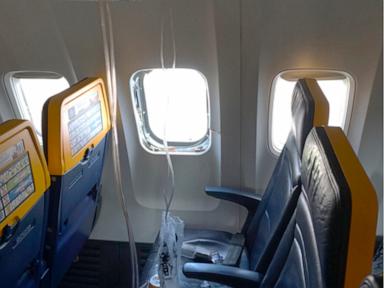
Every time a radar screen blips or a thunderstorm rolls over the English Channel, the internet floods with the exact same lazy narrative. Passengers scream about operational chaos, airlines point fingers at government incompetence, and consumer advocates demand larger payouts for lost time. Everyone loves a good villain. A faceless bureaucrat staring at a green sweep on a monitor makes a far more convenient scapegoat than the uncomfortable reality hiding behind every disrupted boarding pass.
The prevailing consensus dictates that air traffic management is a fragile house of cards waiting to collapse at the first sign of bad weather or a software glitch. Stories surface of families losing a thousand pounds on non-refundable hotels, missed connections, and hastily booked secondary transit, all pinned squarely on the doorstep of national air navigation service providers. The emotional resonance is undeniable. Nobody wants to feel like the architect of their own misery. You might also find this similar story insightful: Why That Missing Thirteen Thousand Dollar Refund is Entirely Your Fault.
Yet this outrage misses the structural mechanics of modern commercial aviation entirely.
I have spent years watching corporate risk managers, network planners, and insurance underwriters game out these exact disruption scenarios. I have seen carriers quietly slash operational buffers to the bone, shaving minutes off turnaround times to keep asset utilization artificially high, knowing full well that a single morning delay will cascade through the entire European network by lunchtime. When the system breaks, the public blames the sky. They should be looking at the spreadsheet. As highlighted in recent reports by Lonely Planet, the results are notable.
Air traffic control is not a random lottery of misery. It is a capacity-constrained rationing system operating on decades-old infrastructure and rigid safety margins. When demand exceeds throughput capacity, slots get restricted. That is physics meeting bureaucracy. What the mainstream commentary ignores is that the financial pain passengers suffer during these events is rarely a direct consequence of a radar failure or a staffing shortage. It is the downstream interest payment on a debt the airlines took out when they decided to sell every single seat without a functional backup plan.
The Myth of the Unforeseen Shock
The standard complaint goes something like this: nobody could have predicted that a technical glitch at a major national provider would ground hundreds of flights, leaving passengers stranded in terminal purgatory with nothing but a voucher for a warm soda.
That framing treats the event as a black swan. It is not. It is an annual tax on an industry addicted to ultra-lean scheduling.
Modern airlines operate on tight turnaround schedules designed to maximize aircraft utilization. An aircraft sitting on the tarmac is a depreciating asset generating zero revenue. Consequently, the industry builds schedules where a tight three-to-five-minute slip in the morning schedule becomes a systematic nightmare by evening. When air traffic control implements flow management restrictions to maintain safety separation standards—which are non-negotiable, regardless of how desperate you are to reach a Mediterranean resort—the fragile schedule shatters.
The carriers know this. Their revenue management algorithms factor in the probability of disruption, weighing the cost of maintaining spare aircraft and standby crews against the statutory compensation payout caps mandated by consumer protection regulations. In many cases, paying out claims under rules like EU261 or UK261 is simply a cheaper line item on the ledger than keeping a multi-million-dollar airframe and a fresh crew parked on standby just in case the radar acts up.
You are not the victim of an unpredictable storm. You are a voluntary participant in a calculated gamble where the house keeps the stakes and you absorb the variance.
Why Your Compensation Strategy is Backwards
When the inevitable happens, the herd instinct kicks in. Passengers swarm customer service desks, dial overloaded hotline numbers, and spend hours drafting furious emails demanding reimbursement for every cent lost. They focus entirely on recovering sunk costs: the hotel room that sat empty, the prepaid museum tickets, the rental car that went unclaimed.
This is a rookie mistake. Focusing on sunk costs blinds you to the asymmetric leverage you actually hold if you understand how carrier liability works.
Most travelers treat the airline as a service provider that owes them a pleasant trip. Legally and operationally, they are a common carrier bound by strict statutory duties of care. When a flight is cancelled or delayed past a certain threshold, the airline does not merely owe you a refund for the canceled leg. They owe you re-routing at the earliest opportunity, which frequently includes booking you onto a competing carrier—even a rival—if their own next available flight is days away.
Yet travelers routinely accept the first pathetic alternative offered by an automated app notification. They quietly agree to a flight forty-eight hours later, silently absorbing the hotel and food costs out of pocket, unaware that statutory duty of care requires the operating carrier to cover reasonable accommodation and meals regardless of whether the disruption was caused by weather, air traffic control strikes, or an act of God.
The distinction matters. Weather and air traffic control restrictions exempt carriers from statutory compensation (the fixed cash penalties for delays), but they never exempt them from the duty of care (hotels, food, transport). The airlines know most passengers do not know this distinction. They blur the lines in their automated communications, hoping weary travelers will assume that "extraordinary circumstances" means they are on their own for the night.
The Alternative Playbook for Resilient Travel
If you want to beat a system designed to monetize your vulnerability, you have to stop playing by its rules. This requires abandoning the comfort of the standard booking funnel and adopting the mindset of a commercial logistics manager.
First, dismantle your reliance on point-to-point ticketing across different carriers. If you piece together a trip using separate budget airlines to save fifty pounds on the initial booking, you have just assumed the entire risk of connection failure. When the first leg is delayed by an air traffic control slot restriction and you miss the second, neither airline owes you a single penny for the onward connection. You bought two independent contracts, not a journey. True resilience means booking under a single ticketed itinerary or building a minimum twenty-four-hour buffer into self-transfers.
Second, stop buying traditional travel insurance policies that treat flight delays as a medical emergency afterthought. Most cheap credit card insurance policies are riddled with exclusions, waiting periods, and proof requirements designed to make payouts statistically improbable. If you are serious about mitigating disruption risk, look at parametric insurance products that pay out automatically based on verifiable public data—such as official flight tracking feeds and air traffic control slot logs—the moment a delay crosses a specified threshold. No receipts required, no claims adjusters gaslighting you about whether a thunderstorm counts as an extraordinary circumstance.
Third, weaponize the carrier's digital infrastructure against them. When a major disruption hits, the physical airport service desk is a bottleneck where desperate people trade hours of their lives for inferior re-routing options. While everyone else is standing in a winding queue watching their battery percentage drop, you should already be on the phone with the airline’s international customer service line—ideally a regional desk in a different time zone where hold times are a fraction of the domestic queue—or processing changes via the app while simultaneously checking competitor inventory on an aggregator.
The Real Cost of Cheap Fares
We need to confront an ugly truth about why the system operates this way. Passengers want flights for the price of a pair of trainers. They hunt relentlessly through comparison engines for the absolute cheapest routing, driving carriers into a race to the bottom where profit margins are measured in single-digit euros per passenger.
When you demand a flight across a continent for less than the cost of a tank of petrol, you are voting for a fragile system. You are explicitly choosing the carrier that strips out redundancy, eliminates operational slack, and relies on the absolute compliance of the atmosphere to keep the wheels turning.
You cannot demand low-cost hyper-efficiency and then throw a tantrum when the system snaps under the weight of its own optimization.
The air traffic control crisis is not a mystery of government incompetence. It is the natural equilibrium of a market where consumers demand bargain-basement pricing and airlines deliver it by running every asset at maximum capacity with zero margin for error.
Until travelers are willing to pay a premium for network resilience, dedicated standby capacity, and redundant operational buffers, the next radar glitch will hit the exact same way. The only question left is whether you will keep playing the victim, or finally build the redundancy into your own travel logistics that the airlines refuse to fund.