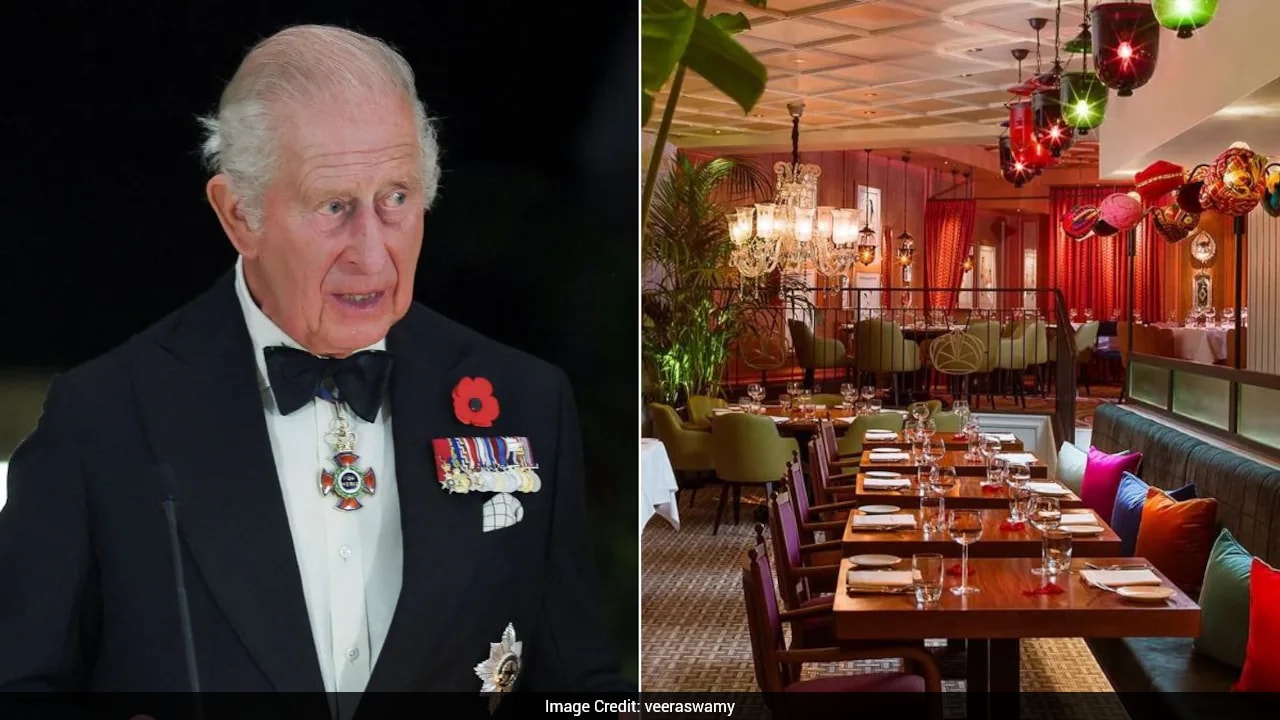
Writing a letter to Buckingham Palace will not pay a single square foot of Regent Street rent.
Yet here we are. Headlines across the British press are weeping over the plight of Veeraswamy, London’s oldest surviving Indian restaurant, opened in 1926 by Edward Palmer. The staff and supporters are appealing directly to King Charles III to intervene as the Crown Estate—the monarch’s own commercial property portfolio—declines to renew the restaurant’s lease in Victory House. The narrative being fed to the public is a tidy little tearjerker: greedy landlords crushing a century-old cultural treasure, and only a benevolent royal decree can save the day.
That story is comforting. It is also complete nonsense.
If you strip away the velvet ropes, the maharaja portraits, and the romanticism of Edwardian Anglo-Indian history, you are left with a brutal commercial reality that hospitality insiders see every single week. Veeraswamy is not dying because the Crown Estate suddenly developed a allergy to curry. It is dying because the restaurant industry has moved a light-year ahead while legacy dining rooms remain trapped in amber, relying on heritage as a substitute for modern unit economics.
The Crown Estate Myth and Commercial Reality
Let us clear up the most glaring misconception right out of the gate. People hear "Crown Estate" and imagine King Charles personally sitting at a mahogany desk, stamping an eviction notice with a royal signet ring.
That is not how the Crown Estate operates. Under the Crown Estate Act 1961, the portfolio is managed by an independent board of commissioners with a statutory duty to maintain and enhance its value and the return obtained from it. The profits go straight to the UK Treasury—which then calculates the Sovereign Grant based on a percentage of those revenues. The King does not micromanage individual retail leases on Regent Street, nor can he legally order commissioners to subsidize a private dining business at below-market rates without triggering a constitutional and financial firestorm.
Even if he could, doing so would be terrible business.
Regent Street is one of the highest-yielding retail and hospitality corridors in Europe. Victory House is undergoing a comprehensive redevelopment to upgrade office space and reconfigure ground-floor access—a standard, multi-million-pound lifecycle upgrade for Grade II listed commercial real estate in central London. When a landlord invests tens of millions into modernizing a historic building, the floorplates change, fire safety compliance shifts, and the rent per square foot resets to reflect current market reality.
I have watched dozens of beloved heritage venues across London, New York, and Paris collapse under the exact same delusion. Owners spend twenty years coasting on a favorable legacy lease, fail to reinvest in a second site or a scalable brand architecture, and then act shocked when the lease expires and the landlord asks for market value. Calling a standard commercial lease expiration a "cultural tragedy" is a PR strategy, not an economic argument.
Why Heritage Restaurants Fail the Unit Economics Test
To understand why Veeraswamy is vulnerable, you have to look at the cold, hard math of fine dining in central London.
Hospitality is a margin business disguised as a glamour business. In a prime West End location, your cost structure is dictated by three relentless pressures:
- Prime Costs (COGS + Labor): In an upscale Indian kitchen where spice blending, marinades, tandoor management, and complex sauces require skilled, multi-station chefs, labor easily eats 38% to 45% of gross revenue. Add food inflation on imported spices, ghee, lamb, and seafood, and your prime cost sits dangerously close to 70%.
- Occupancy Costs: On Regent Street, rent, business rates, and service charges combined routinely demand 12% to 18% of turnover. For a restaurant to stay healthy, occupancy should ideally sit under 10%.
- CapEx Debt: Historic upstairs dining rooms—Veeraswamy sits above street level with an entrance on Swallow Street—suffer from terrible street-level visibility and massive maintenance costs. Updating commercial kitchen extraction and HVAC systems in a listed building costs multiples of what it costs in a modern shell.
When your prime costs are 70% and your occupancy jumps toward 18%, you are left with a razor-thin 12% window to cover utilities, insurance, marketing, credit card processing, and debt service. One bad quarter, one rail strike, or one lease renewal wipes out the entire year's profit.
Legacy restaurants rarely die from a lack of customers. They die from margin compression. They charge luxury prices to cover luxury overhead, yet they lack the table-turn velocity of casual concepts or the high-margin beverage programs of modern bars.
The Lie of "Oldest Means Best"
The public loves an origin story. We are wired to believe that if a business has survived for a hundred years, it must be doing something magical that modern competitors cannot replicate.
In hospitality, longevity is often a sign of real estate luck rather than culinary innovation.
Think about what Indian food in London actually looks like right now. Over the last fifteen years, London has become arguably the most exciting city outside the Indian subcontinent for South Asian gastronomy. Look at the operators who are actually thriving, expanding, and commanding waiting lists:
- Dishoom: Built an empire by turning the nostalgia of Bombay Irani cafés into a high-volume, operationally ruthless machine with an all-day dining model that prints cash from 8:00 AM bacon naan rolls to midnight cocktails.
- Gymkhana & Trishna (JKS Restaurants): Proved that Indian fine dining could earn two Michelin stars while maintaining razor-sharp modern hospitality, aggressive wine pairings, and sleek design that appeals to both Mayfair hedge fund managers and international food tourists.
- Darjeeling Express & Kricket: Showed that regional specificity, open kitchens, and vibrant, unpretentious energy beat stiff white-tablecloth formality every single day of the week.
Compare that energy to the old-guard Anglo-Indian dining rooms. For decades, places like Veeraswamy survived by catering to a specific clientele: tourists ticking off a guidebook bucket list, nostalgic expats, and older diners who equated heavy drapes, formal silver service, and mild, crowd-pleasing curries with sophistication.
That audience is aging out. Younger diners with £150 per head to spend do not want a museum piece. They want electric atmosphere, regional authenticity, bold heat, and a room that feels alive. When a restaurant’s primary selling point is "Mahatma Gandhi’s niece once ate here" or "we opened in 1926," it is admitting that its current food and experience are no longer the main event.
Dismantling the "Cultural Preservation" Trap
Whenever a famous pub, café, or restaurant faces closure, commentators immediately demand heritage protection. They argue that cities lose their soul when historic eateries disappear, and therefore landlords or local councils should freeze rents or block redevelopments to keep them alive.
Let us run a thought experiment to see where that logic leads.
Imagine a scenario where the UK government passes a law tomorrow stating that any restaurant older than 75 years is automatically granted permanent lease renewal at a capped, below-market rent, and landlords are forbidden from redeveloping the building around them. What happens over the next decade?
First, every landlord in London immediately stops signing long-term leases with independent restaurants. Why would a property owner risk letting an independent operator reach year 50 if doing so permanently destroys the capital value of the building? Instead, landlords hand every single ground-floor unit to Pret A Manger, Starbucks, and corporate chains on short, ironclad 10-year leases with zero renewal rights.
Second, protected heritage restaurants become lazy. Without the pressure of market rents forcing them to innovate, improve service, or optimize their menus, quality stagnates. They turn into state-subsidized tourist traps serving mediocre food at inflated prices because they have zero financial incentive to compete.
Cities are living ecosystems, not taxidermy exhibits. The Great Fire of London, Victorian railway expansions, and post-war rebuilding all destroyed beloved taverns and coffee houses—and out of that creative destruction came the very institutions we celebrate today. When you artificially freeze the commercial landscape to save one historical venue, you strangle the next generation of chefs who need that real estate to build the icons of 2126.
What People Actually Get Wrong About Restaurant Closures
If you look at the questions swirling around this story, the public consistently focuses on the wrong culprits.
"Why doesn't the owner just move to a new location?"
Because the brand equity of a legacy restaurant is often fused to its physical address. Move a 100-year-old Regent Street institution three blocks away into a modern glass-and-steel unit in Soho, and half the magic vanishes overnight. You lose the historic dining room, you spend £2 million to £4 million on a new fit-out, and you still have to pay central London rent without the built-in foot traffic of Regent Street. Relocation is rarely a rescue plan; it is usually a slow-motion liquidation.
"Aren't high street landlords destroying British hospitality?"
Some institutional landlords are notoriously inflexible, especially when they value buildings based on theoretical peak rents rather than actual cash flow. However, blaming landlords ignores the bigger structural squeeze: UK business rates, the abolition of tax-free tourist shopping (VAT-free retail), post-Brexit visa restrictions that choked off kitchen talent, and surging energy bills. A landlord lowering rent by 15% does not fix a business model broken by 25% higher labor and ingredient costs.
"Can public petitions or royal appeals ever save a restaurant?"
Almost never. Petitions generate clicks for newspapers and warm feelings for signatories, but signatures do not convert into covers on a Tuesday night in February. Unless a billionaire patron steps in to buy the freehold or underwrite the losses as a vanity project—which happens occasionally in Mayfair, though rarely on Crown Estate land where freeholds are not for sale—emotional campaigns simply delay the inevitable.
The Playbook Legacy Restaurants Refuse to Use
If I were advising the owners of Veeraswamy—MW Eat, the same group behind Chutney Mary and Masala Zone—I would tell them to stop writing letters to Buckingham Palace immediately. The group is run by seasoned operators who know London hospitality inside and out. They know better than anyone that sentimentality is a losing hand.
When a flagship heritage location reaches the end of its lease cycle in a prime redevelopment zone, there are only three smart plays left on the board:
- Monetize the IP, Not the Real Estate: Stop fighting for expensive central London square footage. Take the 1926 Veeraswamy archive—the original menus, the spice blends, the Anglo-Indian recipes, the brand story—and license it. Partner with five-star luxury hotels in Dubai, Singapore, New York, or Mumbai that will gladly pay a management fee and fund the entire CapEx just to put "London’s Oldest Indian Restaurant" on their lobby directory.
- Execute a Controlled Exit on Peak Terms: Close the doors on your own schedule while the dining room is still packed and the press is still romanticizing the centenary. Use the media frenzy to drive a final six-month sell-out run at premium tasting-menu prices, bank the cash, and walk away with your reputation intact rather than bleeding money for three years in a compromised site.
- Downsize to a High-Margin Flagship: If you must stay in London, abandon the sprawling, high-overhead upstairs model. Pivot to a 45-seat, ultra-exclusive, tasting-menu-only counter or intimate salon in Mayfair or Marylebone where average spend per head jumps from £85 to £220, cutting square footage in half while keeping top-line revenue flat.
The Uncomfortable Truth About Backing the Underdog
There is a downside to treating restaurants purely as unsentimental financial machines, and any honest industry veteran will admit it.
When you let pure market economics dictate who survives in central London, the West End steadily homogenizes. Independent character gets replaced by private-equity-backed restaurant groups, sovereign wealth fund trophies, and international chains that can afford to lose money on a flagship location purely for global brand visibility. You lose the weird, quirky, slightly imperfect places that give a neighborhood its texture.
That loss is real. Seeing a century-old dining room go dark hurts the people who cooked there, served there, and celebrated anniversaries there.
Yet pretending that a royal pardon can suspend the laws of commercial real estate does no favors to the staff or the industry. Great restaurants survive because they adapt faster than the city changes around them. They evolve their menus, tighten their operations, and build brands strong enough to survive without a landlord’s charity.
Veeraswamy survived a World War, the Blitz, rationing, and a century of shifting tastes because its founders built something bold for their era. Begging a monarch for a lease extension isn't preserving that legacy—it's admitting the restaurant no longer has the strength to stand on its own.