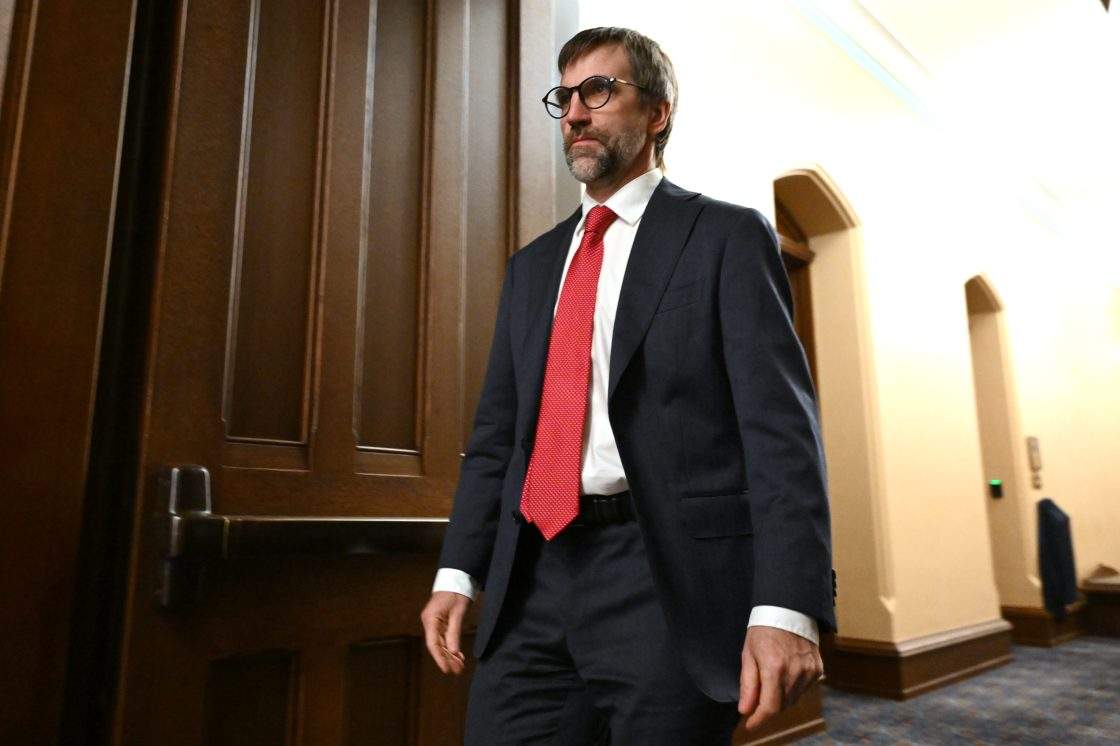
Politics is full of compromises, but every so often, a high-profile figure decides they've had enough. Steven Guilbeault officially vacating his Montreal seat of Laurier—Sainte-Marie marks a turning point for Canadian federal politics.
When a prominent environmentalist-turned-politician walks away from government, it forces everyone to look hard at where the ruling party is heading. Guilbeault didn't just quietly slip out the back door. He made it clear that his departure is rooted in profound disagreements over energy and climate trajectories under Prime Minister Mark Carney.
The Core Conflict Behind the Resignation
You don't spend nearly seven years in federal politics just to quit on a whim. Guilbeault entered the House of Commons in 2019 carrying the heavy expectations of the green movement. As a co-founder of Équiterre and a former Greenpeace activist who famously scaled the CN Tower, his brand was built on uncompromising environmental activism.
Things shifted dramatically when leadership changed. Under Carney, the federal government pivoted toward a pragmatic approach to energy—one that involves striking deals with resource-heavy provinces like Alberta. That shift included memoranda of understanding aimed at approving new bitumen pipelines. For Guilbeault, who had already stepped down from cabinet over these exact compromises, staying in caucus became untenable. He chose principle over party loyalty, leaving a razor-thin margin for the government in the House of Commons.
What Happens to Laurier—Sainte-Marie Now
For the residents of Laurier—Sainte-Marie, this departure triggers an inevitable byelection. Political strategists know that holding this riding won't be easy for the Liberals. Guilbeault's electoral success in the district was deeply personal. Voters there bought into his individual reputation as a climate champion rather than just a party banner.
Finding a replacement with that kind of local notoriety is a massive hurdle. Opposition parties smell blood in the water. They are gearing up to challenge the Liberals in an urban Quebec riding that traditionally demands strong progressive credentials. If the governing party wants to retain the seat, they cannot rely on generic party messaging. They need a candidate who can speak credibly to urban voters worried about climate change.
The Broader Impact on Canadian Energy Policy
This resignation is bigger than one Montreal riding. It exposes a deep ideological split inside the Liberal caucus itself. Reports surfaced that a substantial bloc of Liberal MPs previously expressed unease over the administration's softening environmental posture and energy pacts with western provinces.
When a government tries to balance traditional resource extraction with climate targets, someone usually gets squeezed out. Guilbeault decided he would rather fight from the outside than endorse policies he spent decades opposing.
Expect the upcoming byelection cycle to turn into a referendum on Canada's energy future. Voters will have to decide whether they want pragmatic resource development or uncompromising green activism. Guilbeault is betting that his voice carries more weight outside the parliamentary machine.
Watch how other progressive MPs react in the coming months. If more internal dissent follows, the government's path forward on national energy projects is going to get a lot rockier.
The era of uneasy internal truces is over.
Steven Guilbeault announces he will resign from Liberals during House of Commons address
This video captures the speech where the former minister addressed the House of Commons regarding his political future.