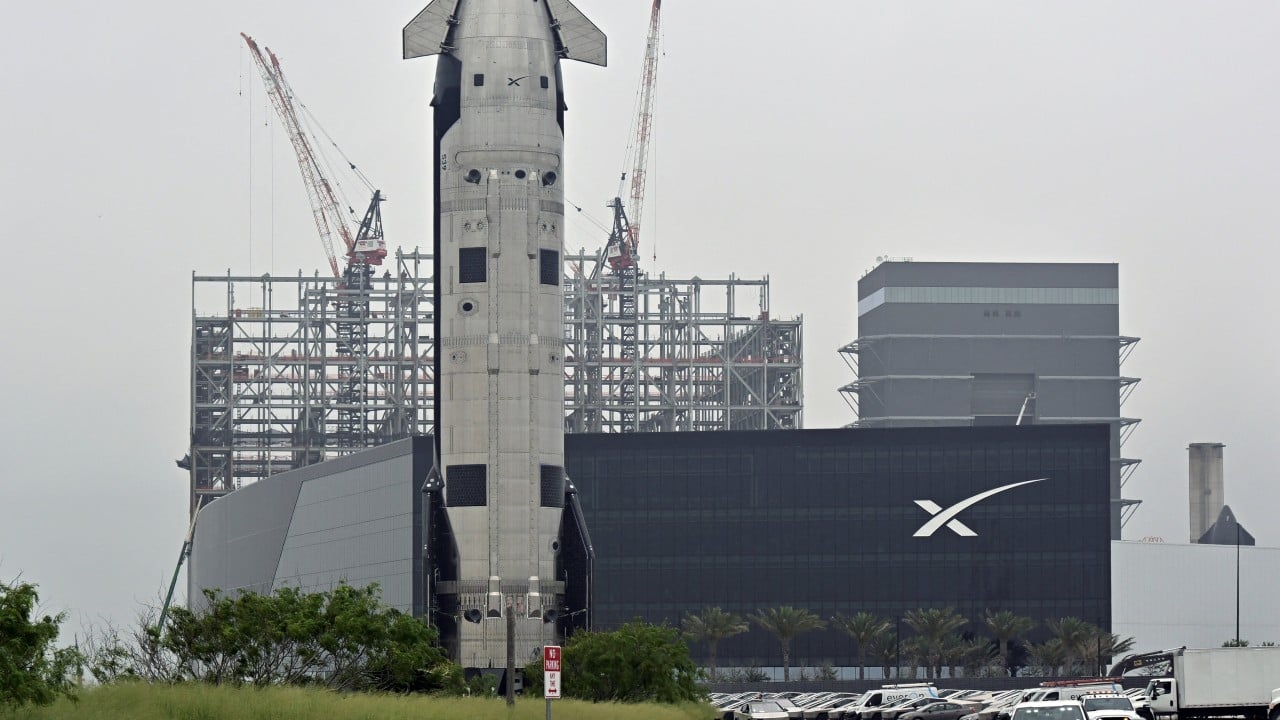
Every armchair orbital mechanic on the internet just discovered what an anti-satellite kinetic kill looks like and decided to apply it to a stainless steel grain silo. The lazy consensus dominating aerospace Twitter right now is that a single orbital Starship anomaly will turn low Earth orbit into a localized shooting gallery, throwing up more shrapnel than a Cold War weapons test. It is a neat, terrifying headline designed to feed the doom algorithm. It is also fundamentally illiterate regarding physics, orbital decay, and how massive structures actually disintegrate under thermal and mechanical stress.
I have watched engineers lose entire telemetry links while managing high-altitude vehicle breakups. I have seen the telemetry logs, and I have watched the debris models turn out completely wrong because the analysts assumed a rocket explodes like a glass lightbulb. Spoiler: it does not. Recently making waves lately: Why Putting Counter Drone Systems On Warships Is A Desperate Illusion.
Let us dismantle the panic.
The Anti-Satellite Fallacy Additional information regarding the matter are explored by TechCrunch.
Comparing a Starship orbital breakup to an intentional anti-satellite missile intercept requires a profound misunderstanding of mass distribution and relative velocity. When an ASAT test destroys a defunct satellite, you are taking a fully fueled, high-density, heavily reinforced object packed with reaction wheels, solar panels, and beryllium optics, and smashing it with a kinetic kill vehicle traveling at ten kilometers per second. The resulting hyper-velocity impact pulverizes the target into hundreds of thousands of microscopic, high-energy shrapnel needles that inherit the massive relative velocity delta of the impact.
Starship operates under an entirely different set of rules. If a vehicle suffers a catastrophic failure in orbit, it is almost never because something punched a hole through it at Mach 25. It is because of a propellant tank overpressure, a manifold rupture, or an avionics flatline during a burn.
Mass Distribution and Structural Realities
When a pressurized thin-walled pressure vessel ruptures on orbit without an external hyper-velocity impact, the energy release is thermodynamic, not kinetic.
- The Hull: Starship is primarily built from 301 stainless steel sheets. Unlike brittle carbon composites or aluminum-lithium alloys that shatter into microscopic splinters under stress, stainless steel has high elongation and ductility. It bends, tears, and stretches before it snaps.
- The Scale: The sheer size of the vehicle works against the "cloud of shrapnel" narrative. A wet Starship weighs around 1,200 to 1,300 metric tons at launch, but an orbital dry ship or tanker variant carries massive, contiguous volumes of empty structural mass. Big things break into fewer, bigger pieces.
- Ballistic Coefficients: A massive chunk of steel tumbling through the exosphere has a radically different area-to-mass ratio than a tiny circuit board or a titanium bolt.
Imagine a scenario where a mid-flight anomaly rips the forward payload bay off an orbital Starship. You do not get a uniform cloud of 500,000 trackable fragments. You get three or four massive, highly dense structural rings, a few heavy header tanks, and some insulation blankets.
The Altitude Advantage
Orbital lifetime is a function of ballistic coefficient and altitude. The critics love to talk about debris persistence as if every orbit is geostationary graveyard territory.
SpaceX operates Starship in low Earth orbit. The deployment altitudes for initial testing and early operational flights are notoriously low, usually sitting between 200 and 350 kilometers. At these altitudes, residual atmospheric drag acts as an aggressive celestial broom.
A tiny fragment from an ASAT test at 800 kilometers can stay aloft for a century. A massive, low-ballistic-coefficient hunk of stainless steel structural plate dropped at 250 kilometers encounters an entirely different atmosphere. Even in the tenuous exosphere, the atmospheric density is enough to drag heavy, low-altitude debris down into a fiery re-entry within weeks, not decades.
The orbital mechanics crowd loves to ignore drag decay when it ruins a good apocalyptic narrative. If a Starship breaks up during its initial insertion phase or early orbital checkout, the orbital lifetime of the resulting debris field is measured in days or months, not generations.
The Real Risk Nobody Wants to Talk About
While the catastrophic orbital explosion scenario is a red herring, the industry is ignoring the actual hazard: unburned operational hardware left in eccentric orbits due to botched de-orbit burns.
The danger isn't that the ship blows up into a million invisible needles. The danger is that a guidance system fails during the terminal de-orbit burn, leaving a 100-ton steel cylinder in a decaying, uncontrolled orbit where tracking networks lose it for three days before it punches a hole through the Indian Ocean. That is a navigation and public safety crisis, not a Kessler Syndrome trigger.
We need to stop evaluating next-generation heavy-lift architectures through the lens of Cold War military doctrines. Starship is a ship, not a cluster bomb. Treat it like one.
Stop designing orbital policy around worst-case sci-fi fantasies and start looking at the actual thermal-mechanical limits of stainless steel under atmospheric re-entry friction.