The ash that fell on Pacific Palisades in January 2025 did not care about Nielsen ratings. When the wildfire swept through the canyon, consuming multimillion-dollar stucco sanctuaries and ancient chapels of coastal privilege alike, it reduced the home of Spencer and Heidi Pratt to the same gray soot as everyone else’s.
For two decades, Spencer Pratt was the man America loved to watch fail. He was the carefully sculpted villain of MTV’s The Hills, a flesh-and-blood cartoon of mid-2000s narcissism who turned manipulation into an art form and a paycheck. We watched him smirk behind designer sunglasses. We watched him alienate friends, hoard healing crystals, and treat the concept of reality as a soft suggestion.
But when the smoke cleared over the scorched earth of his neighborhood, the performance art stopped. Or, perhaps more accurately, it evolved.
Exactly one year after the flames took his house, Pratt stood before a crowd and announced his candidacy for Mayor of Los Angeles.
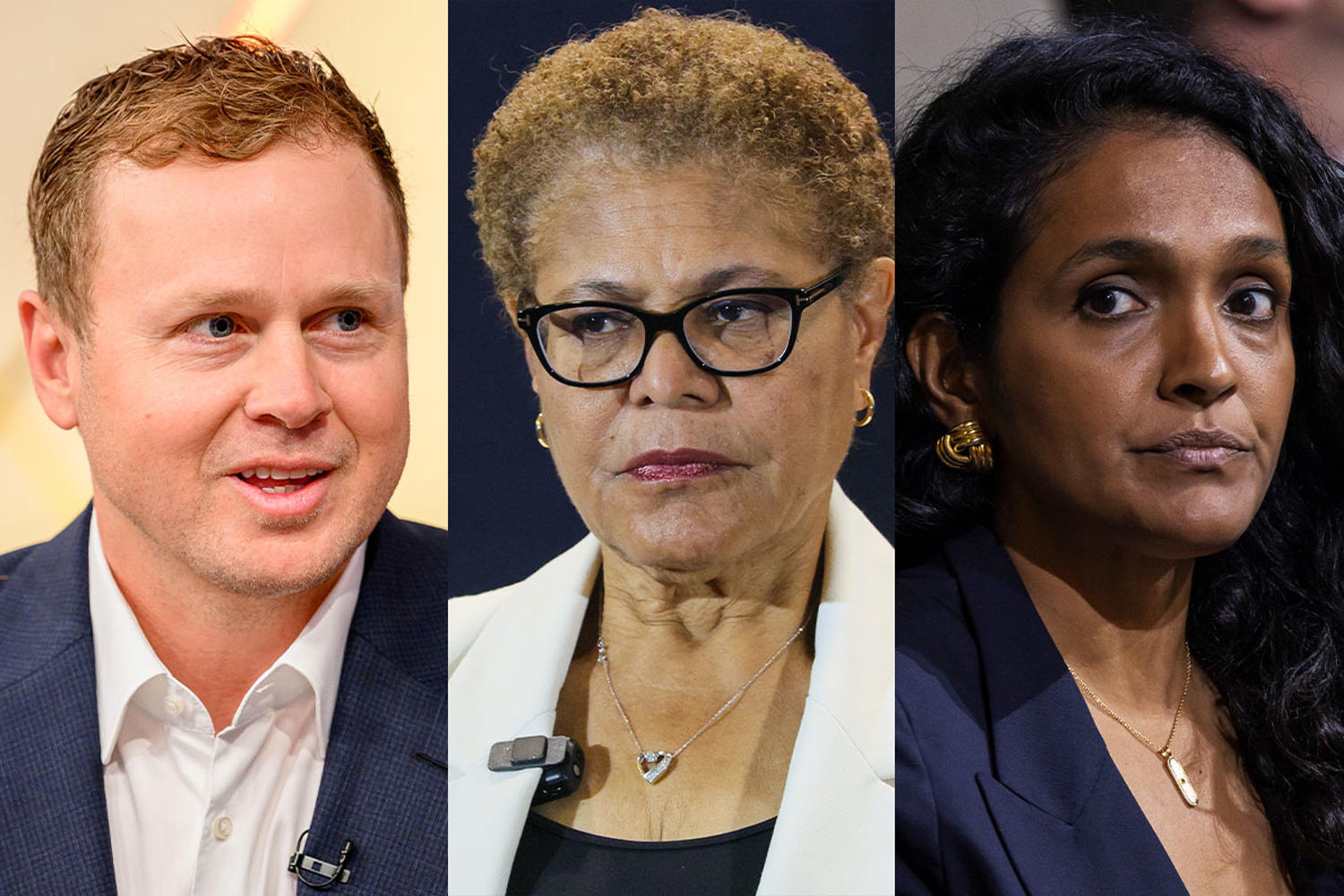
It is easy to laugh. The instinct to dismiss him is a reflex built on twenty years of pop-culture programming. But look closer at the numbers. As the June 2, 2026 primary approaches, the joke has hardened into an undeniable, terrifyingly effective political reality. A May Cygnal poll has the incumbent progressive Mayor, Karen Bass, holding a fragile 25 percent of likely voters. Slapping at her heels in a statistical dead heat for second place is not a seasoned civic leader or a polished technocrat.
It is Spencer Pratt, pulling 22 percent.
The standard political playbook dictates that a registered Republican has no business running a competitive race in a metropolis where the GOP commands a meager 15 percent of the electorate. Los Angeles is a city painted in deep, structural blue. Yet, billionaire entertainment mogul Haim Saban and Universal Music Group chief Lucian Grainge have cut checks for Pratt's campaign. David Foster hosted his fundraiser. Jeanie Buss is in his corner.
How does a man who once symbolized the absolute nadir of reality-television vacuity find himself within striking distance of running the second-largest city in the United States?
To understand the phenomenon, you have to look past the policy white papers and stand on the cracked asphalt of a city that feels, to many of its residents, like it is coming apart at the seams.
Imagine waking up every morning to a neighborhood that looks less like the postcard you were sold and more like an untended waiting room. For the average Angeleno, the crises of the city are not abstract debate topics. They are tactile. They are the smell of burning garbage on a freeway off-ramp. They are the daily, heartbreaking obstacle course of navigating sidewalks lined with nylon tents, where the unhoused suffer in plain sight while billions of tax dollars vanish into the opaque machinery of City Hall.
Incumbent Karen Bass asks for patience. She argues that the foundation has been laid, that the tents will soon clear, and that the city's dynamic spirit will return if voters just trust the process.
But patience is a luxury that burns up quickly when your house is on fire.
Pratt’s entire campaign is built on the weaponization of that exhaustion. He does not speak in the bloodless jargon of the urban planner. He speaks in the raw, visceral language of the aggrieved survivor. He frames the city’s leadership not as well-meaning public servants facing a complex crisis, but as structural arsonists.
Consider his debate performance in May. Commentators expected a train wreck. They braced for the erratic outbursts of a former tabloid fixture. Instead, they got something far more dangerous: a disciplined, sharp-tongued populist who spoke with the clarity of a man who knows exactly how to hold an audience's attention. He bypassed national tribalism entirely. He told the audience that he doesn't care about red or blue; he cares about turning the streetlights back on, locking up the drivers who turn intersections into smoking drag strips during street takeovers, and stopping what he calls the literal robbery of public funds by a bloated bureaucracy.
"Business as usual is a death sentence for Los Angeles," he says.
It is a line designed to hit a nerve. And it hits it perfectly because it taps into a profound sense of betrayal felt by everyday citizens who feel abandoned by the progressive establishment. When Pratt calls the city’s current state a dystopian nightmare, he isn't just offering a policy critique. He is offering a mirror to the fear of the voter who no longer walks their dog after dark.
The traditional media tries to unpack his campaign by comparing it to the standard populist blueprint. They point out the endorsements from MAGA figures like Rick Scott and Richard Grenell. They analyze his viral campaign videos, including an uncommissioned, AI-generated masterpiece that portrays Pratt as Batman fighting a rogue's gallery of local politicians like Bass and Gavin Newsom.
The pundits worry about the ethics of using artificial intelligence to turn political rivals into cartoon supervillains. They debate the mechanics of the top-two runoff system, wondering if Bass's campaign is secretly funding ads to boost Pratt's profile, gambling that he would be an easier opponent to crush in November than a true progressive rival like Nithya Raman.
But this analytical framing misses the deeper truth of our cultural moment.
Pratt is not a glitch in the system. He is its natural conclusion.
We live in an era where the boundary between entertainment and governance has completely dissolved. We spent decades treating politics as a serious, sober profession and reality television as a trashy distraction. We forgot that both are ultimately industries driven by the same fuel: human attention.
A traditional politician spends a lifetime learning how to navigate committees, draft legislation, and build coalitions. But in a fractured media ecosystem where the average voter's attention span is measured in seconds, those skills are invisible. They don't show up on a social media feed. They don't evoke an emotional response.
Pratt understands attention the way a master blacksmith understands iron. He knows how to heat it, shape it, and strike it for maximum impact. He knows that a video of him standing outside Mayor Bass's house, demanding accountability for a mismanaged fire recovery, will get more views and trigger more raw emotion than a twenty-page policy report on affordable housing incentives.
This is the uncomfortable truth that makes his campaign so terrifying to the political establishment. Pratt is demonstrating that the skills required to survive twenty years in the brutal, cutthroat world of Hollywood notoriety are entirely transferable to modern electoral politics. He knows how to handle a hit piece. When CBS News ran a segment using old clips from The Hills to discredit him, he didn't issue a sterile press release. He simply declared he was "done" with the network, turning the media's attack into proof of his anti-establishment credentials.
There is a deep, unsettling vulnerability in admitting that a former reality villain might actually have a point. It forces us to confront the failure of the experts. If the highly educated, deeply experienced political class has spent decades running Los Angeles and left it with a multi-billion-dollar homelessness crisis and infrastructure that buckles under the weight of its own neglect, why not hire the guy who knows how to run a production?
That is the question humming through the quiet, wealthy enclaves of the Westside and the working-class neighborhoods of the Valley alike. It is a vote born of spite, born of fear, born of a desperate desire to see someone crack the knuckles of a political establishment that has grown comfortable in its dominance.
But the danger of hiring a showman to fix a broken house is that a showman's primary loyalty is always to the performance.
Pratt has already stated that if he loses this election, he will leave Los Angeles entirely. It is a telling admission. For a lifelong resident, a city is a home, an interconnected web of neighborhoods and people worth fighting for regardless of who holds the gavel. For a performer, a city can sometimes look like a stage. If the audience stops clapping, or if they refuse to hand over the leading role, you don't stay to clean up the theater. You pack up your costumes and look for the next venue.
The primary on June 2 will not just be a vote for the next mayor of Los Angeles. It will be a referendum on what we value more: the slow, frustrating, often invisible work of systemic repair, or the satisfying, immediate catharsis of a well-delivered monologue.
As the sun sets over the Pacific, casting a long, golden light across a city still scarred by fire and divided by fear, the billboards along Sunset Boulevard continue to glow. They sell stories. They promise reinvention. And on the ballot next week, Angelenos will have to decide if they want to build a real city, or if they are finally ready to let the villain host the show.