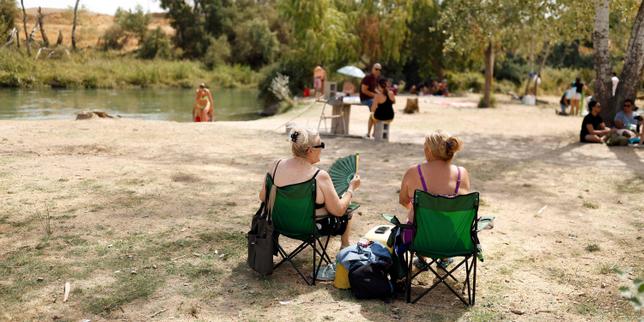
September is supposed to feel like an exhale. School starts, nights cool off, and autumn gently takes over.
In September 2026, Spain didn't get that exhale. According to Spain's State Meteorological Agency, known as AEMET, peninsular Spain recorded an average temperature of 22.5 °C—a staggering 3.4 °C above the 1991–2020 September normal. That made it the hottest September since national records began in 1961, blowing past the old record from 1987 by a massive 0.7 °C.
Honestly, a 0.7 °C jump on a countrywide monthly average is huge. In climate terms, beating a decades-old monthly record by that margin doesn't happen by accident. Even wilder: the average September temperature in 2026 actually beat the climate average of a typical Spanish summer. Autumn showed up late, if it showed up at all.
Why Spain’s Record September Heat Breaks Old Assumptions
People tend to treat late-season heat as a fluke. A weird week, a stalled high-pressure system, bad luck.
That's not what happened in September 2026. Peninsular Spain and the Balearic Islands got hit by a full heatwave right at the start of the month, running from September 2 to 7. After that, two more warm spells rolled through without officially meeting every single heatwave threshold, yet still pushed daytime highs way past normal. Over in the Canary Islands, AEMET counted three separate heatwaves during the same month.
Daytime numbers looked like mid-July rather than early autumn. On September 3, Morón de la Frontera hit 44.4 °C, Seville's airport reached 44 °C, and Córdoba's airport logged 43.5 °C. Granada's airport touched 42 °C the next day.
When you've spent enough time tracking weather patterns in southern Europe, one thing stands out immediately: brutal heat doesn't just tax air conditioners or ruin afternoon plans. It keeps buildings, soil, and coastal waters hot well into the night. When minimum temperatures stay elevated, human bodies lose their primary overnight recovery window. Older adults, outdoor workers, and people with heart or lung conditions feel that strain first.
Bigger Than One Country
Spain wasn't sitting on an isolated bubble. Data from the Copernicus Climate Change Service shows September 2026 was the second-warmest September globally in the ERA5 dataset—1.63 °C above estimated pre-industrial levels—and tied with September 2023 as the warmest September on record for western Europe.
Across neighboring France, Météo-France reported the second-hottest September on record, with daytime highs averaging 4.5 °C above normal and rainfall roughly 70% below average. Meanwhile, ocean heat kept piling up. Copernicus noted record-high September sea surface temperatures for extra-polar oceans overall, along with record September ocean warmth along Europe's Atlantic coast and the western Mediterranean, plus a surging El Niño in the tropical Pacific.
Warm seas near land act like a radiator. They keep coastal air mild and humid, making late-summer heat stick around longer than old-school calendars expect.
Drought and Sudden Downpours Make a Messy Mix
Extreme heat rarely travels alone in dry Mediterranean weather. Peninsular Spain averaged just 15.9 liters per square meter of rain in September 2026—about 36% of normal rainfall—making it the third-driest September of the 21st century and the seventh-driest since 1961.
A common mistake people make is assuming a dry month means zero rain anywhere. Not quite. Dry soil and superheated air can set the stage for sharp, localized downpours later in the month. When heavy rain slams into baked, compacted ground, water runs off fast instead of soaking in, creating flash-flood headaches even inside a broad dry spell.
Across wider parts of western and central Europe, low river flows and dry soils continued to squeeze agriculture, water supplies, and inland transport. Farmers planning autumn planting or harvesting don't just need rain eventually—they need steady, predictable moisture at the right time.
| Metric | September 2026 Value | What It Means |
|---|---|---|
| Peninsular Spain mean temperature | 22.5 °C (+3.4 °C vs. 1991–2020) | Hottest September since 1961; beats 1987 by 0.7 °C |
| Peninsular Spain rainfall | 15.9 L/m² (~36% of normal) | 3rd driest September of the 21st century |
| Global surface air anomaly | +1.63 °C vs. 1850–1900 | 2nd warmest September globally in ERA5 |
| Extra-polar ocean SST (60°S–60°N) | 21.05 °C | Highest September sea surface average on record |
What Most People Miss About Climate Records
Whenever a single month shatters a record, two bad reactions show up right away. One group shrugs and says, "Weather fluctuates, chill out." The other group treats every hot day as proof that every single weather event is 100% deterministic.
Both miss the real nuance. Natural variability—like a heat dome or an intensifying El Niño—still moves the atmosphere around. What's changed is the baseline those swings ride on. Starting from a warmer baseline makes extreme heat thresholds easier to cross, push higher, and last longer.
There's also a practical limit to long-range forecasts. Meteorologists can spot large-scale patterns like ocean anomalies or blocking highs, yet exact local impacts—whether a specific valley gets a localized storm or stays bone-dry—still depend on short-term mesoscale dynamics. Anyone claiming pinpoint certainty months ahead is selling more than the science supports.
Practical Moves When Late-Summer Heat Lingers
If you live in Spain, travel there in early autumn, or manage work around heat and water, treating September as guaranteed mild weather is basically a trap now.
- Shift outdoor exertion early: Schedule runs, hikes, site inspections, or agricultural tasks for early morning rather than late afternoon, and watch for warm nights that prevent recovery.
- Check municipal and official alerts daily: Rely on official warnings from AEMET or local civil protection rather than social media temperature screenshots, especially when heat shifts toward sudden convective rain.
- Rethink travel and home cooling assumptions: Don't assume September rentals or older buildings won't need cooling just because summer officially ended on paper.
- Track water rules early: If you garden, farm, or run operations tied to local reservoirs, monitor regional drought and water-use restrictions ahead of peak demand.
Start by checking your local daily high and overnight low temperatures before planning outdoor hours or autumn trips.


