The mechanics of state-sponsored economic warfare are shifting from passive financial containment to active asset redistribution. The U.S. Department of the Treasury’s directive to evaluate the reallocation of Iranian sovereign wealth to Gulf Cooperation Council (GCC) states establishes a radical precedent in international economic law. Rather than merely freezing assets to restrict liquidity, the proposed policy framework treats sovereign holdings as a dynamic indemnity pool to offset the externalities of kinetic conflict.
This strategy changes the financial calculus of modern warfare. It introduces an explicit cost function to regional aggression, attempting to balance geopolitical risk through asset conversion. To understand the operational and economic viability of this mechanism, the initiative must be broken down into its three core structural pillars: technical asset classification, structural legal bottlenecks, and the inevitable strategic retaliation feedback loop.
The Three Pillars of the Treasury Strategy
The U.S. Treasury, under Secretary Scott Bessent, is moving beyond standard economic sanctions toward an active legal and financial strategy. The policy operates across three distinct structural dimensions.
1. The Valuation and Taxonomy of Targeted Capital
Sovereign assets are not uniform; their liquidity, jurisdiction, and legal structure dictate their utility for reconstruction funding. The Treasury’s assessment must separate assets into distinct tiers based on immediate availability and legal vulnerability.
- Tier 1: Liquid Sovereign Capital. This category comprises approximately $24 billion to $100 billion in frozen central bank reserves and fiat deposits held across global financial institutions. These funds are highly liquid but are heavily bound by international banking clearing protocols.
- Tier 2: Sovereign Hard Assets. This includes physical property, seized maritime vessels (such as commercial oil tankers), and state-owned commercial enterprise equity. Liquidating these assets requires complex judicial processes and introduces significant market valuation discounts.
- Tier 3: Intercepted Illicit Flows. This involves real-time interdiction of sanctioned commodity exports, primarily dark-fleet crude oil shipments transiting international waters.
2. Legal Jurisdictions and Statutory Leverage
Executing an asset transfer of this magnitude requires a shift from domestic executive power to international statutory frameworks. The current legal architecture relies on specific, highly debated legal mechanisms.
- Domestic Extraordinary Powers: Under the International Emergency Economic Powers Act (IEEPA), the U.S. Executive Branch possesses the authority to block transactions and freeze foreign assets during declared national emergencies. However, transferring title of foreign sovereign property to a third party during a non-declared war pushes the outer boundary of traditional IEEPA interpretations.
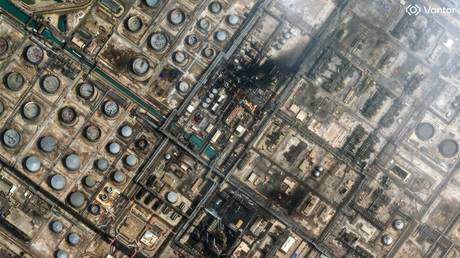
- The REPO Act Precedent: The legislative framework established by the Rebuilding Economic Prosperity and Opportunity (REPO) for Ukrainians Act created a statutory mechanism to seize and repurpose sovereign assets. Applying this framework to the Middle East requires establishing a direct causal link between Iranian state action and the specific infrastructure damages sustained by GCC states like Kuwait and Bahrain.
- Countermeasures Doctrine under International Law: Under international law, a state may take proportionate, reversible actions that would otherwise violate international obligations if those actions are designed to compel another state to return to legal compliance. Labeling a permanent asset transfer as a valid "countermeasure" remains highly controversial among international legal scholars.
3. The Reconstruction Cost Function
The deployment of these assets is governed by an economic model that balances the direct costs of physical damage against the broader operational costs of regional defense infrastructure.
$$\text{Total Reconstruction Liability} = C_{\text{infra}} + C_{\text{system}} + \alpha \cdot R_{\text{risk}}$$
Where $C_{\text{infra}}$ represents the direct capital expenditure required to rebuild physical infrastructure damaged by missile and drone strikes. $C_{\text{system}}$ covers the operational cost of continuous air defense deployment, such as the deployment of Patriot and Terminal High Altitude Area Defense (THAAD) interceptors. The term $\alpha \cdot R_{\text{risk}}$ integrates a premium for ongoing maritime transit disruptions through the Strait of Hormuz, calculating the broader macroeconomic friction inflicted on regional commerce.
Structural Bottlenecks and Legal Vulnerabilities
Transitioning from a theoretical policy to an operational asset transfer reveals deep systemic frictions. The primary vulnerability lies in the sovereign immunity doctrine, which underpins the international financial system. Central bank assets are traditionally granted absolute immunity from execution under the Foreign Sovereign Immunities Act (FSIA) and parallel international statutes.
If the United States unilaterally reallocates these funds to third-party states, it risks damaging the perceived legal stability of Western financial clearing hubs. This action could accelerate structural de-dollarization trends among non-aligned economies.
Furthermore, the physical tracking and verification of damages introduce a significant accounting challenge. The Treasury must accurately match specific Iranian kinetic actions with quantifiable economic damage in countries like Kuwait and Bahrain. This calculation must separate the immediate destruction of property from the broader, ongoing macroeconomic losses caused by regional instability. This measurement process is vulnerable to inflation and contested data points.
The Retaliation Feedback Loop
The proposed asset transfer plan alters the mechanics of ongoing diplomatic negotiations. Rather than acting as a simple economic penalty, it introduces a highly volatile escalatory dynamic into the regional security landscape.
[U.S. Asset Seizure/Transfer Plan]
              │
              ▼
[Deadlock of Peace Negotiations ($24B Release Condition)]
              │
              ▼
[Kinetic Escalation by Regional Actors]
              │
              ▼
[Increased Infrastructure Damage to GCC States]
              │
              ▼
[Higher Financial Demand on Seized Asset Pool]
This structural cycle exposes the primary limitation of using asset transfers as a tool of statecraft. The policy is designed to mitigate the financial burden of conflict, but its implementation guarantees the breakdown of diplomatic alternatives. Iran’s negotiating framework treats the release of its $24 billion frozen capital pool as a baseline prerequisite for any durable ceasefire.
Converting these funds into a permanent compensation pool for GCC states removes Tehran's primary financial incentive to remain at the negotiating table. The removal of this diplomatic pathway directly causes the kinetic feedback loop to accelerate.
Defensive Economics and Strategic Allocation
To counter this cycle, the deployment of seized capital must prioritize long-term structural resilience over simple retrospective compensation. Allocating funds exclusively to clear rubble yields diminishing returns if the underlying infrastructure remains vulnerable to subsequent strikes.
A high-authority deployment strategy must split the captured capital into two distinct, functional accounts.
- The Kinetic Resilience Fund (65% Allocation): This fund finances the immediate co-development of integrated regional air defense architectures. It shifts the financial burden of continuous interceptor procurement directly onto the adversary's balance sheet.
- The Sovereign Indefinite Indemnity Trust (35% Allocation): This capital pool operates as a backstop to underwrite war-risk insurance premiums for commercial maritime traffic transiting the Gulf. This mechanism addresses the structural economic damage caused by shipping disruptions without requiring direct, ongoing taxpayer interventions.
This capital reallocation strategy transforms punitive financial tools into a functional deterrent framework. By linking the volume of adversary asset liquidation directly to the scale of incoming infrastructure damage, the policy creates a clear economic penalty for continued regional escalation.