The heat in the Limpopo province does not just bake the earth. It settles over the bushveld like a heavy, suffocating blanket, silencing the wildlife and turning the air into a shimmering haze. On a vast, secluded farm named Phala Phala, the quiet is expensive. Here, rare Sudanese Ankole cattle—beasts with sweeping, majestic horns worth small fortunes—graze under the watchful eyes of private security.
It is an estate built on the promise of absolute privacy. Yet, a few years ago, this remote sanctuary became the epicenter of a political earthquake that still rattles the foundations of South African democracy.
Imagine the sheer absurdity of the central image. Millions of dollars in crisp, foreign banknotes, stuffed entirely out of sight. Not in a Swiss bank account. Not in a high-tech subterranean vault. They were tucked neatly inside the cushions of a leather sofa, hidden away in a spare bedroom of a president’s private ranch.
When the news first broke, it sounded like a badly written satire of African political corruption. But for the citizens of South Africa, the laughter evaporated instantly. It was replaced by a familiar, exhausting ache.
This is not just a story about a burglary or a high-stakes political cover-up. It is a glimpse into the profound crisis of faith gripping a nation that was promised something entirely different.
The Night the Cushions Were Stripped
The trouble began in the dead of night in February 2020. While the world was beginning to panic about a novel coronavirus, a group of break-in artists slipped past the sophisticated security perimeters of the Phala Phala estate. They knew exactly what they were looking for.
They did not steal the televisions or the artwork. They went straight for the furniture.
When they ripped open the leather casing of that now-infamous sofa, they pulled out stashes of US dollars. The exact amount remains a fiercely debated number, fluctuating between hundreds of thousands and several million, depending on who is doing the telling. The thieves took the cash and vanished into the night, leaving behind an empty piece of furniture and a ticking political timebomb.
Here is the twist that turned a simple robbery into a national scandal: the police were never officially called.
No sirens disrupted the Limpopo night. No forensic teams combed the room for fingerprints. Instead, the president’s private head of security quietly initiated a covert, off-the-books investigation. The suspects were tracked down, interrogated, and allegedly paid off to keep their mouths shut. The stolen cash was gone, but the secret was preserved.
Until it wasn’t.
Two years later, a former spy chief with his own political axes to grind walked into a police station and dropped the details of the burglary like a stick of dynamite. The public learned all at once about the money, the sofa, and the frantic, hushed operation to cover it all up.
The Defense of the Ankole Cattle
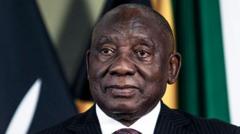
When the scandal finally erupted into the light, President Cyril Ramaphosa faced a wall of furious questions. Where did the money come from? Why was it hidden in furniture? Why was the theft kept secret from the public and the tax authorities?
The official explanation arrived with a straight face. The cash, the presidency claimed, was entirely legitimate. It was the proceeds from a private sale of those prized Ankole cattle. A wealthy businessman from the United Arab Emirates had visited the farm, fallen in love with the livestock, and handed over $580,000 in cash to secure the purchase. Because the farm manager did not know what else to do with that much foreign currency before it could be banked, he chose the safest place he could think of.
The sofa.
To understand why this explanation felt like salt in an open wound for ordinary South Africans, you have to look at the daily reality outside the gates of Phala Phala.
Consider a typical family in the townships of Johannesburg or Cape Town. They live in a world governed by a system known as load-shedding. For hours every single day, the electricity grid fails. The lights go out. Refrigerators defrost, rotting the food inside. Small businesses, the lifeblood of communities, go bankrupt because they cannot afford diesel generators. The youth unemployment rate hovers at agonizing heights, well over fifty percent.
For these citizens, the financial system is a strict, unforgiving master. If a street vendor deposits a few extra rands into their bank account, they face bureaucratic scrutiny. If a nurse falls behind on her taxes, the penalties are swift and severe.
Then, they look at the news. They see their leader, a man who built his political reputation as a wealthy, sophisticated reformer, explaining that half a million US dollars was just casually resting inside his living room furniture like loose change.
The contrast is staggering. It breeds a deep, toxic cynicism. It whispers to the populace that there are two sets of rules in this world: one for the people who pay for the country, and another for the people who run it.
The Ghost of State Capture
To truly comprehend the weight of the Phala Phala saga, you have to look backward. South Africa is a country traumatized by its recent political history. For nearly a decade under previous leadership, the nation endured an era known as "State Capture."
During those years, public institutions were systematically hollowed out. The state rail company, the power utility, the tax agencies—all were plundered by private interests in collusion with corrupt officials. Billions of rands vanished.
When Ramaphosa ascended to the presidency, he did so on a wave of profound relief. He was the man who promised to clean up the mess. He was the billionaire businessman who didn’t need to steal. He was the constitutional architect who would restore integrity to the Union Buildings.
Phala Phala shattered that illusion.
Even if the money was completely legal, even if the cattle sale was genuine, the optics were devastating. The scandal proved that even the self-proclaimed cleaner of the house was operating in the shadows, utilizing private security forces to handle personal problems away from the eyes of the law.
The political fallout was swift and merciless. An independent parliamentary panel concluded that there was prima facie evidence the president may have violated the constitution and his oath of office. For a few tense days in late 2022, rumors swirled that Ramaphosa was on the verge of resigning. The rand plummeted. The nation held its breath, wondering if it was about to slide back into political chaos.
But politics is a game of numbers and leverage. Ramaphosa’s allies rallied around him. The governing African National Congress used its parliamentary majority to vote down the report, shielding the president from an impeachment inquiry. The institutional shield held. The president stayed in power.
Yet, a legal victory is not the same as a moral clearing.
The Long Shadow
The true damage of the cash-in-the-sofa scandal cannot be measured in exchange rates or parliamentary votes. It is measured in the quiet erosion of hope.
Walk through any South African city today and talk to the people. The enthusiasm that defined the birth of the rainbow nation has been replaced by a hardened, survivalist pragmatism. People no longer expect their leaders to be saints; they just wish they would keep the lights on.
The Phala Phala saga refuses to die because it serves as a permanent monument to this disappointment. Every time a politician speaks about fighting corruption, the ghost of the Limpopo farm hovers over the podium. Every time the tax authority demands compliance from struggling citizens, the memory of the undeclared foreign currency returns.
The money has never been fully recovered. The sofa has likely been replaced. The Ankole cattle still roam the beautiful, sun-drenched hills of Limpopo, oblivious to the chaos their value unleashed.
Meanwhile, the nation watches and waits. The citizens continue to navigate the dark hours of power cuts and the grinding daily struggle of an economy under siege. They carry the burden of a system that protects its apex predators while leaving the rest to forage in the dimming light.
The presidency moves forward, but the trust remains buried deep in the cushions of the past, broken and impossibly far out of reach.