The Smell of Pine and Ash
Ash falls like grey snow over the terraced olive groves of western Spain. It settles gently on the leaves, clinging to the morning dew before the sun burns away every trace of moisture.
If you stand on the ridge overlooking the valley, the air does not taste like the crisp resin of pine. It tastes like soot. It sits heavy in the back of your throat, dry and acrid, a quiet reminder that the mountain burning twenty miles away is coming closer. Learn more on a related issue: this related article.
Every summer, Europe’s Mediterranean fringe prepares for fire. It is an old dance. But lately, the rhythm has broken. The intervals between the heatwaves are shrinking, leaving the land brittle, defenseless, and primed to ignite at the smallest spark.
When the Thermometer Stops Making Sense
Consider a farmer named Mateo. He has worked the same stretch of terra cotta soil near the Portuguese border for over forty years. He knows the wind. He knows when the summer storm clouds are carrying rain and when they are carrying dry lightning—the kind that strikes a solitary oak on a dry ridge and sets the grass ablaze before the thunder even reaches the valley floor. Further reporting by NBC News highlights similar perspectives on the subject.
Lately, Mateo spends his afternoons watching the sky with a specific kind of dread. The air does not cool down when the sun sets anymore.
During a typical heatwave, temperatures spike during the day and dip at night, allowing vegetation to recover a fraction of its lost moisture. When night temperatures remain stalled near eighty degrees Fahrenheit, the forests never breathe. The timber cures where it stands.
- Atmospheric pressure locks a dome of scorching air directly over the Iberian Peninsula.
- Soil moisture levels plummet to historic lows within days.
- Wind gusts accelerate across parched terrain, carrying embers miles ahead of the main fire line.
It is not just a hot week. It is a compounding crisis where each scorching afternoon multiplies the danger of the next.
The Fire That Moves Like Water
When a wildfire breaches a certain threshold, it stops behaving like a normal fire. It creates its own weather system.
Pyrocumulus clouds rise thousands of feet into the atmosphere, churning black and purple against the blue sky. Inside those columns, superheated air rushes upward, drawing in ambient air from the surrounding valleys with violent force. The result is a erratic gale that blows in every direction at once. Firefighters on the ground find themselves surrounded before the alarm can even be sounded.
Panic in these moments is silent. It is the sound of an engine turning over three times before catching. It is the quick packing of a single suitcase with birth certificates, old photographs, and a spare pair of boots.
Whole communities are forced to decide what matters in a span of ten minutes. You grab the family dog. You leave the tractor. You drive down a single-lane asphalt road while the trees on both sides burn like torches.
The Invisible Stakes Behind the Headlines
It is easy to look at a satellite map dotted with red heat markers and see only statistics. Thousands of hectares scorched. Hundreds of residents displaced. Dozens of fire brigades deployed.
The real cost is measured in what remains long after the smoke clears.
When a forest burns at such extreme temperatures, it sterilizes the topsoil. The organic matter that binds the dirt together is incinerated. Months later, when the winter rains finally arrive, there are no roots left to hold the hillside together. The soil turns to mud, washing down into the valleys, choking rivers, and burying the very roads needed to rebuild.
The landscape changes permanently. The ancient oak forests that took centuries to mature do not simply grow back. In their place come fast-growing scrub and invasive grasses—plants that burn even faster, setting the stage for the next inferno.
A Siege Without a Truce
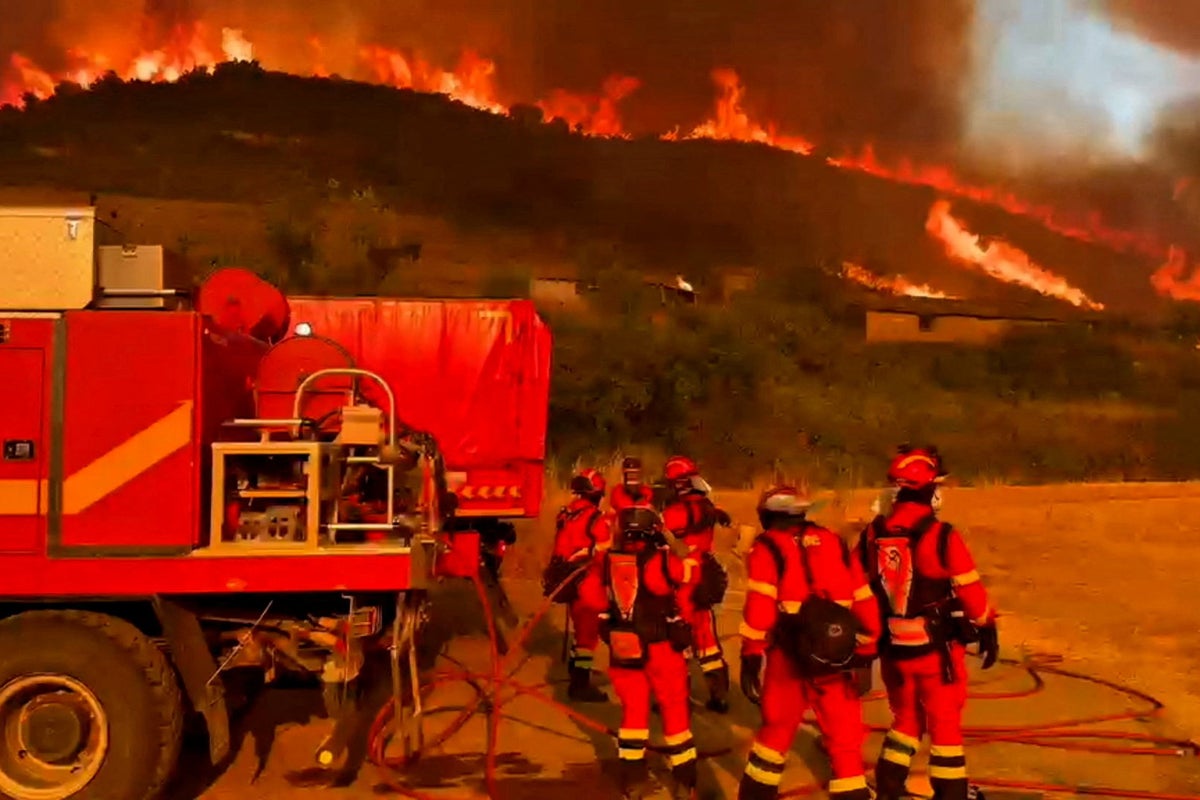
Emergency crews work on rotations that stretch past human endurance. They stand on the edges of trenches dug into baking dirt, hoses slung over soot-stained shoulders, fighting an enemy that does not rest when the sun goes down.
They know that beating back one flank is only a temporary victory. On the weather forecast, another high-pressure system is already assembling off the coast of North Africa, gathering heat to push northward across the sea.
The wind shifts. A fresh plume of dark smoke rises over the northern ridgeline, painting the setting sun a deep, bruised crimson. Mateo stands by his gate, watching the horizon, waiting to see which way the air will turn next.