The valley was entirely dark when the generator sputtered to life.
In remote outposts, natural disaster zones, and cut-off military installations, survival is measured in gallons and pounds. You need clean water. You need blood plasma. You need the specific, mundane machinery components that keep a filtration system running. Usually, getting these things means risking a human life. A pilot flies a helicopter through jagged mountain passes or hostile airspace, battling unpredictable thermal drafts, all to drop a crate of supplies. Sometimes, the helicopter doesn’t make it back. If you liked this article, you might want to read: this related article.
We have accepted this tax on human progress for a century. To move urgent cargo to the hardest edges of the world, we must put a person in a cockpit and cross our fingers.
Then, a massive, three-engine autonomous aircraft hummed to life on a runway in California, taxied without a single soul on board, and changed the geometry of logistics forever. For another look on this story, see the recent update from ZDNet.
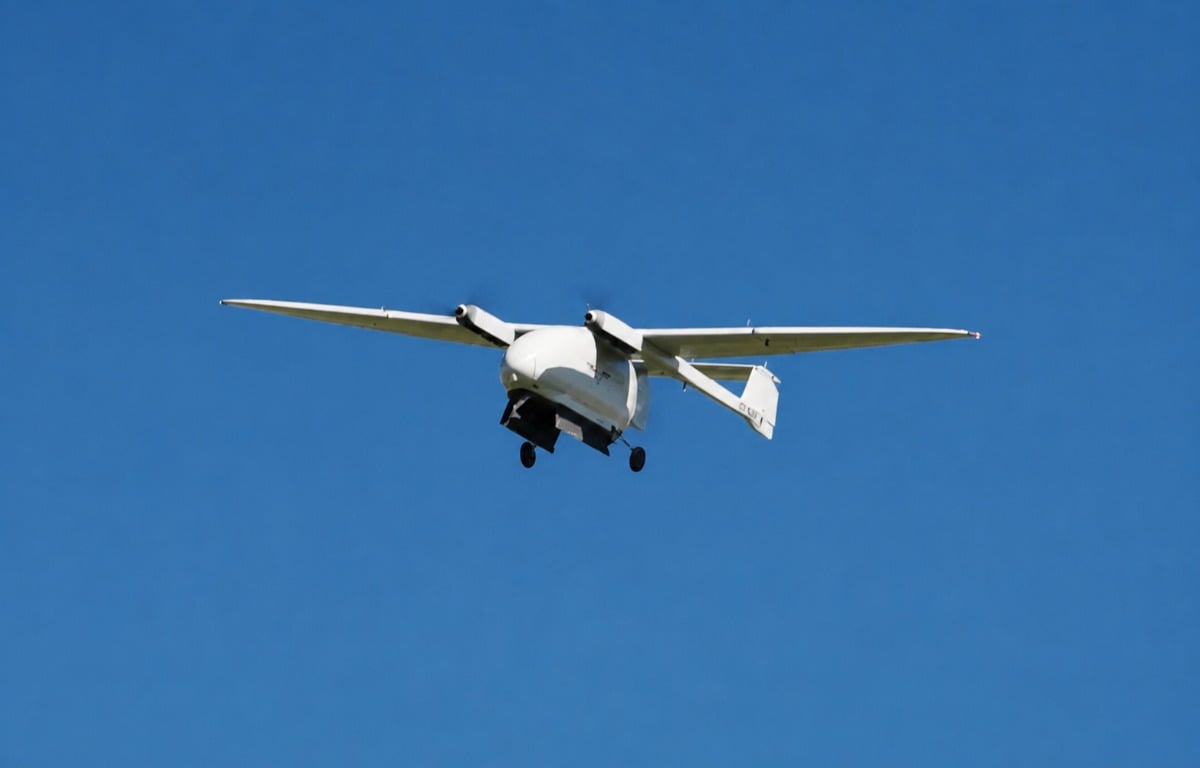
This is the Pelican Cargo, built by Pyka. It looks less like a sleek futuristic drone and more like a rugged, purposeful pack mule with wings. It is the world’s largest passenger-scale autonomous electric cargo aircraft. Recently, it did something that standard tech blogs described as a "successful precision airdrop demonstration."
That sterile description misses the point entirely. What actually happened was a glimpse into a future where the sky becomes a reliable, invisible conveyor belt, capable of dropping life-saving cargo onto a literal dime without risking a single human heartbeat.
The Tyranny of the Last Mile
To understand why this matters, look at a map of any crisis zone. Logistics experts talk about the "last mile" problem. It is the most expensive, dangerous, and inefficient part of any supply chain. You can cross an ocean with a massive container ship easily. You can fly across a continent with a jumbo jet. But when you need to get five hundred pounds of antibiotics to a muddy field after a hurricane has washed out every road, the system breaks down.
Historically, we had two choices.
First, you could use a small, traditional cargo plane. But airplanes need runways. In a crisis, runways are the first things to crack, flood, or fall under siege.
Second, you could use a helicopter. Helicopters are brilliant, versatile machines, but they are mechanical nightmares. They require intensive maintenance, consume immense amounts of fuel, and are notoriously difficult to fly in poor visibility. If a helicopter crashes, you lose the cargo, a multi-million-dollar asset, and the irreplaceable crew.
Consider a hypothetical logistics coordinator named Sarah. She is standing in a makeshift medical tent, looking at a dwindling supply of insulin. A storm is raging outside. The nearest functioning airport is eighty miles away. Between that airport and Sarah’s tent are washed-out bridges and fallen trees. Under the old paradigm, Sarah has to make a terrible choice: ask a pilot to risk their life flying through a gale, or watch her patients suffer.
The Pelican Cargo was built so Sarah never has to make that choice again.
Zero Human Occupants, Zero Hesitation
The recent milestone achieved by Pyka involved integrating a dynamic automated ejection system into the Pelican Cargo. Working in tandem with a specialized defense contractor, Pyka proved that an uncrewed, fully electric airplane could fly at low altitudes, pinpoint a specific drop zone, and release a payload with absolute mathematical precision.
No pilot. No parachute on the cargo. Just pure, calculated physics.
The aircraft utilizes a combination of proprietary flight control software, radar, and satellite navigation to calculate wind drift, altitude, and forward momentum in real time. When it reaches the optimal coordinates, the belly of the aircraft opens. The cargo slides out. Because the plane flies low and slow, the payload strikes the target area with minimal drift, landing exactly where the ground crew needs it.
Think about the sheer computing power required for this. When a human pilot drops cargo, they rely heavily on instinct, experience, and a fair amount of luck. They look out the window, estimate the crosswind, and pull a lever.
The Pelican doesn't blink. It analyzes atmospheric data hundreds of times per second. It adjusts its electric motors instantaneously to compensate for a sudden gust of wind. It executes the drop with a level of cold, repetitive accuracy that no human pilot, no matter how many hours they have in the logbook, could ever replicate.
And if something goes wrong? If a catastrophic mechanical failure occurs over the mountains?
The loss is measured in carbon fiber and lithium-ion batteries. Not funerals.
The Soft Sound of Heavy Lifting
There is a quiet revolution happening in the propulsion systems of these aircraft. Traditional cargo planes are loud, violent machines. They burn aviation fuel, leaving a heavy chemical stink in the air and a massive carbon footprint in their wake.
The Pelican Cargo is completely electric. It runs on a massive battery pack that powers three electric motors. When it takes off, it doesn't roar; it whirs.
This electric architecture does more than just appease environmental sensibilities. It fundamentally changes the cost of operation. Internal combustion aircraft engines require thousands of moving parts, all rubbing against each other under extreme heat and pressure. They need constant oil changes, overhauls, and part replacements. Electric motors have essentially one moving part: the rotor.
This simplicity translates directly to reliability. For operations in remote areas—like the Alaskan wilderness, rural Africa, or isolated islands in the Pacific—maintenance is the enemy. A plane that requires a team of specialized mechanics to tweak its carburetors after every ten hours of flight is useless in a wilderness setting. A plane that can be plugged into a solar-powered grid, checked via a laptop diagnostic tool, and sent back into the air is a lifeline.
But the real magic happens in the weight distribution. Because the aircraft doesn’t need a cockpit, a windshield, life support systems, ejector seats, or flight instruments, every single square inch of the fuselage is optimized for one thing: the payload. The nose opens up like a yawning whale, allowing crews to slide standard cargo pallets directly into the belly of the beast. It is a pure, unadulterated tool.
The Fiction of the Flawless Machine
It is easy to get swept up in the techno-optimism of autonomous flight. The marketing videos show beautiful white aircraft soaring over pristine coastlines under blue skies. But the reality of aviation is messy, unforgiving, and often terrifying.
The sky is a chaotic environment. Ice builds up on wings, blinding sensors. Microbursts can slam an aircraft toward the earth in a matter of seconds. GPS signals can be jammed or corrupted. When we remove the pilot from the cockpit, we are outsourcing human intuition to lines of code written by engineers sitting in comfortable office chairs in California.
Can software truly replicate the split-second decision-making of a seasoned pilot who feels the aircraft slipping in their seat?
Pyka’s argument is that the software doesn't need to feel the plane; it knows the plane better than a human ever could. A human pilot reacts to a stall after they feel the drop in their stomach, a reaction time measured in hundreds of milliseconds. The Pelican's flight controller detects the micro-changes in airspeed and adjusts the control surfaces in milliseconds. It prevents the crisis before the human brain would even register that a crisis was brewing.
Yet, a lingering unease remains. There is a deeply ingrained human desire for a captain. We want to know that someone is up there, sharing our risks, steering the ship. Trusting an empty cockpit requires a profound psychological shift. We must move from trusting a person to trusting a process.
Where the Logistics Lines Blur
The implications of this technology stretch far beyond emergency medical drops. Consider the commercial landscape.
Right now, overnight shipping relies on a massive, centralized hub-and-spoke system. Your package goes from a local warehouse to a massive airport, flies on a giant Boeing 777 to a central sorting facility, flies to another major airport, and is then driven for hours in a diesel truck. It is a system built around the limitations of human pilots and large airplanes. Pilots can only fly a certain number of hours before they get tired. Large planes can only land at large airports.
Autonomous, electric cargo craft shatter this model. They allow for point-to-point, regional distribution networks that bypass major hubs entirely.
Imagine an e-commerce network that operates continuously, day and night, without tiring. A fleet of autonomous Pelicans could quietly move goods between small, regional airfields, completely bypassing the congested highways and major airport bottlenecks. Shipping costs drop. Delivery times plummet. The carbon footprint of moving goods across a state shrinks to near zero.
But the true value of this technology will always be measured at the fringes of civilization.
The Empty Cockpit at Dawn
Imagine the valley again, weeks after the road washed out.
The fog is thick, clinging to the pine trees, reducing visibility to less than fifty feet. A human pilot looking at this weather would pull up the radar, shake their head, and ground the aircraft. The risk is simply too high.
But on a small runway thirty miles away, the Pelican Cargo sits waiting. Its sensors track the cloud base, the wind velocity, and the topography of the valley ahead. The ground crew finishes securing a pallet of fresh water and emergency communication gear into the nose. They step back.
There is no dramatic radio chatter. No adjusting of helmets or checking of flight suits. A technician clicks a mouse.
The three electric motors spin up to a high-pitched hum. The aircraft accelerates down the damp tarmac, lifts smoothly into the gray soup, and disappears from sight. It flies by digital braille, navigating a world it cannot see with absolute mathematical certainty.
Thirty minutes later, Sarah hears a faint whirring sound above the mist in the valley. She looks up. The aircraft is invisible through the thick clouds, a phantom in the fog. Suddenly, a heavy wooden crate breaks through the low ceiling, dropping cleanly into the designated clearing fifty yards from her tent. By the time the crate settles into the mud, the sound of the motors is already fading into the distance, turning back toward the coast to reload.
The clearing is quiet again, save for the sound of rain on canvas. The cargo has arrived. The sky is empty. And somewhere, a pilot is at home, sleeping safely in their own bed.

:max_bytes(150000):strip_icc()/Logistics-db9279223e6c4ccbbdd7b891f20a056e.jpg)