The coffee in the finjan hasn’t even had time to settle. In a small village nestled in the hills of Southern Lebanon, a man named Omar sits on a plastic chair, watching the morning light hit the underside of the silver-green leaves. It is a quiet that feels fragile, like a thin sheet of glass held up against a gale. Then, the glass shatters. The sound is not just a noise; it is a physical weight that slams into the chest, a sonic boom that announces the arrival of iron and fire. Israel’s jets are back, and the cycle of the Levant begins its bloody rotation once more.
We speak of "geopolitics" and "strategic depth" from the comfort of air-conditioned rooms in DC or London, but for Omar, the reality is the smell of scorched earth and the sudden, frantic need to remember where he put the family’s passports. This isn't just a headline about a ceasefire failing. It is the story of a region that has forgotten how to breathe without gasping for air. Meanwhile, you can read other stories here: Iran is Not On the Brink of War and Neither is Israel.
The Illusion of the Dotted Line
A ceasefire on paper is a beautiful thing. It suggests that logic has finally overtaken the primal urge for survival. But in the corridors of power in Jerusalem and the bunkers of Beirut, a piece of paper is often just a tactical pause, a chance to reload. The recent strikes on Lebanese soil weren't just random acts of aggression; they were signals. Israel’s military doctrine currently operates on a hair-trigger. If a missile battery moves, if a drone is spotted, the response is immediate and overwhelming.
The logic is simple: deterrence. But deterrence is a psychological game played with explosive pieces. When Israel hits targets in Lebanon, they aren't just aiming at Hezbollah’s hardware. They are communicating to the Iranian sponsors that the "Ring of Fire" strategy—the attempt to encircle Israel with hostile proxies—will be met with a scorched-earth policy. To see the full picture, we recommend the excellent article by BBC News.
Consider the math of the skies. When Iran fires back, as they have done with a barrage of ballistic missiles, the cost is staggering. Not just the financial cost of the interceptors, which run into the millions of dollars per shot, but the cost to the collective psyche. You have a few minutes to get to a shelter. Imagine trying to explain to a three-year-old why they have to sleep in a concrete room with no windows while the world outside sounds like it’s being torn apart by a giant.
The Invisible Strings of Tehran
To understand why the missiles are flying, you have to look past the smoke and toward the Iranian plateau. Iran’s leadership plays a long game, one that treats the map of the Middle East like a chessboard where the pawns are made of flesh and blood. Their "Forward Defense" policy relies on keeping the fight away from Iranian soil by ensuring that Lebanon, Syria, and Yemen remain in a state of perpetual mobilization.
It is a strategy of shadows. By providing the precision-guided kits that turn "dumb" rockets into surgical tools, Iran ensures that Israel can never feel truly secure. This isn't a secret. It’s a boast. But the blowback is becoming harder to manage. Every time a rocket leaves a launcher in Lebanon, it invites a return flight that erodes the very infrastructure the Lebanese people need to survive.
The stakes are invisible until they aren't. They are found in the fluctuating price of oil, the rerouting of cargo ships in the Red Sea, and the silent conversations in the Kremlin or Beijing. Everyone is watching to see if the regional fire becomes a global inferno.
The Shadow in the Wings
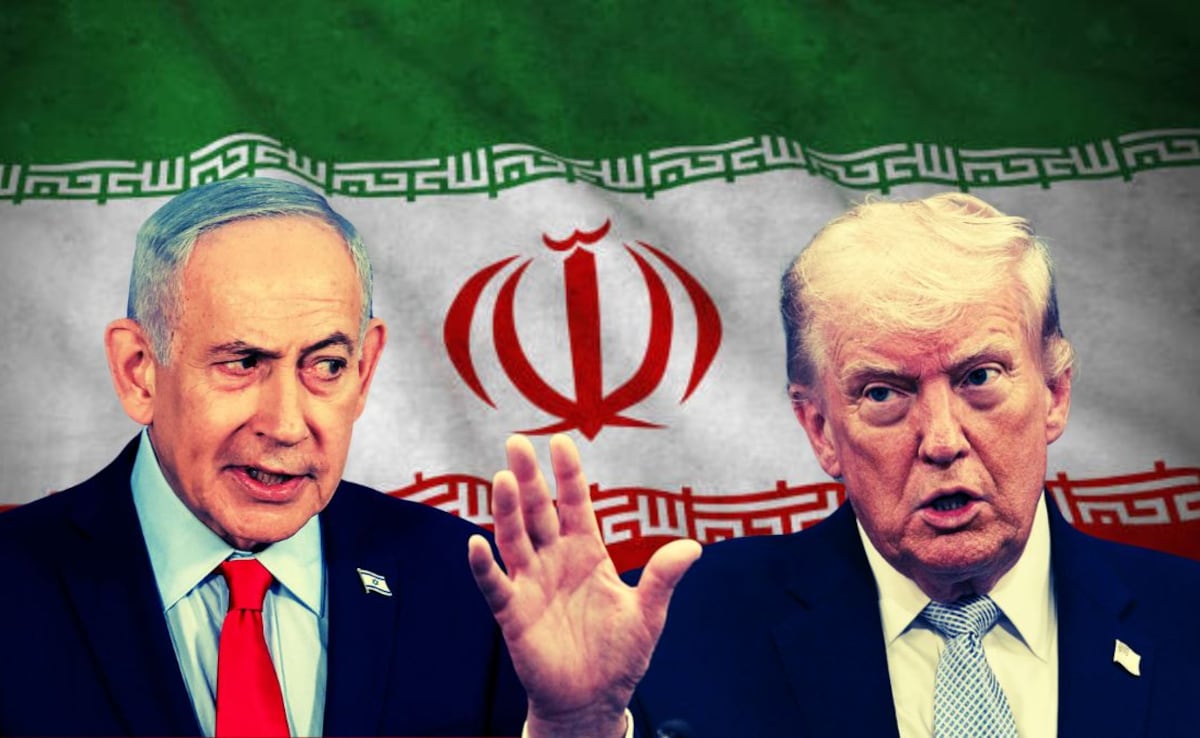
Enter the American factor. For decades, the United States has acted as both the arsonist and the firefighter in this region. Now, as the political winds in Washington shift toward a second Trump administration, the uncertainty has reached a fever pitch.
Donald Trump’s approach to the Middle East has always been transactional, fueled by a disdain for "forever wars" but balanced by a deep-seated desire to project strength. During his first term, we saw the Abraham Accords—a move that tried to bypass the Palestinian issue by making peace with the wealthy Gulf states. It was a business deal masquerading as a peace treaty.
What happens when he returns to the Resolute Desk? The players in the region are already placing their bets. Prime Minister Netanyahu knows that Trump’s "maximum pressure" campaign against Iran aligns with his own goals. However, Trump is also unpredictable. He likes winners, and he hates being bogged down in expensive, messy conflicts that don't have a clear "America First" payoff.
Imagine the scene: A high-stakes phone call. On one end, a leader asking for more munitions. On the other, a man who views every bullet as a line item on a ledger he’d rather not pay. The tension is palpable. The region isn't just waiting for a policy; it’s waiting for a personality.
The Physics of Escalation
There is a concept in physics called "hysteresis"—it's the idea that the state of a system depends on its history. The Middle East is a victim of its own history. You cannot simply hit "reset." Every strike leaves a residue of resentment. Every retaliation builds a layer of scar tissue.
When we talk about "Israel hitting Lebanon," we are talking about a sophisticated military machine targeting an organization that has woven itself into the very fabric of a nation. Hezbollah is a state within a state. They run hospitals, schools, and social services. When their weapons caches—often hidden in civilian areas—are struck, the collateral isn't just concrete. It’s the social contract.
The human element gets lost in the statistics. We hear "ten casualties" or "thirty rockets intercepted." We don't hear the silence of a classroom that is now empty because the parents are too afraid to send their children out. We don't see the farmer who watches his olive trees burn—trees that have been in his family for four generations—because a stray piece of shrapnel ignited the dry brush.
The Deadlock of Pride
Why can’t they just stop? It’s the question every outsider asks. The answer is buried in the concept of "face." In the Middle East, to back down without a clear victory is seen as an invitation for further aggression. It is a world where perceived weakness is a death sentence.
Israel feels it cannot stop until the threat to its northern communities is neutralized. People have been displaced from their homes for months, living in hotels, their lives in limbo. They want to go home. They demand security.
Hezbollah feels it cannot stop because its entire raison d'être is "resistance." To stop while Israel is still striking would be a betrayal of their ideology and their patron in Tehran.
And Iran? Iran wants to maintain its influence without sparking a direct war with the West that could topple its own regime. It is a delicate, deadly dance performed on a tightrope over an abyss.
The Weight of the Next Move
The next move isn't just about military strategy. It’s about the soul of the region. If the escalation continues, we aren't just looking at a third Lebanon war. We are looking at a fundamental shift in how the world operates.
The "Chaos" mentioned in the headlines isn't an accident. It’s a tool. For some, chaos is a ladder. For others, it’s a grave. The invisible stakes involve the future of international law, the viability of the United Nations, and the very idea that a border can mean anything in an age of long-range drones and cyber-warfare.
We often look at these conflicts through a lens of "us versus them." But the reality is a messy, overlapping Venn diagram of human suffering. The mother in Haifa huddling in a bomb shelter wants the same thing as the mother in Tyre: for the sky to stop screaming.
As the political gears in Washington begin to grind toward a new era, the people on the ground are left to wonder if they are merely characters in someone else’s play. The script is being written in real-time, in blood and ink, by people who will never have to live with the consequences of their decisions.
The olive trees in Omar’s village are resilient. They can survive droughts, heatwaves, and even the occasional fire. But they cannot survive forever if the earth they are planted in is constantly being turned over by explosions.
Somewhere in the distance, another jet streaks across the horizon, a white line against the blue. It’s a beautiful day, objectively. The sun is warm. The air is clear. But beneath that beauty is a tension so thick you could cut it with a knife. The world is holding its breath, waiting for the next spark, the next tweet, the next missile.
The coffee in the finjan is cold now. Omar stands up, picks up his chair, and walks inside. He doesn't look at the sky anymore. He knows what’s up there. He’s just waiting to see if today is the day the world finally stops pretending that the paper in the diplomat’s hand can keep the fire at bay.


