The air always changes first.
Before the sirens stutter to life. Before the glass begins to sing its high, sharp note of fracture. There is a sudden, heavy pressure against the eardrums, as if the atmosphere itself has decided to hold its breath. You look up at the French sky, usually so predictable in its postcard blues or soft, slate grays, and you notice the color of bruised plums.
It was supposed to be a Tuesday like any other.
In the quiet corners of northern and eastern France, families were sitting down to dinner. Laundry was still fluttering on outdoor lines in the fading evening light. The day's work was winding down. Then, out of nowhere, the horizon turned inside out.
Thirty-nine people. That is the cold tally handed down by morning reports. Thirty-nine bodies broken, bruised, or battered by flying debris and collapsing timber. Behind that number are thirty-nine distinct worlds thrown into chaos.
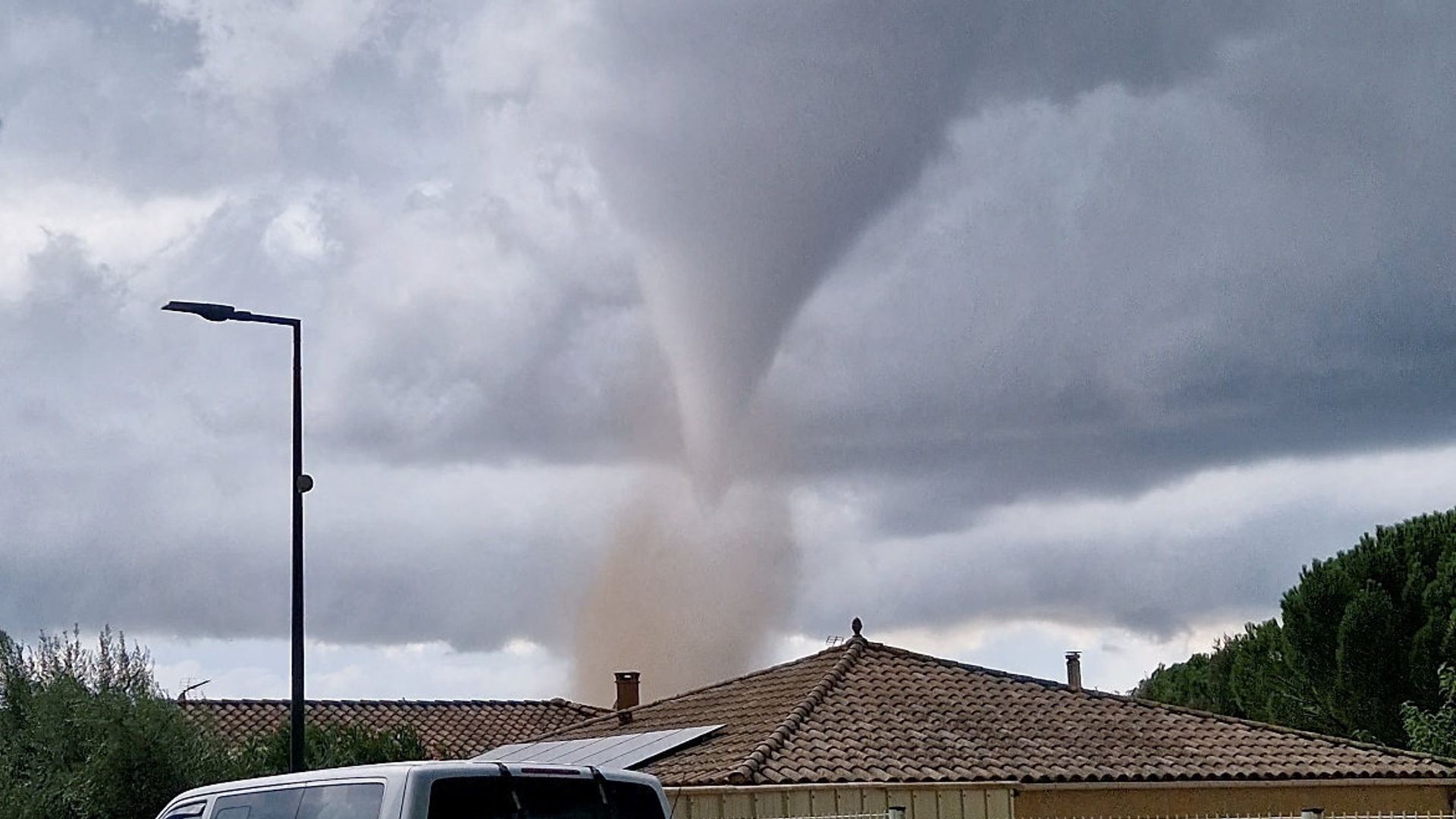
Consider a hypothetical resident—let us call him Jean-Luc—sitting in a stone-built kitchen in a small commune outside the main path of destruction. He hears a sound like a freight train rolling over gravel, except there are no tracks for miles. He reaches for his wife's hand. The lights flicker, die, and the world outside the window dissolves into a churning wall of slate and shadow. The roof doesn't just leak; it vanishes, sucked upward into an angry vortex that leaves the exposed rafters staring blindly at the stars just seconds later.
This is what a tornado looks like when it touches down in regions built for centuries, not seconds.
France is no stranger to wild weather, but these violent meteorological punches carry a different kind of terror. They are anomalies that feel increasingly routine. Hundreds of homes—centuries-old stone walls, modern brick facades, tiled roofs carefully laid by generations of local craftsmen—were cracked open like walnuts.
To understand the scale of this disaster, you have to look past the aerial drone shots of blue tarps stretched over jagged timber. You have to look at the psychology of sudden displacement.
When a home is destroyed, you lose more than drywall and furniture. You lose your anchor. The kitchen table where children did their homework, the indentation on the mattress that belonged to a grandfather, the photograph tucked behind the mirror—all of it transformed into pulverized debris scattered across three fields.
Emergency services moved through the dark with searchlights cutting through the thick, wet fog of aftermath. Sirens wailed a frantic chorus. Firefighters waded through knee-deep sludge mixed with shattered roof tiles and insulation.
Fear is a universal language, but survival is deeply local.
Neighbors who had barely exchanged more than a polite nod across a garden hedge found themselves shoulder-to-shoulder in the pitch black, using the glow of dying smartphone screens to pull trapped elderly residents from bedroom closets. That is the invisible undercurrent of these catastrophes. Long before the insurance adjusters arrive with their clipboards and calculators, human empathy rushes into the vacuum.
Meteorologists talk about instability shear, thermal gradients, and barometric pressure drops. They use dry, academic language to describe a beast that wakes up, tears apart a community, and dissolves back into a gentle summer rain. But physics does not capture the sound of a slate roof exploding inward. Mathematics does not measure the absolute silence that follows the roar, a silence so profound you can hear the distant dripping of water on ruined floorboards.
We build our lives on the assumption of permanence. We mortgage our futures for brick and mortar. We plant orchards that take decades to bear fruit, trusting that the earth will stay still and the sky will remain overhead.
And then the wind shifts.
The recovery will take months, perhaps years. The insurance claims will drag through bureaucratic mazes. The blue tarps will eventually give way to scaffolding, and scaffolding will eventually give way to fresh plaster and paint. The physical scars on the landscape will heal as ivy crawls over newly rebuilt stone and grass reclaims the gouged earth.
Yet, for the people who watched their living rooms merge with the open sky in a matter of heartbeats, the weather forecast will never sound quite the same again.
Every rustle of wind in the poplar trees outside the window will carry a memory of that roar. Every darkening cloud will prompt a quick glance toward the horizon, an instinctive tightening of the chest.
The storm has passed, leaving behind quiet streets and blinking emergency lights. But the wind left its signature written deep in the grain of the earth, a stark reminder of how fragile our grandest human designs truly are when the sky decides to fall.