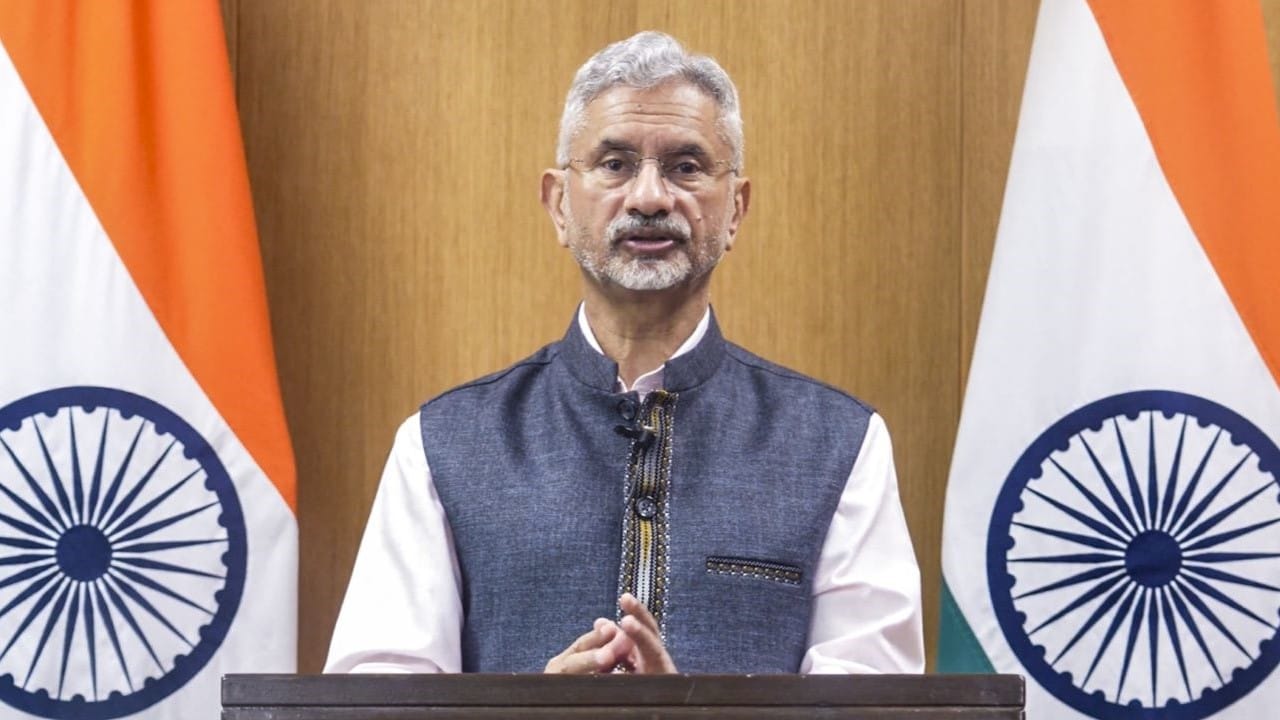
Diplomats love a good handshake. They love the optics of "bilateral cooperation" and the fuzzy warmth of "historical ties." When S. Jaishankar and his Jamaican counterparts shook hands on a new agreement to boost trade and "skilled mobility," the press release practically wrote itself. It hit all the right notes: digital transformation, healthcare cooperation, and a shared vision for the Global South.
It is a beautiful script. It is also a fantasy.
While the official narrative frames this as a win-win for economic expansion, the reality is far grimmer. What we are witnessing isn't the birth of a new trade powerhouse; it’s a desperate attempt to formalize the export of human capital from two nations that can ill afford to lose it. Calling it "skilled mobility" is a polite way of saying "legalized brain drain."
If you think this deal will actually shift the needle on India’s GDP or fix Jamaica’s infrastructure, you aren’t paying attention to the math.
The Skilled Mobility Trap
The cornerstone of the Jaishankar-Johnson agreement is the movement of professionals. On paper, it sounds logical. India has a surplus of tech talent and healthcare workers; Jamaica needs them. In exchange, Jamaica offers a strategic gateway to the Caribbean and Latin America (CARICOM).
But let’s look at the "battle scars" of similar deals. I have watched these "mobility partnerships" play out across Eastern Europe and Southeast Asia for two decades. They almost always follow the same pattern: the sending nation subsidizes the education of its brightest minds, only to have the receiving nation reap the tax revenue and innovation.
When a highly trained Indian cardiologist or a software architect moves to Kingston, India loses more than just a taxpayer. It loses the "multiplier effect"—the local mentorship, the domestic startups, and the institutional knowledge that stays behind. Jamaica, meanwhile, gets a temporary band-aid for its systemic labor shortages rather than fixing the underlying reasons why its own talent is fleeing to Miami or London.
We are treating human beings like commodities on a balance sheet. True "trade" involves the exchange of goods and services that create local value. Shipping people across oceans to fill gaps created by poor domestic policy isn't trade. It’s an admission of failure.
The Digital Public Infrastructure (DPI) Mirage
A major talking point in this deal is the sharing of India’s "Digital Public Infrastructure" (DPI). The narrative is that Jamaica can simply "plug and play" India’s success with UPI (Unified Payments Interface) and Aadhaar to leapfrog into the modern economy.
This is a fundamental misunderstanding of how technology scales. India’s DPI worked because of a unique convergence: a massive, unbanked population, a single regulatory authority (RBI), and a desperate need for a centralized identity system to manage subsidies.
Jamaica is not a mini-India. It has a different regulatory "landscape"—and yes, I’ll use that word once to describe the literal terrain of Caribbean banking—which is heavily influenced by North American standards and high compliance costs. You cannot just export a codebase and expect a digital revolution.
Without the local venture capital to build on top of that infrastructure, you aren't building a "digital bridge." You are building an expensive highway that leads nowhere. If Jamaica adopts India's tech stack but lacks the domestic developers to maintain or evolve it, they haven't achieved "sovereignty." They’ve just traded one form of technological dependency for another.
The Myth of the CARICOM Gateway
Every time India signs a deal with a smaller nation, the "gateway" argument resurfaces. The idea is that Jamaica will serve as a springboard for Indian firms to access the wider Caribbean and Latin American markets.
Stop. Look at the logistics.
The Caribbean is one of the most expensive regions in the world for intra-regional trade. Shipping a container from Kingston to Port of Spain (Trinidad) can often cost more than shipping it from Mumbai to Rotterdam. The "gateway" concept assumes a level of regional integration that simply doesn't exist in practice.
Furthermore, Indian companies don't need Jamaica to get into Latin America. Large Indian IT firms and pharmaceutical giants already have massive footprints in Brazil, Mexico, and Colombia. They went there directly because that’s where the volume is. To suggest that a small island nation—no matter how vibrant its culture—is the "key" to a continent is a geopolitical platitude meant to make the host feel important.
The Productivity Paradox
If we want to actually help Jamaica and India, we need to stop talking about "mobility" and start talking about Productivity per Capita.
Moving 5,000 workers doesn't change the economic trajectory of a billion-person nation, nor does it fix the $14 billion debt of a three-million-person nation. Real growth comes from capital deepening—investing in tools, machinery, and local AI implementation that allows the workers who stay to produce ten times as much.
Instead of "skilled mobility," we should be demanding "capital mobility."
- India should be offshoring its manufacturing, not just its people.
- Jamaica should be demanding technology transfers, not just "cooperation."
- Both nations should be focused on the "Service-Led Export" model where the worker stays in their home country, spends their salary in the local economy, and pays taxes to their own government while exporting their expertise digitally.
The current deal reinforces the old colonial model: the movement of raw resources (in this case, human intelligence) to centers of perceived opportunity.
Why "Bilateral Ties" are a Distraction
The press will tell you this is about "South-South cooperation." They will talk about the shared history of the Commonwealth and the Indian diaspora in Jamaica.
This is emotional manipulation used to mask a lack of economic substance. Sentiment doesn't pay interest on sovereign debt. If the trade balance between India and Jamaica remains skewed—with India exporting manufactured goods and Jamaica exporting... what? Nutmeg? Tourism?—then the relationship is fundamentally lopsided.
Jamaica’s trade deficit with India is not going to be solved by a few more doctors or IT consultants. It requires a hard look at why Jamaica isn't producing goods that India’s massive middle class wants to buy. Hint: It isn't because there aren't enough "skilled mobility" agreements. It's because of high energy costs, aging infrastructure, and a lack of specialized manufacturing.
The Hard Truth for Professionals
If you are an Indian professional looking at this deal, don't wait for a government MOU to change your life. These agreements are often "vaporware"—high-level frameworks that take years to trickle down into actual visa reforms.
If you want to move, you’ll do it via the private sector. If you want to stay and build, you need to ignore the government's "Global South" rhetoric and focus on where the actual liquidity is. The most successful "skilled" individuals I know aren't waiting for bilateral trade deals; they are building borderless companies that ignore the geography these diplomats are so obsessed with.
Stop Celebrating the Paperwork
We need to stop applauding every time two ministers sign a piece of paper. Success isn't a signed agreement. Success is a measurable increase in the complexity of exported goods. Success is a decrease in the "brain drain" as local opportunities become more lucrative than foreign ones.
This deal is a sedative. It makes both governments feel like they are "doing something" about growth while avoiding the painful internal reforms needed to make their economies actually competitive. India needs to make it easier for people to stay; Jamaica needs to make it easier for business to happen.
Everything else is just a photo op.
If you want to build a real partnership, stop moving the people and start moving the machines. Stop talking about "historical ties" and start talking about unit economics. The era of the "mobility deal" is over. We are in the era of the "productivity war."
Pick a side.


