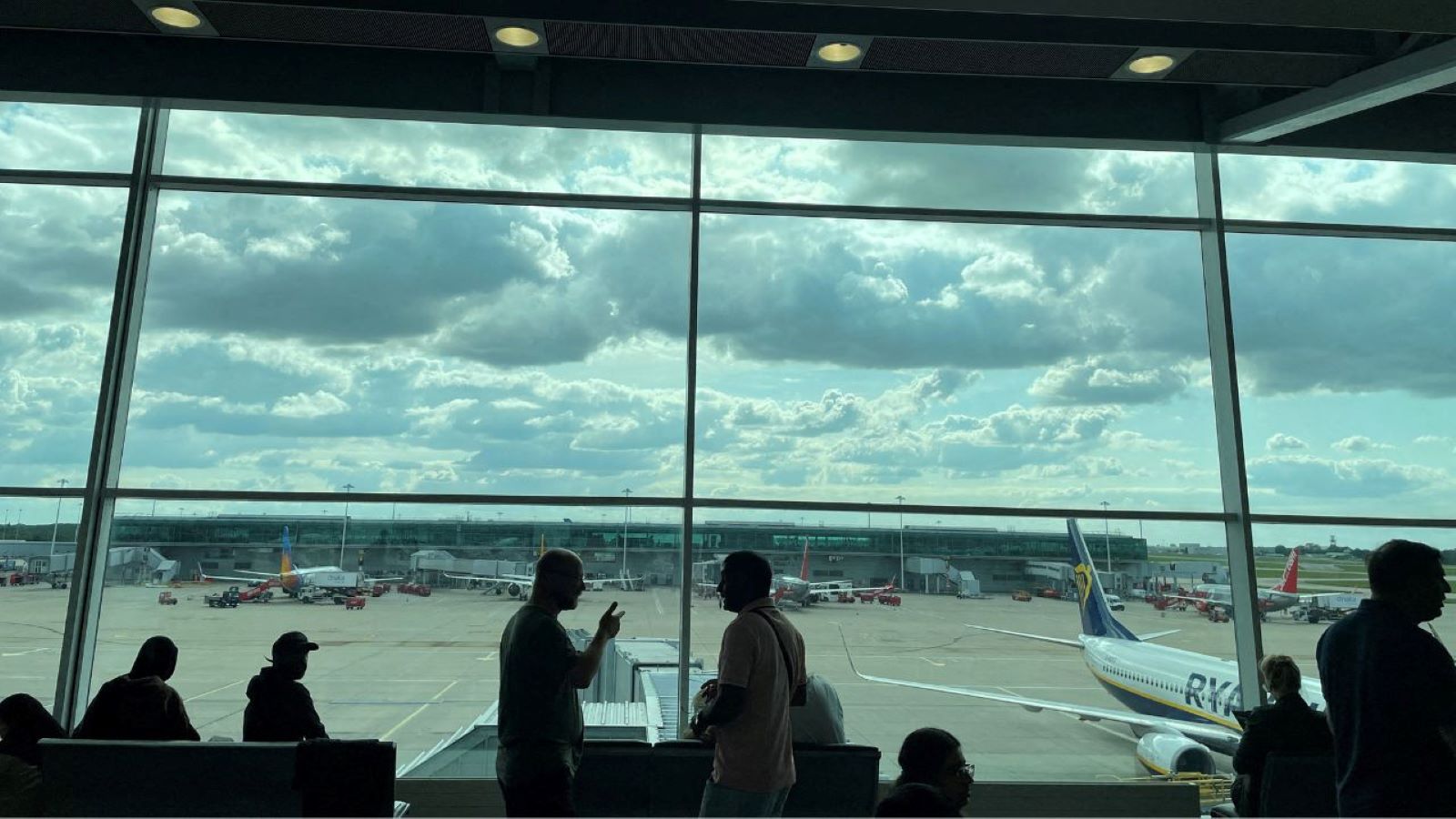
Modernizing critical national infrastructure introduces a structural paradox: upgrading legacy hardware to improve efficiency frequently concentrates systemic risk into unified digital bottlenecks. When an L3Harris-installed router malfunctioned and disrupted thousands of flights across the United States, the event exposed a fundamental architectural vulnerability within the National Airspace System (NAS). The incident was not an isolated hardware anomaly; it was the predictable result of coupling high-dependency operational networks with centralized routing nodes lacking instantaneous failover isolation.
To understand how a single telecommunications component can halt commercial aviation across an entire continent, analysts must separate the physical layer of data transmission from the operational layer of air traffic management. The disruption demonstrates how tightly coupled systems, as defined in Charles Perrow’s Normal Accident Theory, convert minor component failures into cascading operational paralysis.
The Architecture of Aviation Telecommunications
The Federal Aviation Administration (FAA) relies on the FAA Telecommunications Infrastructure (FTI)—a program managed under contract by L3Harris Technologies—to connect more than 4,500 facilities nationwide. This network carries voice, radar, and flight plan data between Air Route Traffic Control Centers (ARTCCs), Terminal Radar Approach Control (TRACON) facilities, and airport control towers.
Historically, aviation communications operated over fragmented, point-to-point analog circuits. While inefficient and expensive to maintain, this fragmentation provided natural blast-radius containment. A severed line in one sector rarely degraded telemetry in an adjacent sector.
The transition to Internet Protocol (IP)-based networking under FTI replaced isolated circuits with shared, high-capacity packet-switched backbones. Routers serve as the traffic directors of this backbone, inspecting packet headers and forwarding critical telemetry—such as Automatic Dependent Surveillance-Broadcast (ADS-B) feeds and Notice to Air Missions (NOTAM) updates—along optimal paths.
The Mechanism of Routing Contagion
When an edge or core router installed within this architecture experiences a fault, the failure rarely manifests as a clean binary disconnect. Clean disconnects are easy for automated protocols to manage; Border Gateway Protocol (BGP) or Open Shortest Path First (OSPF) algorithms detect the dropped link and reroute packets through redundant pathways within milliseconds.
Severe disruptions occur during "gray failures" or control-plane corruptions:
- Packet Blackholing: The router remains powered and continues advertising valid routes to neighboring nodes, yet drops incoming telemetry packets due to buffer exhaustion or firmware deadlocks.
- Route Flapping: The device rapidly alternates between online and offline states, forcing adjacent routers across the national network to continuously recalculate routing tables, consuming CPU cycles and inducing widespread latency.
- Database Desynchronization: Critical operational databases—such as the systems distributing flight plans or pilot safety alerts—lose state synchronization between primary and backup servers when transit packets arrive out of sequence or time out.
In an aviation context, data latency is functionally identical to data loss. Air traffic control systems operate under strict deterministic timing requirements. If flight plan data or radar correlation packets fail to arrive within specified millisecond thresholds, automated safety protocols reject the stale data to prevent controllers from acting on obsolete aircraft positions.
The Three Pillars of Operational Paralysis
When a core routing node degrades, the resulting disruption propagates through three distinct operational layers of commercial aviation. Understanding these layers explains why a localized telecommunications fault forces a nationwide ground stop rather than a regional delay.
1. Telemetry Blindness and Separation Minima
Air traffic controllers rely on fused radar and satellite telemetry to maintain safe vertical and horizontal separation between aircraft. When telecommunications routing falters, radar feeds from remote sites to en-route centers degrade. Without real-time tracking, controllers cannot legally maintain standard 3-to-5-nautical-mile separation minima. Safety regulations mandate an immediate expansion of separation buffers, which mathematically slashes airspace capacity by up to 70 percent within minutes.
2. Flight Plan Processing Bottlenecks
Every commercial flight requires an active, validated flight plan distributed across multiple FAA subsystems before takeoff. These plans dictate routing, altitude, and fuel reserves. When routing failures sever connectivity between airline operations centers and FAA host computers, automated filing halts. Re-routing thousands of flight plans manually via voice channels exceeds human cognitive bandwidth, forcing air traffic flow management to issue ground stops to prevent airborne holding patterns from exhausting aircraft fuel reserves.
3. Crew and Fleet Desynchronization
Commercial airlines operate as tightly scheduled hub-and-spoke networks rather than independent point-to-point shuttles. An aircraft delayed for two hours at a regional airport misses its departure slot at a major hub, which subsequently strands the flight crew scheduled to operate that airframe on its next leg. Federal Aviation Administration rest rules (FAR Part 117) impose hard legal limits on pilot duty hours. Once a telecommunications outage pushes crews past their legal duty windows, the airline cannot legally launch the aircraft even after the router is repaired and network connectivity is restored.
The Economics of Asymmetric Infrastructure Failure
Evaluating the impact of telecommunications failures requires examining the cost function of modern air travel. The capital expenditure required to install, configure, and maintain enterprise-grade routing hardware represents a negligible fraction of national aviation budgets. Yet the economic damage generated by a multi-hour outage scales non-linearly.
Consider the direct and indirect cost drivers triggered by a nationwide ground stop:
- Direct Airline Operating Costs: Burned fuel during ground idling, crew overtime pay, passenger rebooking administration, and mandatory hotel vouchers for stranded travelers.
- Lost Economic Productivity: Delayed cargo supply chains—particularly high-value, time-sensitive medical and manufacturing components—alongside lost business hours for commercial passengers.
- Recovery Tail Latency: A four-hour network outage does not produce a four-hour operational delay. Because aircraft and crews are out of position across time zones, network stabilization typically requires 24 to 48 hours of schedule compression and flight cancellations to clear the backlog.
This asymmetry highlights a chronic flaw in public-private infrastructure contracting. Vendors like L3Harris operate under Service Level Agreements (SLAs) defined by network uptime percentages—often 99.999% ("five nines") availability. However, 99.999% uptime still permits approximately 5.26 minutes of unscheduled downtime per year. In high-frequency financial trading or commercial aviation, five minutes of downtime during peak traffic windows inflicts catastrophic operational costs that standard SLA financial penalties fail to offset.
Known Facts Versus Systemic Hypotheses
Rigorous post-incident analysis requires separating verified operational mechanics from unconfirmed root-cause hypotheses, particularly when federal agencies and defense contractors restrict technical disclosures due to national security protocols.
Verified Operational Reality:
- L3Harris serves as the prime contractor for the FAA Telecommunications Infrastructure program, responsible for engineering, installing, and maintaining the network fabric connecting air traffic facilities.
- Hardware and software modifications—specifically router replacements and configuration updates—occur continuously across the NAS as part of ongoing lifecycle modernization.
- The FAA’s safety architecture prioritizes absolute risk avoidance; when data integrity cannot be verified end-to-end, standard operating procedure dictates halting departures until deterministic communications are re-established.
Structural Hypotheses Requiring Verification:
- Configuration Drift vs. Hardware Defect: While public reporting frequently blames "a faulty router," enterprise network outages rarely stem from pure silicon failure. The more probable mechanism in high-availability environments is human error during configuration deployment—such as an improperly formatted Access Control List (ACL) or a mismatched subnet mask pushed during routine maintenance—or an undocumented firmware bug triggered by specific packet loads.
- Insufficient Out-of-Band Management: When a router misbehaves, network engineers rely on dedicated out-of-band management channels (separate cellular or satellite links) to access the device console and roll back changes. Extended outage durations indicate that engineers either lacked instant out-of-band access to the affected hardware or had to dispatch field technicians physically to reboot and reconfigure the unit.
Why Redundancy Often Fails in Practice
The standard defense against single points of failure is hardware redundancy—deploying dual routers in active-active or active-passive configurations with diverse physical fiber paths. When an outage still occurs despite billions of dollars spent on redundant infrastructure, the failure points to three architectural traps.
Correlated Failure Modes
True redundancy requires independent failure domains. If primary and backup routers run identical firmware versions and receive simultaneous automated configuration updates from a centralized management server, a single corrupted software patch will disable both units concurrently. Hardware redundancy provides zero protection against software monoculture.
Unverified Failover Logic
Backup systems that sit idle until an emergency frequently fail when called upon. Over months of normal operation, network engineers modify firewall rules, routing tables, and security certificates on the primary path while neglecting to mirror those exact changes onto the backup path. When the primary router fails, traffic shifts to a backup router that drops the packets because its security certificates have expired or its routing tables lack current destination prefixes.
Capacity Starvation Under Failover
In multi-node networks, losing one major routing hub forces traffic onto secondary nodes. If those secondary routers are already operating at 65% capacity during peak daytime air traffic, absorbing the redirected load pushes utilization past 100%. This triggers queueing delays and packet drops across the secondary nodes, spreading the outage to regions completely unaffected by the initial hardware fault.
Strategic Imperatives for Critical Infrastructure Governance
Preventing future nationwide aviation disruptions does not require halting modernization or abandoning IP-based networking. It requires shifting engineering governance from component-level reliability to system-level resilience.
1. Enforce Asynchronous Deployment Pipelines
Telecommunications contractors and federal oversight teams must prohibit simultaneous configuration pushes across redundant routing pairs. All firmware upgrades and routing table modifications must follow strict canary deployment protocols: update a single non-critical node, observe telemetry under full operational load for a minimum 72-hour soak period, and only then propagate the change to secondary nodes.
2. Implement Automated Chaos Engineering in Staging
Redundancy cannot be assumed; it must be continuously proven. The FAA and its contractors must build high-fidelity digital twins of the FTI backbone and subject them to automated fault injection—simulating gray failures, packet blackholing, and route flapping—to verify that failover algorithms isolate degraded routers within sub-second thresholds without human intervention.
3. Decouple Control Planes from Data Planes
Future network upgrades must prioritize Software-Defined Wide Area Networking (SD-WAN) architectures that separate routing intelligence from physical hardware. By centralizing policy validation in an isolated control plane equipped with formal verification tools, engineers can mathematically prove that a proposed routing change will not create loops or black holes before a single packet touches a physical router.
4. Restructure Vendor Accountability Metrics
Contractual SLAs for critical national infrastructure must abandon aggregate annual uptime percentages in favor of Maximum Tolerable Outage (MTO) thresholds and blast-radius caps. Vendor compensation and penalty structures should tie directly to mean-time-to-isolate (MTTI) metrics, financially incentivizing contractors to engineer architectures where a localized hardware failure can never propagate beyond a single regional air traffic sector.