The Chip Maker's Midnight Shift
A engineer stands in a sterile cleanroom in Zhangjiang High-Tech Park, staring at a silicon wafer no thicker than a human fingernail. His eyes are raw. Outside, the Shanghai skyline hums with neon light, but inside this pressurized room, time moves differently. Every circuit on that board represents months of failed tests, millions of yuan, and a national anxiety that sits heavily on the shoulders of the people building them.
For years, the story of global technology was written in boardrooms in Cupertino and Santa Clara. But recently, the narrative shifted. When external trade restrictions tightened, access to critical manufacturing equipment dried up almost overnight. The industry calls these technical vulnerabilities "choke points"—the microscopic bottlenecks in software design, advanced lithography, and specialized materials where a single foreign decision can freeze a billion-dollar enterprise. Also making headlines recently: The Zero Interest Trap Haunting Corporate Balance Sheets.
Now, Shanghai is changing the rules of engagement.
Money That Can Wait
In traditional venture capital, speed is everything. Investors demand quick returns, chasing app developers and consumer brands that can scale in eighteen months. Deep technology does not work like that. Building a semiconductor lithography tool or synthesizing ultra-pure chemical agents takes years of quiet, painstaking failure before the first dollar of revenue ever materializes. Further insights on this are covered by Bloomberg.
Shanghai’s municipal response targets this exact friction. By launching dedicated state-backed guidance funds specifically earmarked for hard tech, the local government is attempting something counterintuitive: replacing short-term profit pressure with patient capital.
Imagine trying to build a complex engine, but every three months someone threatens to cut off your fuel supply unless you show immediate mileage. You would build a cheap scooter engine instead of a rocket engine. Patient capital acts as a shield against that short-term panic. It allows research teams to spend three, five, or seven years refining foundational science before worrying about quarterly earnings calls.
These new funds are designed to pour resources directly into the precise gaps where supply chains are most vulnerable:
- Electronic design automation software
- Advanced semiconductor manufacturing equipment
- High-performance specialized materials
- Next-generation biological testing instruments
Opening the Gate for Unprofitable Giants
Capital alone cannot fix a fundamental structural barrier: the public markets. Historically, if a startup wanted to list on domestic stock exchanges, it had to demonstrate consistent profitability over several consecutive years. For a consumer tech company, that makes sense. For a deep-tech firm spending tens of millions on cleanrooms and prototype fabrication before making its first commercial sale, that rule was a death sentence.
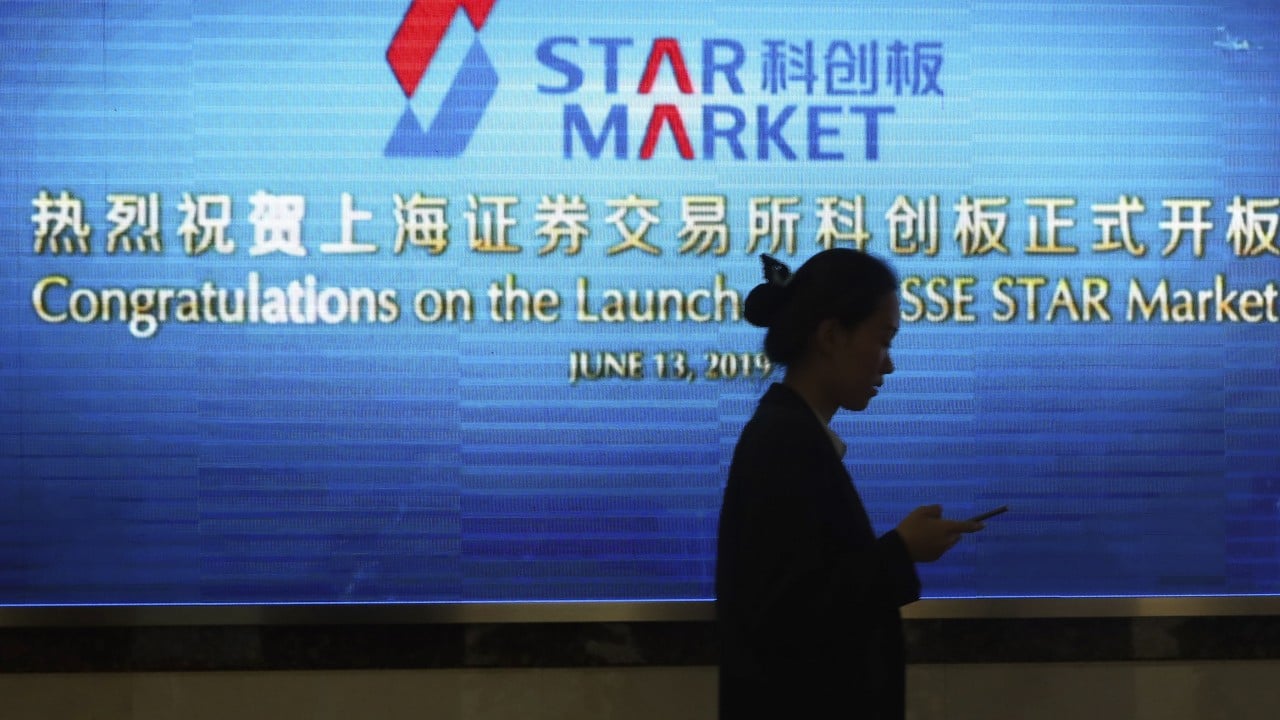
Shanghai is relaxing those pre-profit listing requirements on its tech-heavy STAR Market.
This shift changes the calculus for founders. Instead of burning out or selling prematurely to survive, early-stage hardware companies can raise public funds while still in the research and development phase. The risk transfers from desperate private lenders to public markets willing to bet on long-term industrial capability.
Consider the journey of a hypothetical materials engineer named Lin. Her team develops specialized chemical mechanical planarization slurries—the microscopic abrasive fluids used to polish silicon wafers. Her product is world-class, but her research facility bleeds cash. Under the old framework, Lin would face two choices: pivot to an easier, consumer-grade product to show immediate revenue, or run out of money before completing industrial trials. Under the revised listing parameters, her company can access public equity based on technical benchmarks and strategic necessity rather than net income.
The Human Cost of Strategic Self-Reliance
It is easy to analyze market directives through the lens of policy documents and GDP figures, but the reality on the ground is far more intense. The push for technological self-reliance has turned engineering labs into high-pressure furnaces.
Engineers in Shanghai's tech hubs work against a clock they did not set. The pressure to replace vital components across complex supply chains means that a design flaw is not just a commercial bump in the road; it is viewed as a systemic delay for an entire ecosystem.
The relaxed listing rules and government funds do not guarantee success. Money can buy equipment, build facilities, and hire talent, but it cannot synthesize decades of institutional knowledge overnight. The risk of capital inefficiency remains real. Throwing funds at hard problems sometimes creates bubbles, attracting opportunists who know how to draft persuasive policy proposals better than they know how to design microchips.
The true test will not be measured by how many funds are launched or how many companies go public this year. It will be decided in those quiet cleanrooms late at night, when a team runs their thousandth test on a local replacement part to see if it holds up under extreme heat without cracking.
A technician checks the telemetry on a testing rig. The green light flashes. One small piece of a massive puzzle locks into place, while ten thousand others remain unsolved.