It starts in the middle of a Tuesday afternoon budget meeting, somewhere between the third-quarter projections and a lukewarm sip of coffee.
For a woman I will call Claire—a composite of thousands of women sitting in fluorescent-lit conference rooms right this second—it does not feel like a gentle warming. It feels like someone has quietly walked up behind her chair and dumped a bucket of scalding water down the back of her neck. Her heart slams against her ribs at a hundred and twenty beats a minute. Beads of sweat erupt along her hairline, soaking the collar of her silk blouse in seconds. Across the table, a junior colleague asks a question about supply chain logistics, and Claire stares back, her mind suddenly scrubbed blank of nouns.
She smiles. She nods. She reaches for her water glass with a hand that is visibly trembling.
For decades, the medical establishment looked at Claire’s sudden, violent internal combustion and offered a collective shrug. If she went to her doctor, she was likely handed a pamphlet about wearing breathable cotton layers, told to avoid spicy foods, or quietly nudged toward an antidepressant. Worse, she was left to navigate a minefield of terrifying, outdated headlines about hormone therapy that made relief feel like a gamble with her own mortality.
That era of medical gaslighting is officially crumbling.
A massive shift in clinical guidance—spearheaded by the North American Menopause Society and echoed by major global health bodies—has fundamentally rewritten the playbook on how we treat vasomotor symptoms, the clinical term for the hot flashes and night sweats that hijack the lives of up to eighty percent of women. The new consensus is clear, urgent, and long overdue. Suffering in silence is no longer a valid medical strategy.
The Anatomy of an Internal Wildfire
To understand why the new medical guidance matters so deeply, you first have to understand what is actually happening inside a woman’s brain when a hot flash strikes. It is not a quirk of aging. It is a neurological misfire.
Think of the hypothalamus—a tiny, almond-sized structure deep inside the brain—as the body’s master thermostat. For decades, this thermostat operates with generous margins. Your core body temperature can fluctuate slightly without triggering an alarm. Estrogen acts as the steady hand keeping that thermostat calibrated.
When perimenopause and menopause arrive, estrogen does not simply decline in a smooth, predictable slope. It swings wildly, surging and crashing like a stock market in crisis. Deprived of its steady hormonal anchor, the hypothalamus becomes hyper-reactive. The comfortable temperature zone narrows to a razor’s edge. Suddenly, a fraction-of-a-degree rise in your core temperature—the warmth of a heavy blanket, a sip of red wine, a moment of mild stress—convinces your brain that you are dying of heatstroke.
Panic ensues. The brain fires an emergency signal down the sympathetic nervous system, flooding the bloodstream with adrenaline and dilating blood vessels near the skin’s surface to dump heat as fast as possible.
Sweat. Heart palpitations. Dread.
I remember the first time a night sweat woke me up at three in the morning. I was thirty-nine, convinced I had contracted a rare tropical fever. My sheets were soaked through to the mattress, yet my teeth were chattering uncontrollably as the sweat evaporated off my skin. The sheer violence of the physical reaction is terrifying when nobody has warned you what it feels like. You do not feel like you are transitioning into a graceful new season of life. You feel like your body has been hijacked by an arsonist.
And the damage extends far beyond ruined sleep and damp clothes. Recent longitudinal data shows that frequent, severe hot flashes are not merely an annoyance; they are a biological red flag. Women who experience persistent vasomotor symptoms face measurably higher risks of cardiovascular disease, accelerated bone density loss, and cognitive decline. When a woman’s sleep is shattered five times a night for seven to ten years—the average duration of untreated symptoms—her work suffers, her relationships fray, and her long-term physical health erodes.
The Ghost of 2002
If the biology is so clear, why have millions of women been denied effective care for over twenty years?
The answer lies in a single, catastrophic morning in July 2002. That was the day researchers halted the Women’s Health Initiative, a massive clinical trial studying hormone replacement therapy, and held a press conference before the data had even been fully analyzed. The headlines that exploded across the globe were apocalyptic: hormones caused breast cancer, heart attacks, and strokes.
Within months, prescriptions plummeted by nearly eighty percent. Doctors stopped prescribing hormones. Medical schools stopped teaching menopause care. An entire generation of women was abruptly cut off from the single most effective treatment for their symptoms, left to white-knuckle their way through a decade of misery.
It took years of painstaking reanalysis to uncover the truth that had been buried in the panic. The average age of the women in that 2002 study was sixty-three—more than a decade past the onset of menopause—and many already had underlying cardiovascular disease. Furthermore, the specific synthetic hormone formulations used in that trial are rarely prescribed today.
When researchers finally separated the data by age, a completely different picture emerged. For healthy women under sixty, or within ten years of their final menstrual period, the benefits of hormone therapy overwhelmingly outweigh the risks. Not only does it extinguish hot flashes and night sweats with roughly ninety percent efficacy, it actively protects bone density and reduces the risk of heart disease and type 2 diabetes.
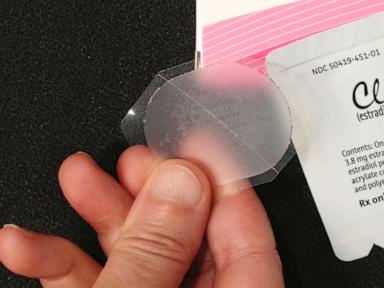
The new clinical guidelines are a direct corrective to that twenty-year trauma. They state unequivocally that hormone therapy remains the gold-standard first-line treatment for debilitating vasomotor symptoms. Modern regimens utilize bioidentical estradiol—delivered through transdermal patches, gels, or sprays that bypass the liver entirely, dramatically lowering the risk of blood clots compared to older oral pills—paired with micronized progesterone for women who still have a uterus.
A New Frontier for the Unreached
Yet even with the vindication of hormone therapy, a massive gap remained. What about the women who cannot take estrogen?
Consider a hypothetical patient named Elena. At forty-six, Elena is a breast cancer survivor, three years clear of chemotherapy and taking endocrine-blocking medication to prevent a recurrence. That life-saving medication plunges her into an immediate, brutal chemical menopause. She endures twenty hot flashes a day. She sleeps in ninety-minute increments. Because her cancer was hormone-receptor positive, estrogen therapy is strictly off the table. For years, Elena’s only options were off-label antidepressants like venlafaxine or gabapentin—medications that offered modest relief at best while layering on side effects like weight gain, emotional blunting, and fatigue.
Under the updated medical framework, Elena finally has an answer engineered specifically for her brain.
For the first time in medical history, clinicians have access to targeted, non-hormonal medications designed to quiet the hypothalamus directly. Drugs known as neurokinin-3 receptor antagonists—such as fezolinetant—work by blocking the specific chemical messengers (neurokinin B) that go into overdrive when estrogen drops. Instead of replacing the missing hormone, these medications essentially put a muzzle on the overreacting thermostat.
Clinical trials show that these non-hormonal blockers can slash the frequency and severity of hot flashes within days, without touching estrogen receptors anywhere in the body. Alongside established non-hormonal options—like specific low-dose SSRIs, SNRIs, and oxybutynin—and evidence-backed behavioral interventions like cognitive behavioral therapy and clinical hypnosis, the updated guidelines dismantle the old binary of "take hormones or suffer."
Notice what is conspicuously absent from the top tier of the new medical recommendations: the multi-billion-dollar unregulated supplement industry. The guidance explicitly warns clinicians and patients away from over-the-counter herbal remedies, black cohosh, evening primrose oil, and compounded bioidentical pellets. Not only do these products lack rigorous clinical proof of efficacy beyond a placebo effect, they also lack regulatory oversight, exposing women to unpredictable dosing and potential liver toxicity.
Reclaiming the Exam Room
Knowing the science is one thing. Getting it past the threshold of a fifteen-minute primary care appointment is another battle entirely.
Because medical education spent two decades ignoring menopause, a staggering number of practicing physicians still operate on outdated fears from 2002. Surveys consistently show that fewer than one in five OB/GYN residency programs offer formal, comprehensive menopause training. If you walk into an exam room and passively ask what can be done about your night sweats, there is a high probability you will still be handed a prescription for a low-dose antidepressant or told to buy a cooling pillow.
Changing that outcome requires walking into the appointment armed with precision.
First, track the data before you arrive. Doctors respond to metrics, not vague complaints of feeling warm. Spend two weeks logging the exact frequency of your hot flashes, how many times you wake up drenched at night, and how those episodes impair your ability to work, drive, or function. Quantifying the disruption forces the conversation out of the realm of minor discomfort and into the territory of clinical impairment.
Second, use the language of the updated guidelines. Ask directly about transdermal estradiol and micronized progesterone if you are within ten years of your final period and have no history of hormone-sensitive cancers or blood clots. If you do have contraindications, ask specifically about FDA-approved non-hormonal neurokinin receptor antagonists rather than settling immediately for off-label psychiatric drugs.
Third, verify your clinician’s credentials. If your current provider dismisses your symptoms as a natural rite of passage you simply need to endure, fire them. Organizations like The Menopause Society maintain public directories of certified practitioners who have passed rigorous competency exams in midlife women’s health. You deserve a doctor who reads the current literature, not one haunted by twenty-year-old headlines.
The End of the Quiet Endurance
We have spent centuries conditioning women to view physical misery as a badge of honor. We tell girls that debilitating menstrual cramps are normal. We tell new mothers that excruciating pain and exhaustion are just the price of admission. And when women reach midlife—often at the absolute peak of their professional power, wisdom, and leadership—we tell them to quietly endure an internal fire that robs them of sleep, clarity, and peace.
There is nothing noble about preventable suffering.
The new medical consensus is more than a dry update to clinical protocols or an expansion of a pharmacy formulary. It is a declaration that a woman’s quality of life in her forties, fifties, and sixties is worth protecting with the full force of modern science. It is permission to demand relief without apology, to sleep through the night without waking in a cold sweat, and to sit at the head of a conference table without feeling your own body turn against you.
Picture Claire again, six months later. She is sitting in that same Tuesday afternoon meeting. The quarterly numbers are brutal, the room is warm, and the pressure is high. She takes a sip of her coffee, looks across the table at her team, and speaks—her voice steady, her mind razor-sharp, and her skin entirely cool.