The world watches the headlines about destroyed buildings and ceasefire talks, but a quieter crisis is unfolding in the detention centers. Medical workers are disappearing from hospitals. Israel continues to hold senior medical staff from the Gaza Strip without formal charges, a pattern of detention that human rights groups warn violates international law.
When the director of Al-Awda Hospital in northern Gaza was detained in December 2024, it wasn't an isolated incident. Dr. Ahmed Muhanna chose to stay with his patients when tanks surrounded his facility. He refused to evacuate. Days later, he was taken into custody. Months have passed, and he remains locked away without a trial, an indictment, or access to a lawyer.
This isn't just about one doctor. It's about a systematic campaign that is crippling what remains of the Palestinian healthcare system.
The High Cost of Staying Behind
Medical personnel have a protected status under the Geneva Conventions. They aren't combatants. Yet, since the escalation of the conflict, the World Health Organization (WHO) has documented hundreds of attacks on healthcare facilities and the detention of dozens of medical professionals.
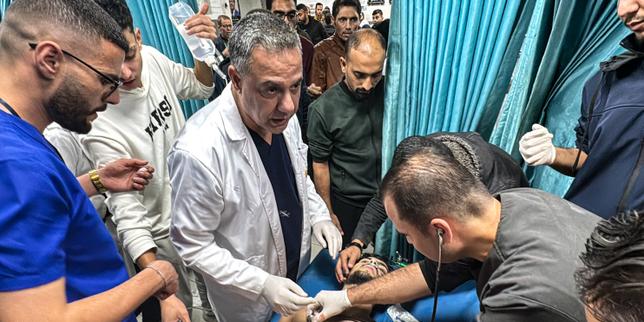
Dr. Muhanna's story reflects a terrifying reality for doctors in Gaza. Al-Awda Hospital was one of the last functioning medical points in the north. Resources were practically nonexistent. Doctors operated by flashlight, used domestic vinegar to clean wounds, and amputated limbs without anesthesia.
When the Israeli military ordered the evacuation of the north, Muhanna made a choice. He stayed. He knew leaving meant certain death for dozens of intensive care patients and newborns who couldn't be moved. That decision transformed him from a physician into a prisoner.
Israel frequently claims that hospitals in Gaza serve as command nodes for armed groups. But months after these high-profile arrests, the state has failed to produce credible evidence or bring formal charges against these medical leaders in a court of law. They're held under administrative detention or emergency laws that allow indefinite imprisonment without sight of the evidence against them.
Indefinite Detention is a Medical Crisis
Holding a hospital director without charge isn't just a legal black hole. It paralyses the community left behind. When you arrest the person who manages logistics, coordinates emergency triage, and secures the last remaining vials of antibiotics, the entire hospital collapses.
Human rights organizations like B'Tselem and Amnesty International have repeatedly called out this specific tactic. They argue that using administrative detention against medical staff serves as a form of collective punishment. Without administrative leadership, international aid organizations struggle to coordinate supply deliveries. Doctors who remain are terrified that they'll be next.
Consider what happens when a system loses its institutional memory. Muhanna knew which generators could be coaxed into running for another six hours. He knew which local warehouses still held hidden stocks of gauze. You can't replace that expertise with an interim manager during a siege.
The legal framework Israel uses to justify these detentions relies heavily on the Unlawful Combatants Law. This piece of legislation strips detainees of standard bureaucratic protections. It allows the military to delay legal representation for months. The evidence? Classifed. Neither the doctor nor their defense attorney gets to see it. It is a system built to prevent a fair defense.
Global Silence and the Precedent it Sets
The international community's response has been remarkably muted. While the WHO and Doctors Without Borders (MSF) release periodic statements condemning the detention of health workers, major Western governments remain quiet.
This silence sets a dangerous global precedent. If a state can detain hospital directors without public evidence during wartime without facing diplomatic consequences, the concept of medical neutrality is dead. Future conflicts will see hospitals treated as standard military targets and doctors as default combatants.
We've seen this play out before in other global conflicts, but the scale in Gaza is unprecedented. Healthcare workers aren't just collateral damage anymore. They are directly in the crosshairs.
What Needs to Happen Next
The situation requires immediate, targeted pressure from international legal bodies and medical associations worldwide. Medical neutrality isn't a luxury; it's the bare minimum required to keep civilians alive during wartime.
The World Medical Association and national medical boards must demand an immediate registry of all detained Palestinian healthcare workers. Israel must either formally charge these individuals with recognizable criminal offenses and present the evidence openly, or release them immediately.
If you want to support medical neutrality, call on your local representatives to pressure international bodies for a transparent accounting of all detained medical staff. Donate directly to organizations providing field medical support, like MSF, who continue to operate despite these extreme risks. The weaponization of detention against doctors must stop, or the field of humanitarian medicine will never recover.