The arrival of U.S. President Donald Trump in Shenzhen on November 18, 2026, ahead of the first formal trilateral summit with Chinese President Xi Jinping and Russian President Vladimir Putin, represents a structural shift in great-power choreography rather than an immediate breakthrough in policy. Standard news coverage frames the event through superficial optics—crowds gathering along motorcade routes and informal pleasantries at Asia-Pacific Economic Cooperation (APEC) galas. That framing obscures the underlying operational reality. When the heads of state of the world's three primary nuclear and geopolitical powers convene in a single room, the venue, protocol, and agenda mechanics function as deliberate instruments of statecraft.
Understanding the Shenzhen summit requires stripping away surface-level diplomatic theater to examine the incentive structures driving Washington, Beijing, and Moscow. Each leader entered Kylin Villa on November 19 facing distinct domestic constraints and asymmetric strategic objectives. The resulting 90-minute session and the four-point "U.S.-Russia-China Heads of State Declaration toward Peace" did not resolve territorial wars or lock in binding arms treaties. Instead, the summit established a new bargaining architecture that alters how bilateral disputes over trade, nuclear proliferation, and regional conflicts are priced and negotiated.
The Protocol Matrix and Venue Selection
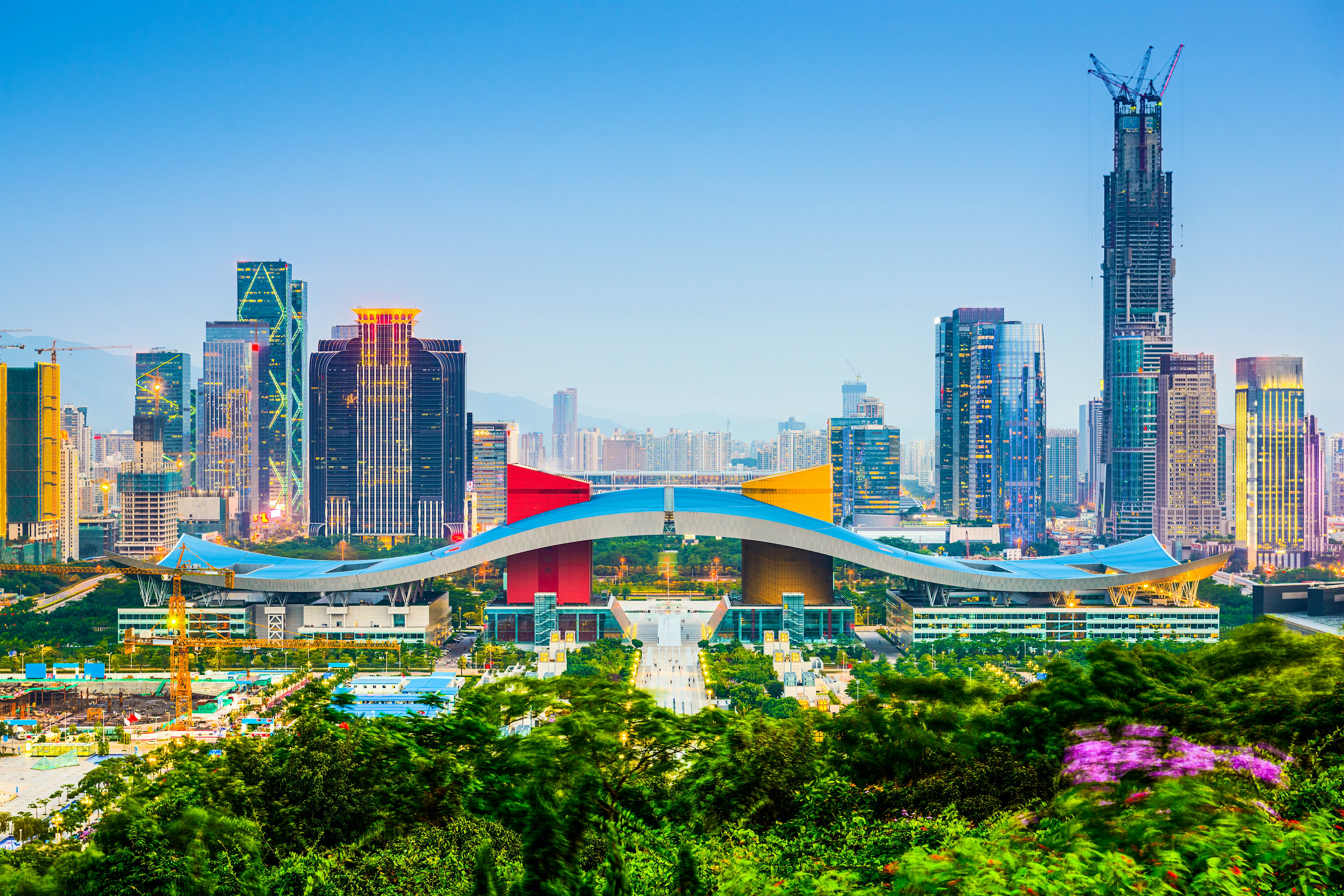
In high-level diplomacy, physical geography and ceremonial protocol act as non-verbal signaling mechanisms. Beijing's decision to host the 2026 APEC summit and the accompanying trilateral meeting in Shenzhen—rather than the political capital of Beijing—was a calculated exercise in economic signaling.
- Technological Projection Over Imperial Authority: Beijing showcases historical legitimacy and centralized state control. Shenzhen, as China's premier coastal innovation and hardware manufacturing hub, projects industrial capability and supply-chain indispensability. Hosting the first sitting U.S. president to visit Shenzhen places American leadership directly inside the physical ecosystem that U.S. export controls are designed to contain.
- Asymmetric Ceremonial Calibration: Protocol variations during the Shenzhen arrivals functioned as an immediate hierarchy mapping. Xi Jinping broke a 14-year precedent by personally greeting Trump at the airport—an honor never previously extended by the Chinese leader to a visiting head of state. By contrast, Japanese Prime Minister Sanae Takaichi received a minimal guard of honor, a greeting from a junior official, and a silent handshake from Xi. This divergence signals to regional observers that Beijing is compartmentalizing its disputes: isolating U.S. allies through diplomatic frost while elevating direct bilateral engagement with Washington to stabilize top-line relations.
- Crowd Mobilization as Domestic Validation: State-facilitated crowds welcoming the U.S. delegation serve a dual purpose. Internally, they demonstrate to the Chinese public that Washington still treats Beijing as an indispensable peer despite ongoing tariff regimes and semiconductor restrictions. Externally, they feed Trump's preference for visible, personalized acclaim, lowering interpersonal friction before substantive negotiations begin.
The Three-Player Payoff Matrix
Standard diplomatic reporting treats a trilateral summit as a collective problem-solving exercise. In practice, a three-way negotiation among strategic competitors operates as a multi-variable game where each participant optimizes for different domestic and international variables.
Washington's Objective: Breaking Bilateral Deadlocks
Trump entered Shenzhen operating under heightened domestic constraints following Republican losses in the November 2026 U.S. midterm elections, alongside sustained pressure from Congress and cabinet officials to maintain a hardline posture toward Beijing. Simultaneously, the U.S.-China trade truce faces a hard expiration deadline on January 10, 2027.
Washington's core objective in agreeing to the trilateral format was twofold:
- Triangulating Nuclear Arms Control: Following the expiration and erosion of traditional bilateral U.S.-Russia arms control frameworks, Washington has sought to pull China into formal stockpile limitations. With Pentagon projections indicating Beijing's nuclear arsenal will exceed 1,000 warheads by 2030—up from a historical baseline of roughly 300—bilateral U.S.-Russia treaties no longer capture the strategic balance. Trump used the Shenzhen stage to frame the three nations as uniquely positioned to negotiate three-way denuclearization.
- Extricating U.S. Bandwidth from Regional Wars: The Trump administration seeks negotiated settlements in both Ukraine and the Middle East (specifically regarding Iran) to reallocate strategic bandwidth. Engaging Putin and Xi simultaneously tests whether Beijing and Moscow will trade diplomatic pressure on regional conflicts for economic and sanction relief from Washington.
Beijing's Objective: Legitimacy and Tariff Insulation
For Xi Jinping, the primary value of the Shenzhen trilateral lay in the format itself rather than the text of the final communique.
- The Convener Dividend: By hosting both the U.S. and Russian presidents on Chinese soil, Beijing positioned itself as the central diplomatic clearinghouse of the international system. This optics play counters Western narratives of Chinese diplomatic isolation and demonstrates to the Global South that major global disputes cannot be adjudicated without Chinese mediation.
- Extending the Economic Runway: China faces structural economic headwinds and ongoing friction over advanced technology export controls, underscored by recent disputes involving semiconductor firms like Nvidia. Cultivating personal rapport with Trump—whom Xi treats as a transactional interlocutor distinct from the broader Washington national security apparatus—buys time to negotiate an extension past the January 2027 trade truce cliff.
- Deflecting Binding Nuclear Caps: While Xi signed onto general language regarding the prevention of nuclear war, Beijing maintained its long-standing refusal to accept hard numerical caps while its arsenal remains a fraction of the size of U.S. and Russian stockpiles.
Moscow's Objective: Ending Diplomatic Quarantine
Vladimir Putin extracted the highest immediate marginal utility from the Shenzhen meeting simply by appearing in the frame.
- Neutralizing Western Containment: Subject to a 2023 International Criminal Court (ICC) arrest warrant and more than four years into the full-scale war in Ukraine, Putin has faced sustained Western efforts to isolate Moscow diplomatically. Standing alongside the U.S. president in a formal trilateral summit—and hearing Trump publicly dismiss the ICC as "out of control"—effectively dismantles the Western diplomatic quarantine.
- Locking in Strategic Parity: In his opening remarks, Putin emphasized the three nations' status as founding members of the United Nations Security Council. This framing deliberately elevates Russia from a sanctioned regional aggressor back to the status of a co-equal global arbiter alongside Washington and Beijing.
- Preserving Territorial Leverage: Despite claiming that the three powers share converging interests in resolving the Ukraine war, Moscow made zero territorial concessions during either the trilateral session or the separate Trump-Putin bilateral meeting. Having survived four rounds of U.S.-brokered negotiations in Abu Dhabi earlier in November without yielding ground, Putin used Shenzhen to signal that any settlement must accommodate Russian security demands.
Deconstructing the Four-Point Declaration
The tangible output of the Kylin Villa meeting—the "U.S.-Russia-China Heads of State Declaration toward Peace"—illustrates the gap between diplomatic rhetoric and operational commitment. A rigorous audit of the document's core provisions reveals why substantive policy shifts remain constrained:
- United Nations Reform and State Consent: The declaration pledges to reform the UN and uphold principles of state consent. In diplomatic parlance, "state consent" is a defensive mechanism favored by Beijing and Moscow to block international interventions, human rights investigations, and multilateral sanctions regimes.
- Global Refined Petroleum Supply: The commitment to boost the production and supply of refined petroleum products "for the benefit of all nations" aligns with Trump's domestic priority of suppressing global energy prices and inflation. For Moscow, this language implicitly validates the continued flow of Russian hydrocarbons into global refining markets—primarily through Asian intermediaries—undermining the enforcement architecture of Western energy sanctions.
- Nuclear Risk Reduction vs. Arms Control: The declaration references reducing nuclear risks and preventing nuclear war, yet omits verification protocols, warhead ceilings, or inspection regimes. Risk reduction relies on crisis communication hotlines and declaratory doctrine; arms control requires intrusive, legally binding limits. The Shenzhen text achieved the former while failing to initiate the latter.
- Absence of Enforcement Mechanisms: None of the four points contain implementation timelines, working-group mandates, or compliance penalties. Without institutional follow-through at the ministerial level, heads-of-state declarations degrade rapidly once leaders return to their respective domestic political environments.
Structural Bottlenecks and Analytical Limitations
Treating the Shenzhen summit as a foundational realignment ignores three structural bottlenecks that severely limit what personal leader-to-leader diplomacy can achieve.
First, domestic institutional friction limits executive flexibility. While Trump favors personalized deal-making and views Xi as a friend, U.S. trade policy, semiconductor export controls, and defense posture are heavily codified by congressional legislation and bureaucratic enforcement. A post-midterm U.S. Congress with heightened opposition leverage will constrain the White House's ability to offer unilateral tariff relief or lift technology restrictions without verifiable, structural concessions from Beijing.
Second, alliance networks create third-party veto points. Neither Ukraine nor European capitals were present in Shenzhen, yet no durable settlement to the European war can be implemented without Ukrainian compliance and European financial and security participation. Similarly, Beijing's pointed diplomatic snub of Japan's prime minister in Shenzhen demonstrates that regional security tensions in the Indo-Pacific cannot be papered over by a U.S.-China photo opportunity. If Washington appears willing to trade allied security interests for bilateral agreements with Beijing and Moscow, key U.S. treaty allies—including Japan, South Korea, Poland, and Germany—face heightened incentives to pursue independent nuclear deterrents, directly contradicting the non-proliferation goals stated at the summit.
Third, the asymmetry of nuclear modernization prevents near-term parity. China is expanding its missile silos and warhead inventory precisely to escape a position of strategic inferiority relative to the United States and Russia. Expecting Beijing to freeze its arsenal at roughly one-third the size of its competitors violates basic deterrence theory. Until China reaches what its military planners define as an assured second-strike threshold, trilateral arms control talks will remain stalled at the level of non-binding platitudes.
Operational Benchmarks for the Next 60 Days
Because the Shenzhen summit produced a framework for dialogue rather than binding treaties, analysts and market participants must track concrete operational milestones rather than diplomatic statements to measure whether the trilateral format holds value.
- The December 14–15 G20 Summit in Miami: Trump is scheduled to host Xi at his Doral resort in Florida within four weeks of the Shenzhen meeting, with an open invitation extended to Putin. If the Shenzhen trilateral generated genuine momentum, Miami must produce formal sub-cabinet working groups on nuclear risk reduction and regional conflict mediation. An absence of technical working-group announcements will confirm that Shenzhen was purely transactional theater.
- The January 10, 2027 Trade Truce Cliff: This hard deadline serves as the primary empirical test of the Trump-Xi rapport. Watch for concrete adjustments to tariff schedules or export-control entity lists before January 10. If the deadline passes without either a structural trade agreement or a formal, multi-month extension, the goodwill generated in Shenzhen will immediately evaporate into renewed tariff escalation.
- Fifth-Round Ukraine Negotiations: Monitor whether Beijing alters its diplomatic or economic posture ahead of the next round of Russia-Ukraine talks following the inconclusive fourth round in Abu Dhabi. Genuine Chinese mediation would manifest as measurable pressure on Moscow to freeze front lines or accept international security guarantees—not merely rhetorical endorsements of peace declarations.
Great-power summits hosted in showcase cities routinely generate inflated expectations through carefully stage-managed visuals. In Shenzhen, the choreography succeeded in lowering immediate diplomatic temperatures and granting each leader a tailored domestic win. Yet until the four-point declaration translates into verifiable arms control inspections, extended trade truces, and territorial compromises before January 2027, the Kylin Villa meeting must be classified as an exercise in tactical stabilization rather than strategic resolution.
Watch the coverage of Trump arriving in Shenzhen ahead of the talks with Xi and Putin to observe the exact arrival protocol and ceremonial staging used by Beijing during the summit's opening phase.