Nostalgia is a hell of a drug, and the music industry is currently the world’s most aggressive dealer.
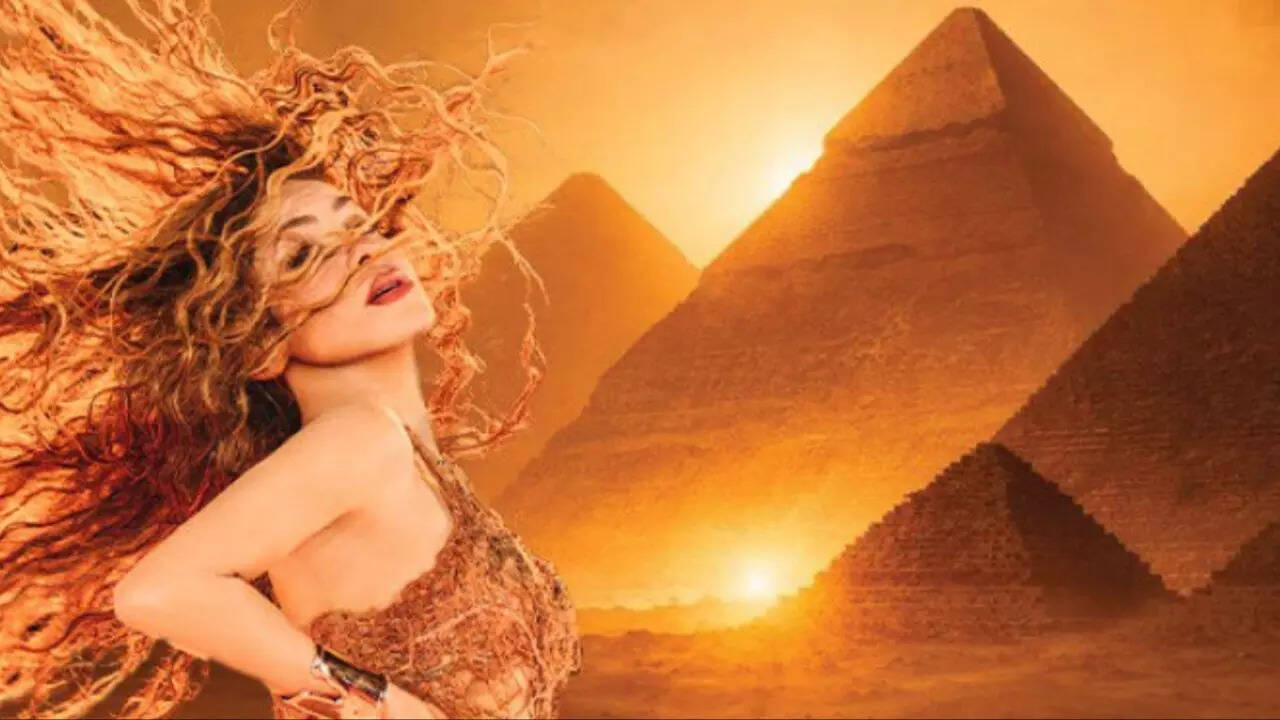
The internet is melting down because Shakira is returning to the Pyramids of Giza after nearly two decades. The narrative being shoved down your throat is simple: a triumphant return, a cultural milestone, a "historic" moment for global pop. Fans are "losing it" because they’ve been conditioned to mistake a calculated legacy-cashing maneuver for a genuine artistic breakthrough.
Stop falling for the optics.
I’ve spent years watching labels and promoters manufacture "moments" to distract from a lack of fresh output. This isn't a cultural reset. It is a textbook example of an artist leveraging ancient architecture to mask the fact that her current musical trajectory is stuck in a loop of trend-chasing and safe collaborations.
The Giza Tax and the Illusion of Grandeur
Let’s be honest about the venue. Performing at the Pyramids is the ultimate "get out of jail free" card for a stagnant brand. When an artist plays a stadium in New Jersey, they have to rely on the music. When they play at the foot of the Sphinx, the background does 90% of the heavy lifting.
The Pyramids provide an unearned sense of weight. It’s a trick of visual association. By standing in front of something that has lasted 4,000 years, the artist tries to borrow that permanence. We see this every time a legacy act feels their relevance slipping. They stop playing clubs and start playing "Wonders of the World."
It’s the "Giza Tax"—the premium fans pay to watch a performer rely on a backdrop because the setlist hasn't evolved in a decade. If Shakira played this exact set in a parking lot in Dubai, would the fans still be "losing it"? No. They’d notice the recycled choreography and the backing tracks.
The 19 Year Gap is a Marketing Weapon
The "19 years later" headline is a masterclass in emotional manipulation. It frames this show as a rare, once-in-a-lifetime event. In reality, it’s a gap born of logistics and shifting market priorities, not some grand cosmic alignment.
Promoters love a "return to form" arc. It allows them to jack up ticket prices by 400% under the guise of "exclusivity." But look at the data of the touring industry. Artists like Shakira aren't returning because they have a burning desire to connect with Egyptian history; they are returning because the MENA (Middle East and North Africa) region is currently the highest-growth market for live entertainment.
Saudi Arabia’s Vision 2030 and Egypt’s aggressive push to modernize its tourism infrastructure have created a gold rush. Shakira isn't making history; she’s following the venture capital.
The Myth of the Global Artist
The competitor pieces will tell you this is a win for "global representation." They’ll point to Shakira’s Lebanese roots as proof of a deep, spiritual homecoming.
That’s a nice story. It sells magazines. But from a business perspective, it’s a shield.
Whenever a major pop star faces criticism for creative stagnation—like the recent string of mid-tempo reggaeton tracks that sound indistinguishable from one another—they lean into "heritage." It’s an easy way to shut down critics. If you criticize the show, you’re not just criticizing a pop star; you’re criticizing a cultural moment.
I’ve seen this play out with dozens of A-list stars. They use their identity as a promotional tool when the charts get cold. Real innovation happens when an artist pushes the boundaries of their sound. Shakira’s recent work, while commercially successful, has been a series of safe bets. A show at the Pyramids is the safest bet of all. It is the architectural equivalent of a Greatest Hits album.
The Technical Reality of Greatness
Let’s talk about the actual performance.
Performing at high-altitude, open-air desert sites is a nightmare. The acoustics are objectively terrible. The wind shear destroys the soundstage, and the distance between the stage and the audience—mandated by heritage site protections—kills the intimacy.
People attending this show aren't going for the music. They are going for the Instagram photo.
We are witnessing the "Experience Economy" eat the "Music Industry" alive. When the "Gram-ability" of a concert becomes more important than the vocal performance or the arrangement, the art dies. Shakira is a phenomenal dancer and a capable vocalist, but the Pyramids show is designed to be seen, not heard.
Imagine a scenario where an artist of this caliber invested that same $10 million production budget into a revolutionary new stage technology or an intimate, high-concept residency that forced them to reimagine their catalog. Instead, we get a laser show on limestone. It’s flashy, it’s expensive, and it’s hollow.
Why Fans are Asking the Wrong Questions
People keep asking, "Will she do the hits?" or "How will she top the 2007 show?"
Those are the wrong questions. The real question is: Why do we allow legacy artists to stop being pioneers?
By celebrating this "return" as a peak achievement, we are telling artists that they don't need to innovate anymore. We are telling them that as long as they can find a big enough monument to stand in front of, we’ll ignore the lack of creative growth.
The industry insiders are laughing because they know they’ve found the ultimate loophole. They don't need to spend years developing a new sound for an artist. They just need to wait twenty years and book a historical site.
The Downside of the Contrarian View
I’ll admit there is a risk to this stance. There is value in spectacle. There is value in the sheer joy fans feel when they see their idol in a majestic setting. For many, the "why" doesn't matter as much as the "what."
But if we don't demand more than just "big shows in big places," we end up with a cultural landscape that is just a series of expensive reboots. We get the Star Wars sequels of pop music—visually stunning, technically proficient, but ultimately devoid of the soul that made the original work matter.
Stop Clapping for the Logistics
The Pyramids show is a triumph of logistics, insurance underwriting, and tourism board negotiations. It is not a triumph of music.
If you’re going to the show, enjoy the view. It’s one of the best on Earth. But stop pretending this is a "historic return." It’s a corporate pivot. It’s a legacy act doing what legacy acts do: maximizing the value of their brand before the clock runs out.
Shakira is a legend. She doesn't need the Pyramids to prove it. The fact that she’s using them anyway should tell you everything you need to know about the current state of her creative ambition.
The fans aren't losing it because the music is better. They are losing it because the marketing worked.
Don't be the person who mistakes a billboard for the sky.