The kitchen in Dhaka starts to go quiet around four in the afternoon. In a neighborhood where the lanes are narrow enough to touch clotheslines from opposing balconies, the sound of a gas burner is a communal heartbeat. It is the rhythmic hiss of morning tea, the steady roar of evening curry, the invisible pulse that tells a mother her children will have a warm meal before the mad rush of homework and sleep.
Except today, the blue flame refuses to catch.
Farzin turns the dial once. Nothing. Twice. A weak puff of air escapes the brass port, smells faintly of sulfur, and dies. She stares at the metal ring with a familiar, sinking heaviness. There is no surprise left in the failure—only a quiet calculation of how much charcoal is left in the sack on the balcony, and whether the neighborhood tea stall will sell her an extra canister of kerosene tonight.
Across an ocean, thousands of miles away from Farzin’s silent stove, a tanker sits dark and heavy on the rolling swells of the Arabian Sea. It is a floating city of steel carrying thousands of tons of refined fuel, its engines idling, its captain tracking the coordinates of naval skirmishes and missile trajectories. The tanker is waiting for a clearance that will not come today, or tomorrow. It is carrying the refined lifeblood meant for the fuel stations of Lahore and Karachi, where drivers wait in snaking lines that stretch around city blocks, engines idling until their tanks scrape empty.
We talk about geopolitics as if it were a game played on a flat map with plastic pieces. We talk about the Middle East, about strikes in the Red Sea, about the shadow war between Washington and Tehran, as distant abstractions. We quote defense analysts and oil futures. But geopolitics does not happen in a boardroom. It happens on an empty stove. It happens in the sputter of a taxi engine dying at a traffic light in Punjab while the driver watches his fuel gauge drop toward zero with the terrifying certainty of a countdown clock.
To understand why a war of drones and diplomatic threats thousands of miles away can starve a kitchen of gas and empty a petrol pump, you have to look at the fragile, invisible threads of modern survival.
Let us be honest about how the world works. Nations do not live in isolation. They live downstream.
Bangladesh, an economic engine humming with garment factories and ambitious infrastructure, runs on energy it must buy from abroad. Much of that energy arrives in the form of Liquefied Natural Gas, carried across the oceans in cryogenic vessels cooled to minus 260 degrees Fahrenheit. These ships are floating miracles of engineering, but they are also profoundly vulnerable. When global supply chains fracture—when maritime choke points become zones of active conflict, and when soaring spot prices cause global energy suppliers to divert cargoes toward richer, higher-paying buyers in Europe—developing economies get squeezed out.
Consider what happens next in a scenario that repeats every time a crisis erupts in the Persian Gulf. (And let us be clear: this is not a hypothetical weather pattern; it is the raw economic mechanics of scarcity). When international spot prices for LNG spike because supplies are choked off or rerouted, nations with tighter foreign exchange reserves face an agonizing choice. Do they burn through their national savings to buy a single shipload of gas at triple the normal cost, or do they ration?
They ration.
The valves are turned down. Industrial plants see their supply throttled. Power plants switch off turbines. And in Farzin’s apartment, the gas pressure drops to a ghost of what it once was, until finally, it stops entirely. The invisible chain connects a missile launch in the Middle East to a cold dinner in Dhaka.
Meanwhile, a few hundred miles to the west, a different crisis plays out in shades of gasoline and diesel.
Pakistan’s energy vulnerability is an old ghost with a new face. The country imports a massive share of its petroleum products, relying on stable maritime routes through the Strait of Hormuz and long-term supply contracts that must weather every fiscal storm. When regional tensions flare—when the risk premium on shipping skyrockets, and when currency depreciation makes every barrel of imported oil twice as expensive to buy as it was a year ago—the financial strain cascades down to the pumps.
Imagine a man named Tariq. He owns a white Suzuki cultus that he uses as a rideshare in Rawalpindi. His entire livelihood depends on the differential between the cost of fuel and the fare he can collect from passengers whose own wages are being devoured by inflation.
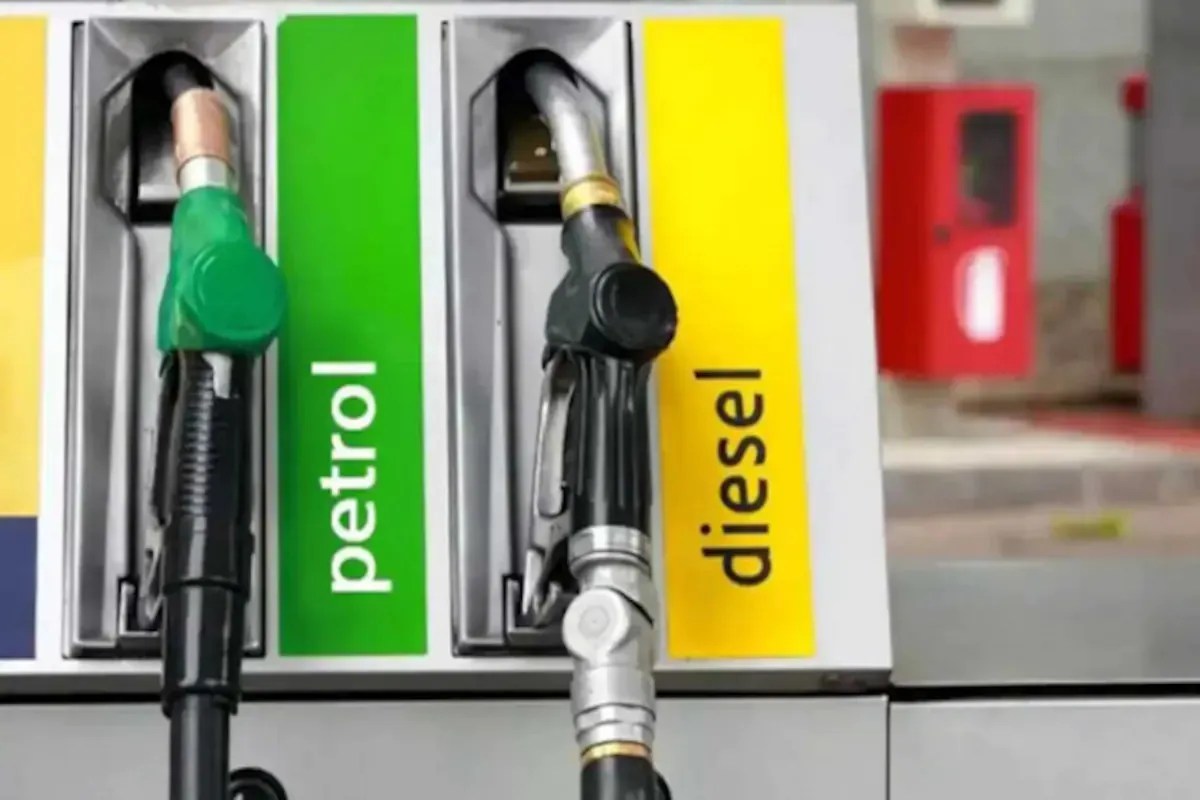
When the news breaks that petroleum supplies are dipping because international supply lines are disrupted by widening regional conflict, Tariq does not think about maritime insurance rates or Red Sea security architectures. He thinks about the petrol station down the road. He thinks about the yellow plastic sign that will soon read Out of Stock or the endless queue where cars bake in the sun for three hours only for the station manager to announce that the quota is finished.
The fuel shortage is not merely an inconvenience. It is a tax on time, patience, and dignity. Every hour Tariq spends idling in a fuel queue is an hour he isn't earning. Every rupee extra he pays for smuggled or black-market diesel is money pulled directly from his children's school fees.
The macroeconomics of energy insecurity always translate into micro-tragedies.
Why does the Iran-America conflict—or any escalation involving regional proxies, shipping lane blockades, and economic sanctions—hit South Asia with such devastating precision? Because the architecture of global energy is centralized and deeply interdependent. When tensions rise between Tehran and Washington, the ripples do not stay contained within the Persian Gulf. They radiate outward along every trade route, driving up marine insurance, forcing vessels to take longer routes around the Cape of Good Hope instead of cutting through the Suez Canal, and triggering panic-buying in spot markets.
Energy is not like software. You cannot code your way around a physical shortage of molecules. If a tanker is delayed by two weeks because it has to skirt an active combat zone, or if a supplier reneges on a contract because a domestic shortage forces them to keep their gas at home, the importing nation feels it instantly in the dark rooms of its factories and the cold burners of its kitchens.
We often look at these crises through the cold lens of data. We read that LNG imports dropped by a certain percentage, or that foreign exchange reserves fell below a critical threshold, or that petroleum stocks are down to a few days of cover. But numbers are just human stories compressed into shorthand.
Behind every percentage point drop in fuel reserves is a textile mill in Narayanganj that has to shut down its looms for three days a week, laying off daily-wage workers who have no safety net. Behind every disrupted shipment is a logistics chain that stutters, a fisherman who cannot afford the diesel to take his boat out into the bay, a hospital generator that has to ration its runtime.
The modern world prides itself on its hyper-connectivity. We are told that we live in a global village where an event in one corner of the earth instantly touches another. But we rarely talk about the dark side of that connectivity—the fragility of a system where a spark in a distant geopolitical flashpoint can plunge a million homes into darkness and bring thousands of vehicles to a dead halt on the highways of South Asia.
We are left with a sobering realization. The prosperity, the warmth, and the movement of everyday life in developing economies are tethered to forces far beyond their control, floating on oceans they do not police, at the mercy of rivalries they did not start.
The sun dips below the horizon in Dhaka. The neighbors across the alley are trying to coax a small camp stove to life with dried coconut husks, sending a thick, acrid ribbon of smoke up into the evening air. Farzin watches them from her window, listening to the quiet hum of a city learning, once again, how to endure the invisible cold blowing in from across the world.


