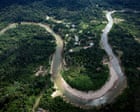
The river does not carry water alone. Out here, deep in the dense greenery where Brazil fades into Peru, the Javari River carries fear.
It starts with the sound of a two-stroke outboard engine cutting through the evening dampness. Ten years ago, that sound meant a neighboring village was arriving for a soccer tournament or trading manioc flour for fish hooks. Today, the hum of an engine makes mothers grab their children, pull them inside timber huts, and extinguish oil lamps.
The silence that follows is heavy. suffocating.
Across the sprawling borderland of the Javari Valley, criminal syndicates have quietly turned riverways into illicit highways. What was once the sanctuary for the highest concentration of uncontacted and recently contacted Indigenous peoples on Earth has morphed into a high-stakes corridor for international drug cartels, illegal loggers, and armed poachers.
Village leaders describe the situation in stark, unvarnished terms. They are not merely living alongside crime. They are hostages in their own ancestral home.
The Conquest of the Canals
To understand how a rainforest turns into a battleground, look at a map. Better yet, look at the water.
The border between Brazil and Peru in this region is not marked by fences or concrete checkpoints. It is defined by thousands of miles of winding, opaque tributaries. For generations, Indigenous communities like the Kanamari, Marubo, Matís, and Mayoruna managed these waterways with intimate precision. Every bend had a name. Every sandbar told a story about seasonal floods.
Then came the cocaine routes.
As enforcement tightened in traditional Andean transit points, transnational drug networks sought alternative paths to transport narcotics from Peruvian processing camps toward Atlantic ports in Brazil. The Javari Valley, remote and historically neglected by state security apparatuses, offered an ideal geographic loophole.
To secure these routes, criminal groups needed control over the riverbanks. They did not launch a formal invasion with tanks or proclamations. Instead, they arrived in small groups carrying assault rifles, offering cash to desperate youths, and delivering explicit threats to anyone who dared to speak to authorities.
Imagine a village elder named Francisco—a composite figure based on testimonies collected along the border. Francisco spent his youth tracking game by reading broken twigs and disturbed mud. Today, his tracking skills are useless against heavily armed squads patrolling the river mouth near his home. When traffickers dock at his community's wooden pier, they do not ask for permission. They demand fuel. They take food. They leave behind a simple warning: speak to the federal police, and the river will carry your body downstream.
This is not hyperbole. It is the daily math of survival.
An Absence of Law
Why doesn't the state intervene? The answer lies in the sheer vastness of the geography and a chronic, crippling lack of resources.
The Javari Valley Indigenous Territory covers an area roughly the size of Austria. Protecting an expanse that large requires boats, fuel, satellite intelligence, and hundreds of trained personnel. In reality, the stations operated by Indigenous protection agencies and federal forces are understaffed, underfunded, and constantly under fire.
When protection outposts operate with a handful of agents armed with basic handguns, while trafficking networks operate with automatic weapons, night-vision equipment, and limitless financial backing, the balance of power shifts instantly.
The tragic deaths of British journalist Dom Phillips and Indigenous expert Bruno Pereira in 2022 brought temporary global attention to this lawless frontier. For a few months, international news crews flooded into the port towns, and military patrols made high-profile sweeps. But news cycles move on. The camera crews left. The underlying infrastructure of organized crime remained intact.
When federal presence ebbs, the gangs return to fill the vacuum. They set up checkpoints along the rivers. They demand tolls from local fishermen. They establish illegal processing stations hidden beneath the thick canopy, knowing that by the time a police boat navigates the endless bends of the river, any trace of criminal activity will have vanished into the jungle.
The Collateral Damage of Silence
The physical presence of armed men is horrifying, but the subtle, psychological erosion of community life is what truly destroys a village.
Indigenous communities depend on collective labor and open movement. Hunting trips require walking deep into the forest for days at a time. Fishing expeditions mean spending nights on distant riverbanks. When criminal gangs declare certain tributaries off-limits, those food sources disappear overnight.
Malnutrition creeps in. Micro-economies collapse.
Sadder still is the destruction of trust within communities. Trafficking networks do not just use force; they use corrupting capital. In isolated regions where cash is scarce and basic medical supplies are non-existent, gang recruiters offer young men money, satellite phones, and status. It splits families down the middle. Fathers who spent their lives defending the forest suddenly find their sons working as lookouts for the very syndicates threatening their leaders.
When a community can no longer trust its own river, its own forests, or its own youth, the social fabric dissolves. The physical village remains standing, but its spirit is broken.
Beyond the Borderline
It is tempting for someone sitting in a city thousands of miles away to view this as a localized tragedy—a distant conflict in a far-off jungle. That assumption is dangerously flawed.
The destruction of the Amazon rainforest is tied directly to this lawlessness. Illegal drug networks do not operate in isolation. They reinvest their profits into illegal gold mining, land grabbing, and unauthorized logging. The same criminal infrastructure that moves contraband down the Javari River carries tons of illegally harvested timber out of protected zones.
Every acre of forest lost to armed gangs accelerates global environmental instability. Every Indigenous community forced off its land represents the loss of invaluable ecological knowledge accumulated over millennia.
The Indigenous leaders speaking out today are taking calculated, terrifying risks. When a tribal leader signs a public statement or travels to a state capital to denounce gang activity, they are effectively placing a target on their own back. They do it not because they feel safe, but because they have run out of options.
Consider what happens if their calls for help continue to fall on deaf ears: the complete criminalization of one of the world's last great wildernesses, and the displacement of the people who have kept it alive for centuries.
The water in the Javari River flows north toward the Amazon mainstem, silent and relentless. Along its banks, the villagers wait for the sound of the next engine, listening closely to hear whether it brings a neighbor or another crew of men carrying rifles in the dark.


