The United States Central Command (CENTCOM) declared a total maritime blockade of Iranian ports on April 13, 2026, effectively attempting to sever the jugular of the Iranian economy. Within 36 hours, the Pentagon claimed a 100% success rate in halting economic trade. On the surface, the numbers support this: hundreds of commercial vessels sit anchored in the Persian Gulf, paralyzed by the withdrawal of London-based war risk insurance and the looming threat of U.S. interdiction. Yet, beneath this veneer of total control, a sophisticated "shadow pipeline" is moving millions of barrels of crude.
Iran is not merely bypassing the blockade; it has spent the last decade building a parallel maritime reality that the U.S. Navy is struggling to map, let alone stop. This isn't about small wooden dhows slipping through in the dark. It is a high-tech shell game involving Very Large Crude Carriers (VLCCs), digital identity theft, and a new "forced" routing system that utilizes Iranian territorial waters as a protected sanctuary.
The Territorial Shield Strategy
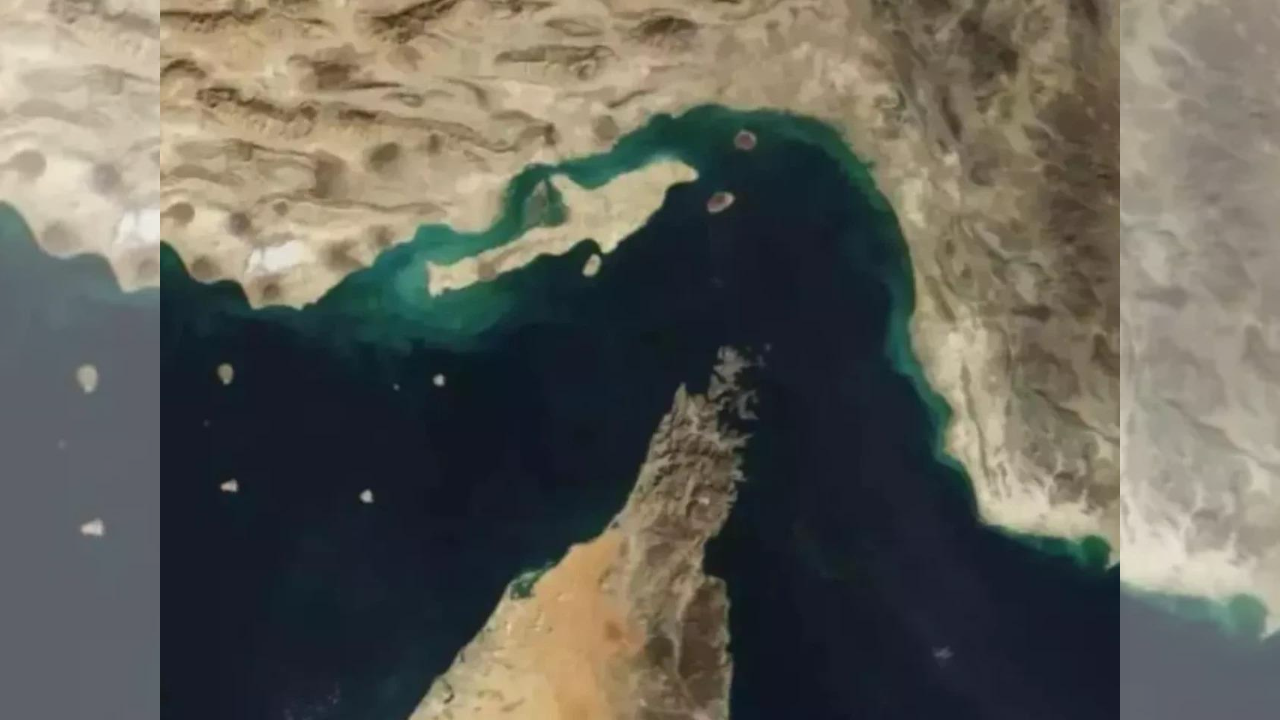
The primary mechanism for this evasion is the "IRGC Transit Lane." Following the initial strikes in February 2026, the Islamic Revolutionary Guard Corps (IRGC) mandated that all "friendly" traffic—predominantly vessels bound for China, India, and Malaysia—abandon the internationally recognized Traffic Separation Scheme (TSS). Instead, these ships are ordered to hug the Iranian coastline, passing between the islands of Larak and Hormuz.
This isn't just a change in geography; it's a legal and tactical gambit. By forcing tankers into territorial waters, Iran creates a dilemma for U.S. blockading forces. To interdict these vessels, U.S. warships would have to violate Iranian sovereignty in a high-tension combat zone, potentially triggering a wider regional conflagration. Data from LSEG and Kpler shows that as recently as April 14, sanctioned tankers like the Rich Starry and the Elpis successfully navigated this inner channel. They aren't "passing" the blockade so much as they are operating behind a wall of sovereign risk that the White House is currently hesitant to breach.
Digital Ghosts and AIS Spoofing
The blockade relies on the Automatic Identification System (AIS) to track and identify targets. However, the "Dark Fleet"—a collection of aging, often unlined tankers—has turned AIS into a tool of deception. We are seeing a massive uptick in "voyage simulation."
In this process, a vessel remains docked at an Iranian terminal like Kharg Island while its AIS transponder, or a shore-based emulator, broadcasts a fake journey. To a satellite or a remote analyst, it appears the ship is making a routine, legal port call in Iraq or the UAE. Meanwhile, the actual tanker is moving under "dark" conditions, its lights out and transponder killed, to a mid-sea rendezvous point.
The Anatomy of a Ghost Transfer
- Identity Hijacking: Tankers frequently use IMO numbers (permanent ship IDs) belonging to scrapped vessels or ships currently under construction in Chinese yards.
- The Circle Pattern: Advanced spoofing now includes "impossible" movements. Analysts have flagged vessels that appear on radar to be moving in perfect, geometric circles or straight lines at impossible speeds—a digital footprint intended to clutter U.S. naval tracking algorithms.
- Reflagging on the Fly: Ships are switching flags mid-transit, moving from "Blacklisted" status to neutral registries like Botswana or Palau in a matter of hours, often using fraudulent paperwork.
The Malaysian Hub and the End of Oil for Security
The blockade's greatest weakness isn't in the Strait of Hormuz itself, but thousands of miles away off the coast of Malaysia. This has become the primary clearinghouse for sanctioned crude. Ship-to-ship (STS) transfers allow Iranian oil to be blended with other grades, re-branded as "Malaysian Blend," and moved onto "clean" tankers that have no legal ties to the IRGC.
The U.S. Treasury recently blacklisted over two dozen entities linked to the Shamkhani shipping network, but for every firm shuttered, three more emerge in jurisdictions with little appetite for enforcing American mandates. This friction points to a deeper systemic collapse: the "Oil for Security" deal that governed the Persian Gulf for decades is dead.
The Trump administration has attempted to fill the gap by deputizing the U.S. Development Finance Corporation to provide subsidized reinsurance for "friendly" shippers. They are essentially trying to buy back the market's confidence. However, insurance alone cannot move a ship through a minefield or past a drone swarm.
The Logistics of Economic Fury
While the U.S. focuses on "Economic Fury"—targeting the financial infrastructure of the Shamkhani family and other regime elites—the physical reality on the water is one of attrition. Iran is currently holding roughly 157 million barrels of oil "on water." This is a massive floating stockpile that serves as both a strategic reserve and a ready-to-ship inventory the moment a gap in the blockade appears.
The Pentagon’s claim of a 90% halt in trade ignores the 1.5 million barrels per day that continue to flow through the shadow pipeline to China. China has reportedly agreed not to send weapons to Iran in exchange for "permanently opening" the Strait, but this diplomatic posturing does little to stop the flow of energy that fuels the Chinese industrial machine.
The blockade has created a two-tier maritime economy. In the first tier, legitimate commercial shipping is paralyzed, leading to a 346% spike in port-of-loading rollovers. In the second tier, the ghost fleet operates with near impunity, leveraging Iranian territorial waters and digital spoofing to ensure the regime’s revenue remains at a "stable but exposed" level.
As long as the U.S. naval strategy remains focused on the deep-water channels and international lanes, the Iranian coastline will remain a highway for the very trade the blockade was designed to kill. The "total" blockade is, in reality, a sieve, and the holes are getting larger as the Dark Fleet refines its tactics.