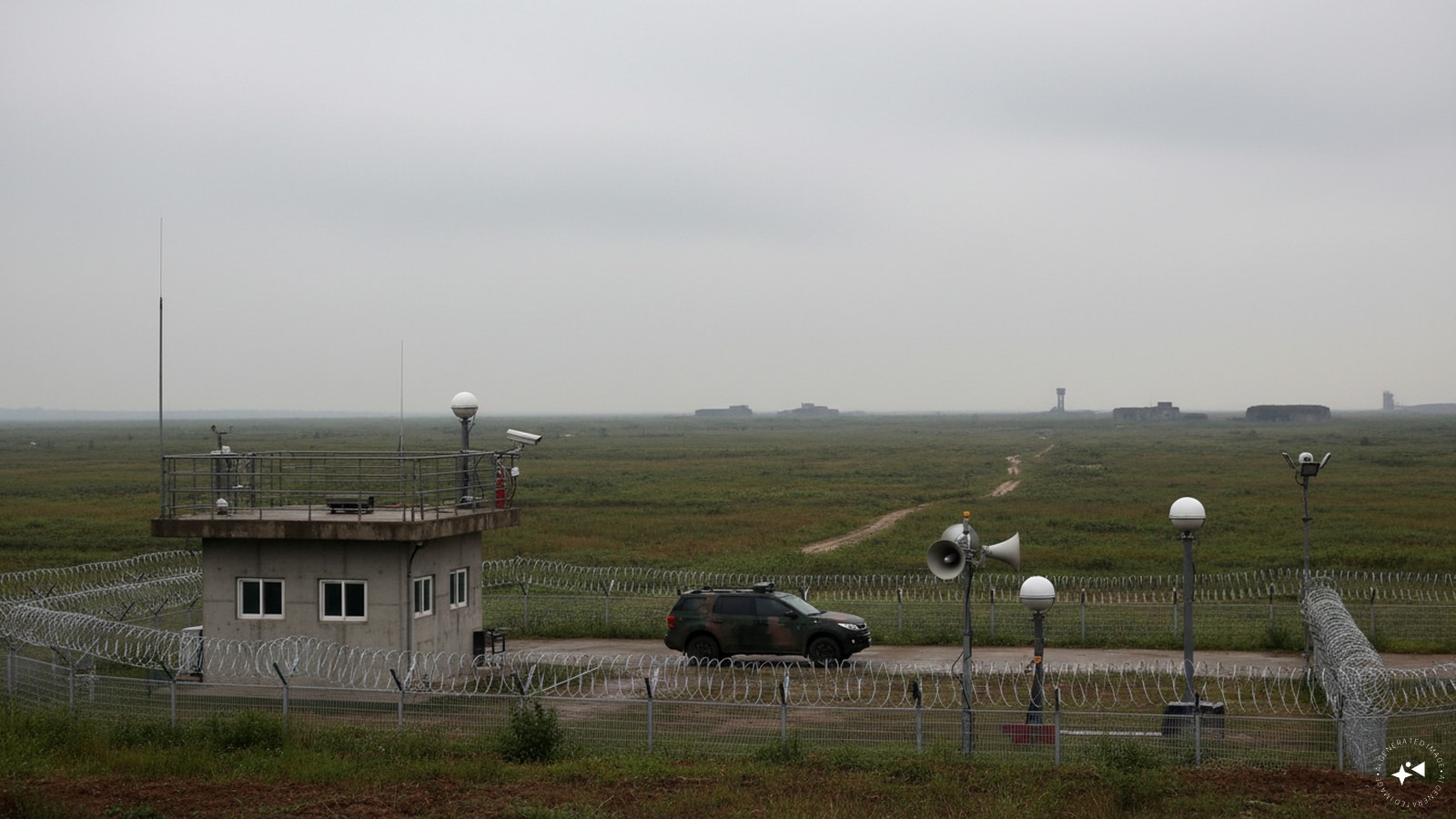
When South Korea vows a stern, resolute response to new North Korean border measures, it isn't just reciting cold-war boilerplate. Something tangible has shifted on the ground inside the Demilitarized Zone, and the numbers tell a story that diplomatic slogans alone can't paper over.
South Korea's Joint Chiefs of Staff, led by Chairman Gen. Jin Yong-sung, ordered frontline units to respond decisively after Pyongyang threatened to deploy additional tactical strike assets along the frontier and revive anti-South propaganda loudspeaker broadcasts. That warning came on the heels of a Sept. 21 landmine explosion in the western section of the DMZ that wounded three South Korean soldiers—an incident a United Nations Command investigation concluded involved North Korean antipersonnel mines and breached the 1953 Armistice Agreement.
If you're searching for what this standoff means, the short answer is that the border isn't just tense—it's being physically rebuilt into a harder, more volatile barrier. Most analysts don't view this as a signal of an imminent full-scale invasion. Instead, the real danger is a localized clash or miscalculation along a crowded, heavily mined 250-kilometer line where both sides have fewer guardrails than they used to.
Why North Korean Border Measures Look Different This Time
For decades, the DMZ was a four-kilometer-wide buffer strip running across the Korean Peninsula, split down the middle by the Military Demarcation Line. Even when relations were frosty, both sides treated it largely as a frozen armistice zone rather than a newly constructed international wall.
That changed after North Korea began fortifying its border in April 2024, following Kim Jong Un's late-2023 shift away from reunification toward treating South Korea as a separate, hostile state. Since then, North Korea has cleared vegetation, laid wire fencing and anti-tank barriers, built tactical roads, and reportedly planted roughly 960,000 landmines along the border zone—approaching or surpassing total mine estimates from the entire post-1953 era. South Korean military assessments have indicated that ground-clearing is largely finished and overall construction is roughly 40% to 60% complete, with completion projected in the second half of 2028.
Honestly, this isn't just about keeping South Korean forces out. A hardened, mined frontier also locks North Koreans in, reinforces Pyongyang's ideological break from shared-nationhood rhetoric, and creates a physical reality that matches its nuclear-state posture.
Crossings and Loudspeaker Warfare
Physical construction isn't happening in a vacuum. South Korean military figures cited by lawmakers and news reports show North Korean troops crossing the Military Demarcation Line more than 50 times in 2026—a sharp jump from 17 crossings in 2025 and 9 in 2024, including roughly 20 crossings in August and 30 in September alone. When those crossings happen, South Korean troops have used warning broadcasts and warning shots until the soldiers pull back.
Then there are the loudspeakers. Kim Yo Jong warned in October that North Korea was preparing to deploy anti-South loudspeakers along the border and accused Seoul of crossing a "red line" with loudspeaker broadcasts and warning shots, while Pyongyang denied responsibility for the September mine blast and insisted its troops weren't breaching the border during fortification work. Loudspeaker campaigns sound almost quaint compared to ballistic missiles—especially after North Korea fired around a dozen short-range ballistic missiles off its east coast on Oct. 29 and announced cluster-bomb warhead tests for tactical ballistic missiles. Yet psychologically and tactically, loudspeakers sit right on the hair-trigger edge of frontline friction.
What Seoul's Resolute Response Actually Means on the Ground
When South Korea's top brass talks about resolute punishment or a stern response to North Korean border measures, it's drawing two lines at once.
First, Seoul is pushing back against what it views as creeping violations of the 1953 Armistice Agreement—from mines planted south of the Military Demarcation Line to unauthorized crossings and forward-deployed strike assets. Following the Sept. 21 blast that injured three South Korean soldiers, Seoul demanded an apology and an end to border fortification work, while also renewing an offer on Oct. 23 for military talks to establish a reference line for the MDL after an earlier November 2025 proposal went nowhere.
Second, South Korea is trying to prevent Pyongyang from dictating the rules of engagement inside the DMZ. Gen. Jin Yong-sung's directive to frontline troops emphasized responding decisively to provocations and reinforcing South Korea's operational initiative. In practice, that means troops on watch aren't supposed to hesitate when border violations happen, even as Seoul insists its own operational measures are legitimate.
Here's where people sometimes misread the situation. A tough warning from Seoul doesn't mean South Korea wants a war. Quite the opposite. Deterring localized bullying requires making clear that provocations carry immediate costs—before small incidents spiral into something nobody can walk back. At the same time, Pyongyang has told its own border troops to take "prompt and resolute action" if their safety is threatened. When both sides tell frontline soldiers to act fast and decisively in tight quarters, the margin for error gets razor-thin.
Why Analysts See Miscalculation Rather Than Invasion
If you look at recent reporting from outlets like The Guardian and Channel NewsAsia, a consistent thread runs through the analysis: North Korea's fortification drive and border friction look more like coercive consolidation and high-risk brinkmanship than preparation for an all-out ground invasion. Analysts have also noted that testing command dynamics or reacting to allied military drills—which Pyongyang routinely condemns as war rehearsals—can fuel sharper rhetoric and tactical displays.
Still, I wouldn't wave that away as "just noise." History shows how quickly a localized mine incident can escalate. In 2015, a landmine blast in the DMZ led to an artillery exchange before a tense deal cooled things down roughly three weeks later. Today, with hundreds of thousands of newly laid mines, forward artillery and strike units, and virtually zero working military communication between Seoul and Pyongyang, an accidental clash could escalate faster than diplomats can react.
There's also a layer of uncertainty we should be candid about: independent verification inside North Korea is heavily restricted, and both sides frame border events to fit their own narratives. Relying on UN Command findings and South Korean Joint Chiefs of Staff assessments gives a much clearer picture than taking KCNA statements at face value, though exact mine counts and future construction timelines remain estimates rather than audited totals.
Common Questions and Misconceptions About the Border Standoff
People tend to jump to two extremes whenever headlines about North Korean border measures hit. Either they assume Seoul and Pyongyang are hours away from war, or they assume it's all theater and nothing ever changes. Neither captures what's happening.
A common misconception is that any border flare-up puts everyday life in Seoul in immediate danger. The recent incidents and fortification work have been concentrated along the DMZ and MDL, not inside South Korea's capital. That doesn't make border tensions irrelevant—markets, regional diplomacy, and frontline troops feel the strain—but distance and layered defenses matter.
Another point of confusion is whether the DMZ was ever truly "demilitarized." On paper, the 1953 armistice set up a demilitarized buffer zone. In reality, it has been heavily guarded for decades. What's new is the sheer scale of recent mine-laying, barrier construction, and more frequent line crossings.
Practical Ways to Track What Happens Next
If you're following this story—whether for geopolitical research, business risk, or travel planning—don't get pulled around by every dramatic headline or angry state-media statement. Look at concrete indicators instead:
- Check official travel advisories rather than rumor. If you have travel plans to South Korea, check authoritative government advisories such as U.S. State Department travel guidance or UK Foreign Travel Advice before booking and again right before departure.
- Watch MDL crossing counts and UN Command statements. Sustained drops in Military Demarcation Line crossings or formal statements from the UN Command and South Korea's Joint Chiefs of Staff signal real operational shifts far better than rhetorical broadsides.
- Look for any sign of working military hotlines or talks. Seoul has repeatedly proposed military talks to clarify the MDL; any willingness by Pyongyang to engage—or conversely, new deployments of artillery, loudspeakers, or missile tests—will show whether friction is leveling off or climbing.


