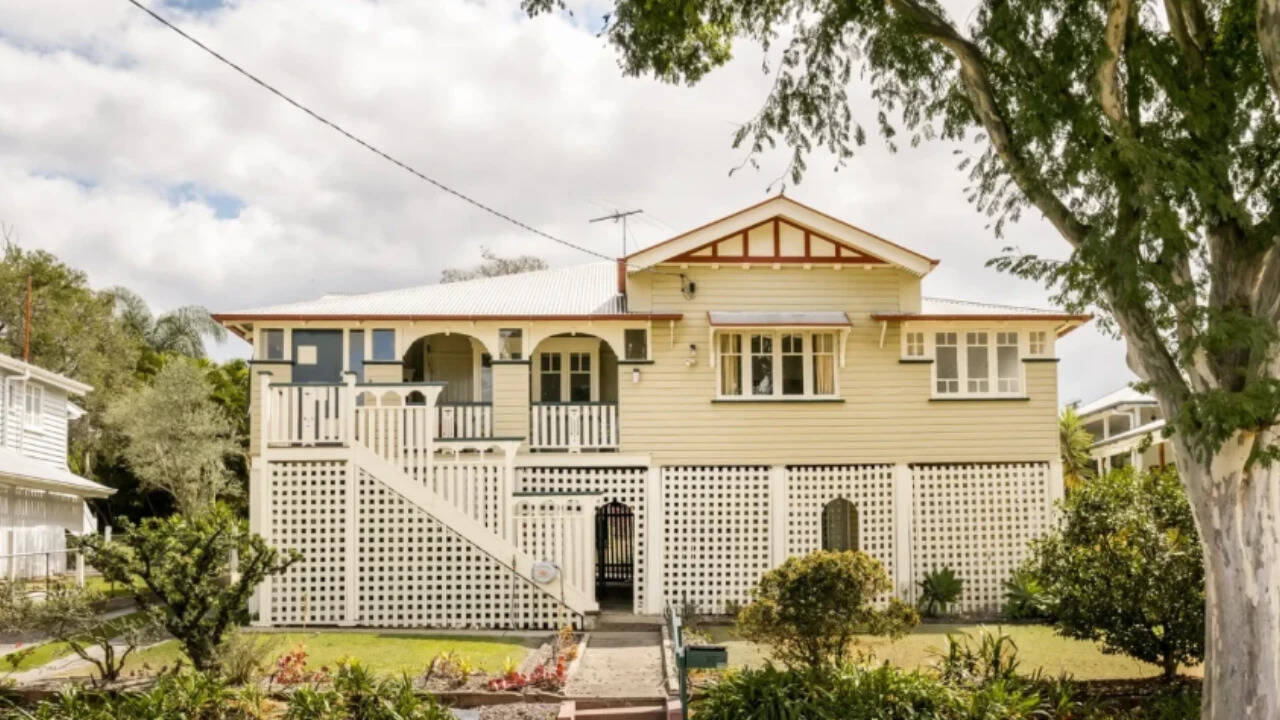
Everyone lost their minds over the ninety-eight-year-old woman in Brisbane who finally unloaded the weatherboard cottage her father threw together in 1921 for just over two million Australian dollars.
The mainstream press framed it as a triumph of generational grit. A sweet testament to holding on. A nostalgic monument to a simpler time when men built roofs with their bare hands and families stayed put for a century.
It is a comforting bedtime story. And it is entirely financially illiterate.
Let us look at the arithmetic of sentimentality.
When a property sits in inner Brisbane untouched for a hundred years, people assume the owner won the lottery of time. They see the headline figure and salivate over the capital growth. What they ignore is the opportunity cost of an asset trapped in amber.
I have watched property owners bleed hundreds of thousands of dollars in deferred maintenance, lost yield, and tax inefficiencies simply because they lacked the emotional detachment to treat a parcel of dirt like a balance sheet item. Holding a 1921 weatherboard home until 2026 isn't a masterclass in investing. It is a slow-motion liquidity leak disguised as family pride.
The Myth of the Forever Block
Real estate folklore tells you that land appreciates indefinitely while structures decay. That is half-true. Land does the heavy lifting, but only if its density matches its economic potential.
A single-family dwelling sitting on a generous parcel in an inner-ring suburb represents a massive market inefficiency. If a block can support townhouses or low-rise apartments, keeping a timber shack on it is an act of economic vandalism against your own net worth. The market paid two million dollars for that Brisbane block not because the 1921 walls had architectural integrity. It paid for the demolition permit and the air rights.
When you celebrate the octogenarian who held out for a century, you are praising someone who left millions on the table for decades because parting with the kitchen lino felt too hard.
Let us break down what actually happened to that capital over ninety-eight years. If you factor in council rates, structural insurance, termite treatments, roof repairs, and the sheer lack of cash flow compared to a diversified equities portfolio or high-yield commercial holdings, residential nostalgia is a terrible financial advisor.
The Cost of Staying Put
The lazy consensus in property circles is that time in the market beats timing the market. That adage works for broad-market index funds. It fails catastrophically for single-asset real estate.
Single assets require active capital defense. A stock doesn't rot. A share portfolio doesn't suffer
Why That Two Million Dollar Brisbane Cottage Sale is a Financial Tragedy Dressed as a Success Story
business, news
A ninety-eight-year-old woman just sold a Brisbane house built by her father in 1921 for two million and thirty thousand dollars. The media is popping champagne. Headlines are screaming about generational wealth, property milestones, and the infallible genius of sitting on a patch of dirt for a century.
It is a masterclass in financial delusion.
Strip away the sentimental varnish about a family homestead standing firm since the roaring twenties, and you are looking at a century of dead capital, missed opportunities, and inflation eating away at real returns. People look at a two-million-dollar price tag on a property purchased for a fraction of a penny generations ago and think they are looking at a gold mine. I see a ninety-eight-year liquidity lockup.
Let us dismantle the lazy consensus that buying a house and dying in it is the pinnacle of economic achievement.
The Myth of the Century Long Hold
The standard narrative goes like this: buy land, hold it through world wars, economic depressions, and urban sprawl, and walk away a multi-millionaire. It sounds romantic. It also ignores the invisible tax of maintenance, rates, insurance, and the supreme cost of opportunity.
If her father built that house in 1921, what else could that initial capital have done over one hundred years? Put that money into a globally diversified productive index fund with a conservative historical real return, reinvest the dividends, and watch what happens. You do not end up with a single timber-framed cottage on a suburban block worth two million dollars. You end up with a compounding engine that dwarfs the modest appreciation of Australian residential real estate over a long horizon.
Real estate agents love to talk about capital growth. They rarely talk about the drag. Over one hundred years, how many roofs were replaced? How many coats of paint applied? How many municipal rates paid to the Brisbane City Council? Every dollar poured into maintenance is capital that stopped compounding elsewhere. When you factor in total cost of ownership, the net annual return on that 1921 cottage looks remarkably ordinary.
The Sentiment Trap
We weaponize nostalgia to justify poor asset allocation. Families hold onto crumbling suburban properties because of memories, ghosts of parents past, and a deep-seated cultural phobia of renting. We treat bricks and mortar like a family member instead of what it actually is: a tool for utility and capital deployment.
When a property appreciates purely due to population pressure and land scarcity in a localized pocket, people mistake macro tailwinds for personal investing genius. Brisbane transitioned from a sleepy regional hub into a booming metropolis. The house did not become two million dollars better. The surrounding infrastructure improved, the population density exploded, and the purchasing power of the currency evaporated.
If you own a business that stagnates for ninety-eight years and only survives because the land underneath it quadruples in value due to external government infrastructure spending, you did not build a great asset. You bought a lottery ticket and waited a lifetime for the numbers to be drawn.
The Real Cost of Low Liquidity
Liquidity matters. Tying up capital in a single, non-divisible physical asset for a century exposes you to localized risk. What if the neighborhood zoning changes? What if a major arterial road is planned right through the backyard? What if economic shifts pull wealth away from that specific suburb?
Diversification is not a buzzword invented by modern venture capitalists; it is a shield against reality. Putting a hundred years of potential savings, sweat equity, and maintenance costs into one wooden house in Brisbane is a massive concentration risk. The fact that it worked out ok for a ninety-eight-year-old survivor of a century of economic changes does not make it a strategy worth emulating. It makes it a survivor bias anecdote.
We should stop celebrating multi-decade property stagnation as a masterclass in investing. True wealth creation is active, efficient, and mobile.
Stop treating your family home like an untouchable shrine to the past. It is an asset. If its return profile looks like an anchor rather than a rocket, cut the rope.