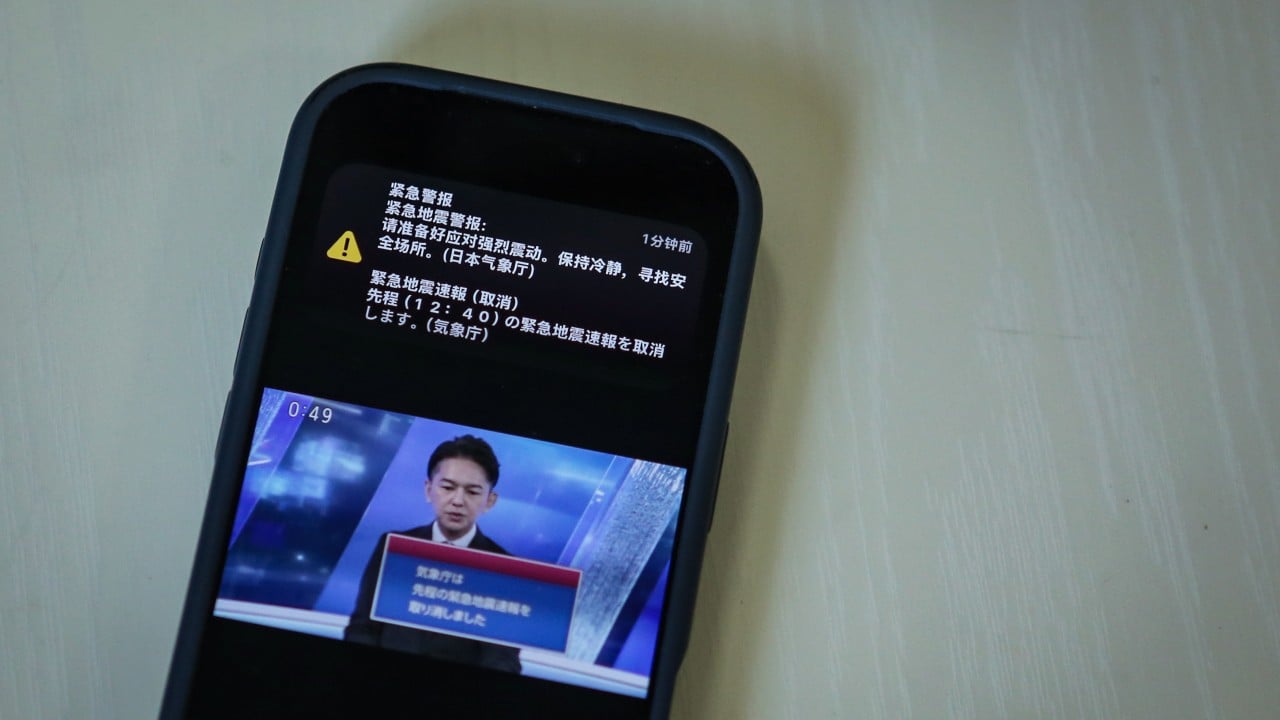
Public warnings about a catastrophic earthquake that fails to arrive impose immediate economic and psychological costs while exposing the gap between probabilistic seismology and binary human decision-making. To replace sensationalist narratives around "mega-quakes that never was" and "false alarms," risk managers need a rigorous blueprint that separates physical fault mechanics from institutional warning thresholds, maps the cost function of premature alerts, and diagnoses the causal chains that erode long-term readiness. A typical media treatment treats an unfulfilled seismic advisory as either a triumph of caution or a humiliating failure of science. Both readings miss the structural reality of low-probability, high-impact geohazards: issuing a warning when no major rupture follows is not necessarily a scientific error, nor is a quiet fault a proof of safety.
Deconstructing the False Alarm Narrative
Popular accounts of unfulfilled mega-earthquake warnings frequently conflate deterministic prediction with probabilistic hazard advisories. In everyday speech, people hear "mega-quake warning" and expect a countdown clock to zero. In geophysical practice, authorities issue elevated risk notices when seismic activity, slow-slip events, or foreshock clustering shift short-term rupture probabilities above a pre-set operational baseline—even when the absolute probability of a devastating event in the next week remains low.
Competitor commentary often falls into three analytical traps:
- Outcome bias: Judging the quality of a warning solely by whether a major earthquake occurred during the advisory window, ignoring that a 1% or 3% elevated chance still resolves as "no rupture" roughly 97% to 99% of the time.
- Flat risk framing: Treating a localized tremor or elevated advisory as a uniform threat across entire regions, rather than distinguishing between near-field shaking, tsunami inundation zones, and distant infrastructure exposure.
- Single-loop behavioral assumptions: Assuming that populations respond to repeated advisories with linear caution, overlooking habituation, alert fatigue, and rational economic trade-offs made by households and firms.
A sharper analytical lens treats a "false alarm" in seismic risk management as a signal-versus-action mismatch. Seismologists detect real physical signals—such as foreshocks, stress transfers, or anomalous crustal deformation—but institutional protocols convert those signals into high-visibility public alerts that carry steep disruption costs. When the hazard does not materialize, the public experiences the cost of disruption without the visible benefit of averted casualties.
The Architecture of Seismic Risk and Warning Thresholds
Understanding why mega-quake advisories feel like false alarms requires separating the underlying physical system from the decision rules built on top of it. Subduction zones and major fault systems accumulate strain over decades or centuries, releasing energy through a mix of background seismicity, moderate quakes, and occasional megathrust ruptures.
Known Mechanics Versus Educated Hypotheses
It is a known fact in seismology that large earthquakes can be preceded by foreshocks and that stress changes on one fault segment can alter loading on adjacent segments. It is also a known fact that current geophysical instruments cannot reliably specify the exact time, magnitude, and rupture extent of a future megathrust earthquake days or weeks in advance.
By contrast, claims about specific precursory signatures reliably foretelling an imminent mega-quake—or claims that a quiet period proves imminent release or prolonged calm—sit closer to educated hypotheses and statistical models than deterministic laws. Because fault friction, pore-fluid pressure, and heterogeneous rock strength operate deep underground out of direct visual view, models rely on historical catalogs and geodetic measurements that contain wide uncertainty bounds.
The Signal-to-Noise Dilemma in Megathrust Zones
Megathrust faults pose an acute detection problem because the background "noise" of smaller earthquakes and aseismic slip is frequent, whereas catastrophic ruptures are rare. Lowering the threshold to issue a warning increases sensitivity (catching a higher share of true escalations) but lowers specificity (increasing the number of heightened alerts that end without a major event). Raising the threshold protects against disruption and alert fatigue but risks missing a genuine precursor window.
Consider a regional emergency agency operating a tiered advisory system. If an unusually large earthquake occurs near a major subduction zone, statistical aftershock and triggering models may show an elevated chance of an even larger event within days. Issuing a broad public advisory protects lives if a larger rupture strikes, yet every week-long advisory that passes quietly trains citizens and supply-chain managers to discount the next alert.
The Cost Function of Premature and Missed Alerts
An operational risk framework models warning decisions through a cost function rather than moral blame. Every alert decision involves weighing expected losses across four states of the world: true positive, false positive, true negative, and false negative.
Direct Disruption and Opportunity Costs
When a high-profile mega-quake advisory is issued and no major quake follows, costs accrue immediately across multiple layers:
- Operational halts: Factories, ports, rail operators, and public venues may slow operations, cancel events, or run costly standby protocols, creating lost output and logistics bottlenecks.
- Household friction: Families cancel travel, stock supplies at peak prices, or lose sleep and work hours monitoring updates, incurring tangible time and stress costs.
- Institutional credibility drawdowns: Repeated high-drama alerts that end quietly spend political and public trust—a scarce resource needed during genuine emergencies.
The first hidden cost of frequent, high-intensity alerts is attention misallocation. When residents treat every advisory as routine background noise, they may under-react to genuine, immediate hazards such as strong ground shaking or an imminent tsunami wave where seconds determine survival.
Asymmetric Tail Risk
Why, then, do authorities still issue warnings that frequently look like false alarms in hindsight? Because the loss distribution is heavily skewed. A false alarm costs money, convenience, and credibility—all of which can be rebuilt. A missed catastrophic rupture in a densely populated coastal zone can inflict mass casualties, severe infrastructure collapse, and multi-generational economic damage.
In decision theory, when potential downside losses are extreme and irreversible while alert costs are moderate and reversible, rational risk-averse policymakers accept a higher rate of false alarms—provided the alert is paired with proportional, low-regret actions rather than paralyzing lockdowns.
Missed Cause-and-Effect Chains Behind Alert Fatigue
Standard commentary treats alert fatigue as a simple psychological quirk: people hear "wolf" too often and stop listening. In practice, alert fatigue emerges from a cause-and-effect chain linking warning design, economic incentives, and social trust.
From Binary Panic to Rational Cynicism
When an advisory is framed in apocalyptic terms—"mega-quake threat"—but the required protective actions are vague or overly demanding, citizens face a mismatch between threat rhetoric and practical execution. Over time, a predictable sequence unfolds:
- Over-broad alerts trigger unnecessary economic and daily disruption across areas with varying hazard levels.
- Zero-event outcomes reinforce the perception that warnings overstate immediate danger.
- Behavioral discounting sets in, where people delay basic preparedness steps or ignore non-mandatory guidance.
- Compounded vulnerability occurs if a subsequent genuine threat arrives just as public responsiveness hits a low.
A logistics manager running just-in-time inventory illustrates this chain clearly. After two consecutive advisories that caused costly rerouting and idle shifts with zero resulting damage, the manager may tighten criteria for halting shipments on the third advisory—gambling that either no quake will occur or that early warnings will still leave enough time to react. That gamble is an educated guess under pressure, not recklessness, yet it weakens systemic resilience.
The Illusion of "All-Clear" Relief
Another overlooked causal link is the psychological rebound after an advisory expires. When a heightened warning window closes without disaster, relief can curdle into complacency. People often interpret the absence of a mega-quake during the advisory period as evidence that the fault has "relieved pressure" safely or that the threat has passed for the foreseeable future.
Geophysically, a quiet week after a heightened advisory does not reset long-term seismic hazard. Strain accumulation continues, and future ruptures remain governed by long-run tectonic loading and fault mechanics rather than public relief cycles.
Tactical Framework for High-Trust Seismic Warning Systems
Fixing the false-alarm problem does not require pretending geophysics can predict earthquakes with precision. It requires engineering tiered, action-calibrated communication and operational readiness that survive repeated non-events.
Calibrate Tiers to Concrete Actions
Warning systems lose credibility when a single alarm level triggers disproportionate fear without clear behavioral steps. Effective systems separate probabilistic awareness from immediate protective action:
- Baseline readiness: Maintain structural retrofitting, emergency kits, family communication plans, and evacuation route familiarity as continuous habits rather than emergency reactions.
- Elevated advisory (days to weeks): Communicate heightened statistical likelihood plainly, explain uncertainty ranges without hype, and prompt low-cost verification steps (securing heavy objects, checking supplies, reviewing protocols) rather than panic.
- Immediate warning (seconds to minutes): Reserve maximum urgency for rapid ground-motion or tsunami alerts where immediate physical action—such as drop, cover, and hold on, or moving to high ground—directly reduces injury and loss of life.
Measure System Performance Beyond Hit Rates
Evaluators should grade warning regimes on decision utility and trust preservation, not just whether a mega-quake happened during an alert window. Key diagnostic dimensions include clarity of uncertainty communication, proportionality of recommended actions, compliance rates on life-saving behaviors during actual shaking, and recovery speed of public confidence after quiet periods.
Limitations and Trade-Offs
No warning architecture eliminates false alarms or missed events entirely. Lowering false alarms by raising alert thresholds increases the risk of being caught flat-footed if an escalation precedes a major rupture. Conversely, maintaining high sensitivity preserves caution for extreme tail events at the price of recurring disruption and credibility friction. Furthermore, public communication alone cannot compensate for weak building codes, vulnerable critical lifelines, or inadequate evacuation infrastructure.
Strategic Play for Seismic Risk Leaders
Stop marketing heightened seismic advisories as near-certain predictions of impending catastrophe, and rebuild warning architecture around low-regret readiness paired with strict separation between statistical advisories and immediate life-safety alerts. Organizations and public agencies that pair transparent probability framing with practical, repeatable checklists—and reserve maximum-urgency alarms for verified physical triggers like shaking and tsunami waves—will preserve public trust through quiet periods while keeping populations sharp for the moment real ground motion begins.