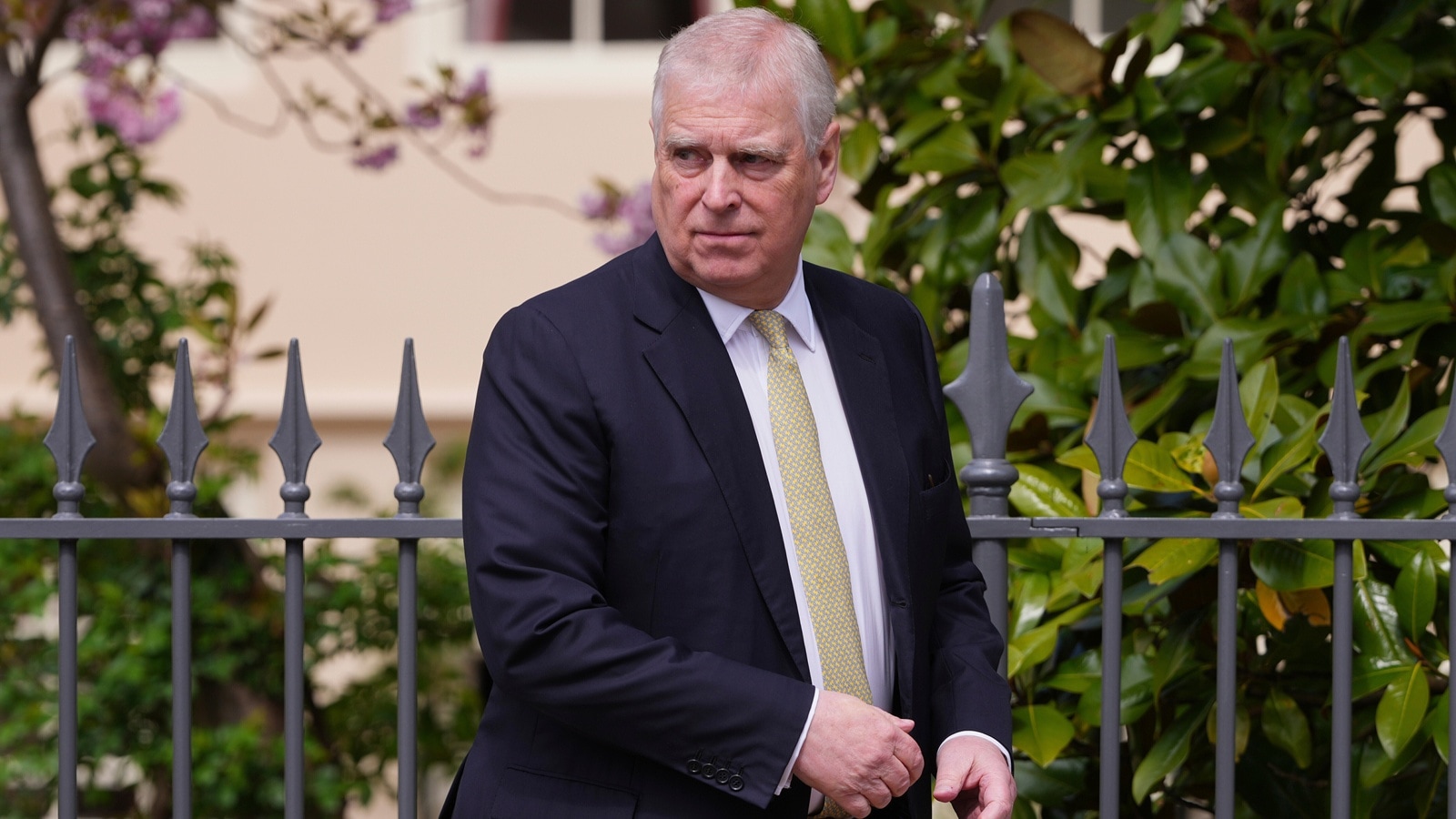
The recent arrest of a 34-year-old man on suspicion of possessing an offensive weapon near the grounds of Royal Lodge exposes a staggering vulnerability in the protection of the UK’s most controversial royal figure. This isn't just a story about a lone intruder with a grudge. It is a stark indictment of the current security protocols surrounding Prince Andrew, the Duke of York, whose public standing has evaporated even as his physical safety becomes increasingly difficult to guarantee. Police confirmed the suspect was detained after making specific threats directed at the Duke, a situation that marks a significant escalation from previous trespassing incidents.
This breach occurred in the shadow of an ongoing, high-stakes dispute over the Duke’s residence and the ballooning costs of his private security detail. Since losing his taxpayer-funded police protection in 2022 following the Jeffrey Epstein scandal and his subsequent settlement with Virginia Giuffre, Andrew has relied on a private team reportedly funded by the King. The latest intrusion suggests that these private measures may be failing the test of a determined adversary.
The Perimeter Problem at Windsor Great Park
Windsor Great Park is an expansive, porous environment. Unlike the hardened fortress of Buckingham Palace, the Royal Lodge sits within a landscape that balances public access with private seclusion. This balance is currently tilted toward risk. When the Home Office stripped the Duke of his Roundhouse security—the elite Metropolitan Police unit—they replaced a coordinated state intelligence network with a localized, reactive private force.
Private security firms lack the legal authority and the intelligence-gathering infrastructure of the Met. They cannot monitor terror watchlists or psychological health databases in real-time. They are essentially high-end watchmen. This latest incident shows the "reactive" nature of the current setup. The suspect was apprehended, but only after reaching a proximity that should be impossible for a high-profile target facing global scrutiny.
The Psychology of the Royal Stalker
Security analysts have long warned that the Duke of York is a "magnet" for fixated individuals. In the world of threat assessment, there is a clear distinction between the "nuisance" and the "assassin." The Duke’s current public persona—marked by disgrace, perceived lack of accountability, and a stubborn refusal to vacate his 30-room mansion—creates a potent cocktail of resentment for those with fragmented mental health or radicalized ideologies.
In 2021, a woman was famously allowed into the grounds of Royal Lodge after claiming she was the Duke’s fiancée. She spent twenty minutes wandering the gardens before anyone intervened. While that incident was viewed with a mix of ridicule and concern, the latest arrest involving a weapon indicates a shift from delusional fantasy to violent intent.
The Financial Standoff Fueling the Risk
The threat to Prince Andrew is being exacerbated by a very public and very messy financial tug-of-war between the Duke and King Charles III. The King has been tightening the royal purse strings, and the Duke’s security bill—estimated at over £3 million per year—is a primary target for the shears.
There is a cruel irony at play here. The more the King pressures Andrew to move to a smaller, more easily secured location like Frogmore Cottage, the more the Duke digs in his heels at Royal Lodge. This stalemate has left the security situation in a state of flux.
- Contract Uncertainty: Private security contracts are currently being negotiated on a short-term basis.
- Personnel Turnover: High-stress roles with uncertain futures lead to a loss of institutional knowledge on the ground.
- Asset Degradation: Fixed security tech, such as thermal imaging and perimeter sensors, requires constant investment that is currently stalled.
Why Private Security is Not a Long-Term Solution
The fundamental flaw in relying on private contractors for a high-risk royal is the lack of "Blue Light" integration. A private guard cannot radio for immediate armed backup with the same priority as a police officer. They are bound by the laws of citizen's arrest. This delay, even if it is only a matter of sixty seconds, is the window in which a tragedy occurs.
Furthermore, the Duke of York occupies a unique space in the British consciousness. He is a man without a formal role but with a permanent target on his back. The state has decided he is not worth the public expense, but the state also cannot afford the international fallout of a violent attack on a member of the Royal Family, regardless of his status. This creates a "security vacuum" where the protection is just good enough to fail slowly.
The Geography of Vulnerability
Royal Lodge is not just a house; it is a sprawling estate with multiple entry points through the Windsor estate. The suspect in this latest case reportedly navigated the outer fringes before being intercepted. This suggests a knowledge of the gaps in the patrol rhythm. To secure a site like this properly, you don't just need boots on the ground; you need a sophisticated "ring of steel" that includes electronic countermeasures and constant surveillance.
If the Duke continues to refuse a move to a more compact, defensible property, the risk of a successful breach will only rise. The current security team is playing a game of probability. They have to be right every single day. An intruder only has to be lucky once.
The Legal and Social Aftermath
The 34-year-old suspect is currently being held under the Mental Health Act, a common outcome in these types of royal security breaches. However, this should not be used as an excuse to downplay the severity of the event. The possession of a weapon changes the calculus entirely. It moves the conversation from "trespass" to "attempted violence."
The public reaction to this news has been tellingly cold. On social media and in the comment sections of major broadsides, the sentiment is often one of indifference or a belief that the Duke "brought this on himself" through his associations. This erosion of public empathy is a tactical nightmare for security professionals. When the public stops being the "eyes and ears" for a protected person, the burden on the formal security detail doubles.
Hard Truths for the House of Windsor
The King faces a choice that is both personal and political. He can continue to fund an imperfect, private security solution that keeps his brother at Royal Lodge but leaves him exposed, or he can force a relocation that simplifies the security architecture. The current middle ground—a private team with limited powers—is the most dangerous path possible.
The Duke of York’s insistence on maintaining the trappings of his former life is now a physical liability. Security is not a luxury or a status symbol; it is a functional requirement based on a threat assessment. Currently, the threat assessment for Prince Andrew is high, while the security implementation is compromised by budget cuts and family friction.
The arrest in Windsor is a final warning. The next individual to climb the fence or bypass the gate might not be so easily stopped. The monarchy functions on the illusion of untouchability, an illusion that is currently being shredded at the gates of Royal Lodge. If the Duke of York remains in situ, the security detail requires an immediate, professional overhaul that ignores the family's internal politics in favor of raw survival.
Andrew’s security team needs to stop operating like a concierge service and start operating like a high-threat protection unit. This means a total audit of the Windsor Great Park perimeter, the installation of military-grade motion detection, and a clear, non-negotiable mandate for armed intervention. The Duke's personal comfort and his desire to stay in his home are irrelevant when a man with a weapon is standing in his driveway.
The Crown must decide if it is protecting a prince or a property. Right now, it is doing a mediocre job of both.