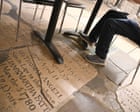
The ground beneath Trafalgar Square is moving, though not in a way a seismograph would catch. Millions of tourists trample the flagstones each year, completely oblivious to the fact that they are walking over an ancient graveyard, a royal quarry network, and a structural time bomb. At the center of this historical collision sits St Martin-in-the-Fields, a landmark church whose Portland stone walls are finally surrendering their long-held secrets. Recent architectural forensics and deep-crust geological surveys have revealed that these stones contain much more than structural load parameters. They hold the physical record of London’s violent environmental shifts, hidden economic exploitation, and a forgotten chapter of urban survival.
To understand the urgent crisis facing London's historic core, you have to look closely at the masonry itself. The classical facade of St Martin-in-the-Fields, designed by James Gibbs and completed in 1726, looks unyielding. It is a brilliant illusion. Portland stone is a limestone packed with the fossilized remains of Jurassic-era marine creatures, meaning the entire church is effectively built from the compressed shells of ancient oysters and ammonites.
When rainwater combines with modern atmospheric pollutants, it forms a weak carbonic acid that slowly melts this fossil network from the inside out. This process creates a ghostly phenomenon known as "stone bleeding," where centuries of trapped grime and industrial soot run down the pillars, permanently scarring the architecture.
The Invisible Decay of Portland Stone
For decades, preservationists assumed that urban soot was merely a cosmetic issue. They were wrong. Micro-drilling analysis and thermal imaging have exposed a far more insidious mechanism. The black crust forming on the sheltered areas of the church facade is actually gypsum, a mineral produced when sulfur dioxide from vehicle exhaust reacts with the calcium carbonate in the limestone.
This gypsum crust acts like a tight, non-porous skin over the breathing stone. Moisture crawls behind this layer during London’s damp winters and freezes when temperatures drop. As water freezes, it expands by roughly 9%. This immense internal pressure shatters the stone structure beneath the surface. When the crust eventually flakes off, it takes centuries of historic detail with it, leaving behind a powdery, vulnerable core.
The financial cost of reversing this decay is staggering. Traditional stone matching requires extracting pristine blocks from the highly regulated quarries on the Isle of Portland in Dorset. These specific geological strata are running dangerously low. Architects are forced to choose between using inferior, faster-weathering stone layers or importing foreign alternatives that alter the visual heritage of the capital.
The Forgotten Dead Beneath the Crypts
The structural crisis is intimately tied to what lies beneath the floorboards. During the massive renovations of the early 21st century and subsequent ongoing monitoring, excavators pulled back the subterranean layers of the church crypt. They found something unexpected. The site was not merely a repository for wealthy 18th-century parishioners. It was an overcrowded necropolis stretching back to the Roman occupation of Britain.
+------------------+------------------------------------+-----------------------------------------+
| Historical Layer | Estimated Depth Below Current Site | Primary Archeological Findings           |
+------------------+------------------------------------+-----------------------------------------+
| Georgian         | 0.5 to 2.0 meters                  | Brick-lined vaults, lead coffins        |
| Medieval         | 2.0 to 4.5 meters                  | Dense communal burial pits, token coins |
| Roman            | 4.5 to 6.0+ meters                 | Limestone sarcophagus, tile kilns       |
+------------------+------------------------------------+-----------------------------------------+
This underground congestion presents a serious engineering dilemma. The weight of James Gibbs' massive stone steeple rests on foundation walls that cut directly through these multi-layered burial zones. Centuries of organic decomposition have left the subsoil highly unstable and pocketed with hidden voids. As groundwater tables shift due to nearby underground tube lines and major civil engineering projects, these voids collapse. The ground settles unevenly. This movement transfers immense torque up into the church walls, manifesting as hairline fractures that allow moisture to penetrate deeper into the building's core.
The Political Economy of Preservation
Maintaining an iconic monument in the heart of a modern metropolis is never purely an architectural challenge. It is a political battleground. St Martin-in-the-Fields operates a bustling complex of cafes, concert venues, and homeless outreach initiatives. This high-traffic model keeps the institution financially self-sustaining, but it drastically accelerates the physical wear on the structure.
Vibrations from subterranean transit and the thousands of delivery vehicles servicing Trafalgar Square send low-frequency acoustic pulses through the foundations. Over time, these micro-shocks loosen the lime mortar holding the Portland stone blocks together.
Preservation bodies often clash over the philosophy of restoration. One camp advocates for a radical "scrape clean" policy, using high-pressure micro-abrasives to strip the building back to its original 1726 appearance. Opponents argue that this aggressive cleaning removes the stone’s natural protective patina, accelerating future decay. They favor a policy of managed retreat, applying sacrificial lime washes that erode over a decade, absorbing the city's chemical assault so the underlying stone does not have to.
The reality of urban heritage management is that there are no permanent victories. Every clean surface begins degrading the moment the scaffolding comes down. The stones of St Martin-in-the-Fields tell a story of an endless war of attrition against time, weather, and human progress. The ultimate survival of this architectural marvel depends on our willingness to acknowledge that heritage is not a static monument, but a living, vulnerable organism that demands continuous, aggressive intervention.