We react to violence with checklists, knee-jerk panic, and policy overreactions that change nothing.
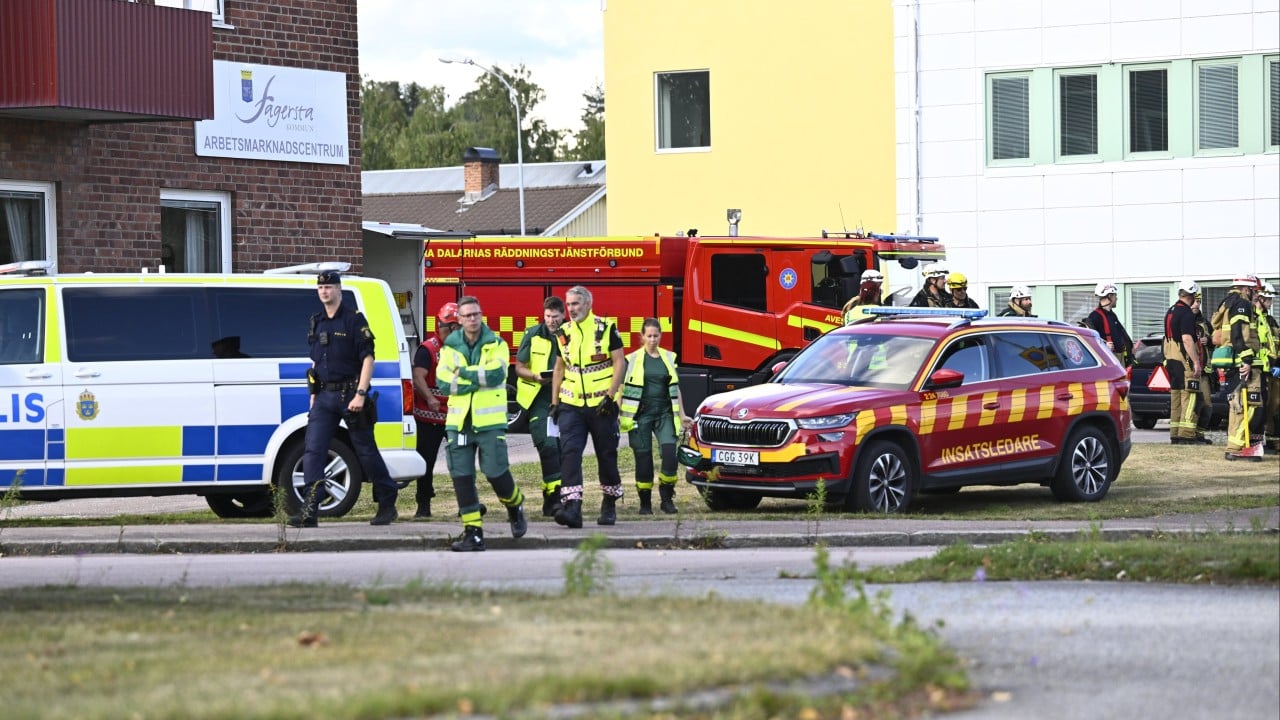
When a sword attack hits a Swedish high school, the media cycle grinds into its predictable gear. Flash alerts go out. Pundits demand metal detectors, perimeter fencing, and heavier policing inside educational corridors. Everyone agrees we need to "secure our schools."
That consensus is lazy, cowardly, and factually bankrupt.
Focusing purely on hardening the physical perimeter of a school building misses the actual mechanics of institutional vulnerability. I have spent years analyzing high-consequence security failures across public sector facilities, and the pattern is always identical. Administrators panic, buy expensive theater, and ignore the human anomalies that actually drive rare, catastrophic events.
The Illusion of Perimeter Defense
Let us clear up the core misconception right away. Schools are not prisons, nor should they be designed to function like medium-security penitentiaries.
The standard media narrative assumes that an attack by a determined individual wielding an edged weapon can be stopped by physical barriers alone. It is a comforting myth for bureaucrats who want to point to a budget line and say, "Look, we installed smart locks." But edged and blunt force trauma inside a soft target cannot be engineered away by slapping electronic turnstiles at the front entrance.
Consider a scenario where a facility spends half a million dollars on access control systems, bullet-resistant glass, and bag scanners. What happens when the threat originates from within the student body or slips past a propped-open side door during a morning delivery? The perimeter holds, but the casualty count climbs anyway because the security apparatus was optimized for a Hollywood invasion rather than local, psychological reality.
Real security is boring. It involves intelligence sharing, active threat recognition, and shrinking the response window of human intervention. Concrete bollards and badge-swipe gates do nothing to stop a crisis born of isolation and social breakdown. They just make the building harder to exit during an emergency.
Why Bureaucrats Love Bad Data
We keep falling for the same institutional trap because safety metrics are easy to fake.
Administrators love quantifiable inputs—number of cameras installed, height of fences, frequency of lockdown drills. These metrics look great in an annual report to a municipal board. They create an auditable paper trail that protects superintendents from liability lawsuits.
They do not protect students.
When an anomalous attack occurs, the knee-jerk reaction is to double down on the exact variable that failed: physical control. If a gate was bypassed, build a taller gate. If a door was forced, add a second lock. This is cargo cult security. You mimic the outward rituals of safety—guards, badges, checklists—hoping the aesthetic will ward off tragedy.
Data shows that rare, high-impact violence inside schools correlates far more tightly with social contagion, local grievance, and acute individual crisis than it does with architectural weakness. Yet, spending money on mental health triage, peer intervention networks, and threat assessment teams does not yield a shiny piece of hardware that politicians can cut a ribbon in front of.
The Cost of Our Collective Panic
The downside of this fortress mentality is severe. By treating schools like lockdown zones, we foster an environment of constant low-grade paranoia.
Students internalize the architecture of fear. When every hallway looks like a TSA checkpoint, you do not create a safe learning environment; you create a high-stress containment unit. We trade psychological well-being for the illusion of physical impermeability, and we do not even get the physical protection in return.
Furthermore, over-indexing on physical security creates a false sense of complacency. Teachers and staff assume the hardware is doing the heavy lifting, leading to a drop in situational awareness. When everyone relies on a badge reader to keep them safe, nobody pays attention to the quiet kid slipping into a downward spiral of radicalization or despair.
What Actually Works
If we want to reduce the frequency and lethality of these attacks, we have to abandon the hardware fetish and adopt a model based on behavioral disruption.
First, dismantle anonymous reporting barriers and replace them with rapid-response triage teams. Most attackers broadcast their intent or exhibit radical behavioral shifts long before a blade is drawn or a threshold is crossed. The failure is rarely a lack of cameras; it is a breakdown in listening.
Second, train staff to recognize the markers of extreme psychological fracture rather than practicing rote drills that teach children how to hide under desks. A lockdown drill is a reactive measure of last resort. Threat assessment and early intervention are proactive measures of first defense.
Stop buying the lie that more locks equal more safety. Stop letting bureaucrats trade your children's mental health for institutional liability insurance.
The next time an incident happens, ignore the politicians demanding more walls. They are just trying to hide behind them.