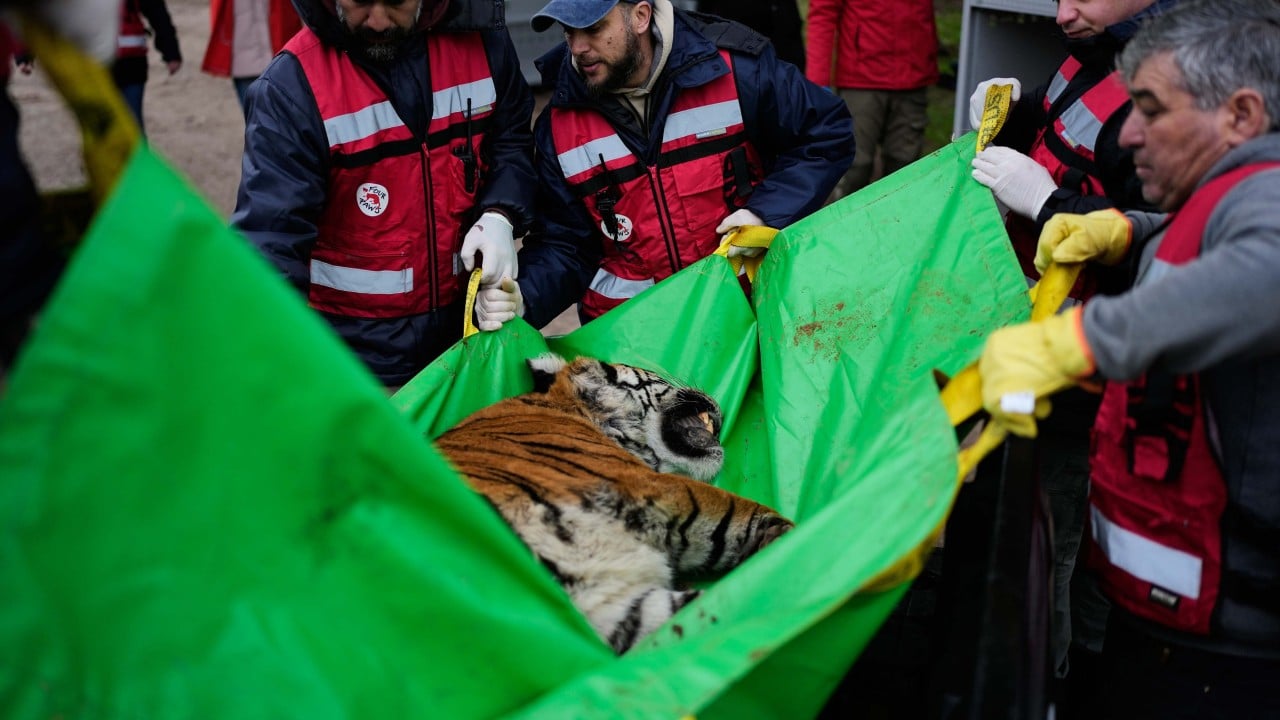
Every few years, the media finds its favorite script. A decrepit enclosure in South America. Concrete floors. Iron bars. A rusty sign reading zoo. Then, the savior narrative kicks in. Activists mobilise, private donors open their checkbooks, and cargo planes are chartered to fly lions and tigers out of Argentina to sprawling, sun-drenched sanctuaries in Africa or the United States.
The public claps. The headlines call it liberation. For a more detailed analysis into similar topics, we recommend: this related article.
It is nothing of the sort. It is expensive, highly publicized theater designed to soothe human guilt while doing absolutely nothing for conservation, animal welfare, or reality.
I have watched conservation funds vanish into the black hole of high-profile animal relocation projects for over a decade. I have seen organizations blow millions on private jets for aging apex predators while regional habitats crumble from a lack of basic anti-poaching funding. We love the imagery of the big cat stepping out of a crate onto green grass. It makes us feel like we fixed a broken world. We didn't. We just paid for a very expensive photo op. For further context on the matter, comprehensive coverage is available at The New York Times.
Let us dismantle the lazy consensus.
The Myth of the Wild Refugee
The core fallacy driving these mass relocations is the belief that a captive-born, human-habituated animal recognizes a sanctuary as home.
To an aging tiger or lion born behind concrete walls in a bankrupt municipal zoo, a sanctuary in South Africa or Colorado is not a return to the wild. It is simply a larger, more expensive cage. These animals do not possess ancestral memories of the savanna or the jungle. They do not look at the horizon and weep with ancestral joy. They look for where the meat drops at 3:00 PM.
Transporting geriatric predators thousands of miles across the globe creates immense physiological trauma. Sedation, cargo holds, pressure changes, quarantine protocols, and unfamiliar climates introduce acute stress to animals whose immune systems are already compromised by age. The mortality rate during or immediately following these long-haul luxury flights is quietly swept under the rug by PR teams who need a clean narrative.
Why do we do it? Because human psychology demands a visible redemption arc. We cannot bear the cognitive dissonance of walking past a sad cage, so we demand a dramatic rescue. We treat wildlife conservation like a Hollywood screenplay where every protagonist gets a happy ending, physics and biology be damned.
Where the Money Actually Goes
Let us talk numbers, because the conservation math behind these flashy rescues is staggering in its irresponsibility.
Moving a single large cat internationally can easily clear six figures once you factor in veterinary clearance, specialized crates, CITES permits, cargo charter fees, ground transport, and lifetime sanctuary upkeep endowments.
Imagine a scenario where an NGO drops five hundred thousand dollars to relocate two aging lions from a concrete pit in Córdoba to a sanctuary abroad. Sounds noble. Now look at what that same half-million dollars could achieve if deployed into frontline habitat protection in an active range state. That money could fund local ranger units, pay informants to dismantle illegal bushmeat networks, repair perimeter fences in legitimate national parks, or secure critical wildlife corridors against encroaching agriculture.
Instead, the cash goes toward fuel surcharges and luxury shipping crates so a handful of activists can post a heartwarming video on social media.
This is not conservation. This is emotional self-indulgence masquerading as philanthropy. We are prioritizing the individual comfort of two animals over the systemic survival of an entire subspecies.
The Zoo Problem Nobody Wants to Solve
The closure of notorious facilities like Argentina's former Buenos Aires Zoo—now transformed into an eco-park—is hailed as a monumental victory for animal rights.
It is a smoke screen.
Shutting down a crumbling urban zoo and scattering its inhabitants across global sanctuaries does not fix the underlying institutional rot that created the facility in the first place. It is a relocation of symptoms, not a cure for the disease. Municipal governments wash their hands of the financial burden of animal care, transfer the responsibility to private charities, and declare victory.
Meanwhile, the systemic issues persist. The illegal wildlife trade continues unchecked. Private breeding mills still operate in the shadows. Public funding for local biodiversity research remains starved.
If you want to fix a broken system, you do not pack up its casualties and ship them halfway around the world to hide them from the local tax-payers' view. You force local institutions to rebuild, modernize, and pivot toward actual scientific education and regional conservation breeding programs. By exporting the problem, we absolve local governments of their duty to do better.
The Hard Truth About Sanctuary Economics
Let us address the sanctuary industry itself, because the halo effect protecting these organizations has blinded the public to their limitations.
Legitimate sanctuaries do vital work. They take in animals that cannot be released, cannot stay where they are, and have nowhere else to go. But sanctuaries are lifeboats, not ocean liners. They have finite carrying capacity, finite veterinary resources, and finite budgets.
When a high-profile international rescue consumes massive media oxygen and donor capital, it starves smaller, localized rescue operations that are quietly dealing with the daily grind of domestic wildlife rescue. The charismatic megafauna always win the funding lottery, while regional rescue centers struggle to pay for basic antibiotics and raw meat.
Furthermore, many of these animals are geriatric. A lion lives roughly ten to fifteen years in captivity; tigers can reach around twenty. Moving a fifteen-year-old cat across an ocean to spend its remaining eighteen months in a different enclosure is an act of human vanity, not animal welfare. The animal does not care about the geopolitical coordinates of its enclosure; it cares about peace, quiet, and predictable meals. We put them through the blender of international transport simply so we can feel like good people.
What We Should Be Doing Instead
If we are serious about wildlife welfare, we need to stop reacting to viral outrage and start applying hardheaded pragmatism.
First, stop funding international luxury relocations for geriatric animals. If an animal is too old or habituated for release into a functional wild habitat, the most humane option is often high-quality, localized palliative care. Build better enclosures where they stand. Improve their diet, enrich their environment, and let them live out their final years without the terror of a cargo hold.
Second, redirect every dollar of relocation hype into in-situ conservation. Protect the habitat. Support the local rangers. Buy land buffers around existing national parks. If a species has no wild home left to return to, spending a fortune moving its captive remnants from one concrete box to another is a parlor trick.
Third, stop treating animal welfare as an exercise in emotional hygiene. True conservation is often unglamorous, bureaucratic, and mathematically brutal. It requires funding boring things like DNA tracking, community outreach programs, and anti-corruption enforcement in developing nations.
The next time you see a headline about a cargo plane full of rescued lions soaring toward a sunlit horizon, do not cheer. Ask who paid for the flight, how much it cost, and how many wild animals died in actual habitats while the money was being spent on airplane fuel.