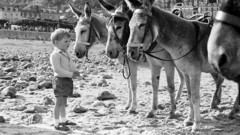
The British seaside is addicted to nostalgia, and it is killing coastal innovation. Every summer, like clockwork, local news outlets run the same hand-wringing feature: a profile of a third-generation donkey operator on a grey beach in Blackpool, Cleethorpes, or Weymouth, lamenting that the tradition is dying. The tone is always sepia-toned and mournful. "It will be really sad if they disappear," the locals say.
This sentimentality is completely misplaced. Meanwhile, you can find other developments here: Why Sweden Protected Söderåsen for All the Wrong Reasons.
The decline of the traditional seaside donkey ride is not a tragedy. It is a lagging indicator of progress. The collective anxiety over losing this "heritage" ignores a glaring reality: the economic model is broken, the animal welfare standards required for modern public scrutiny are incompatible with low-margin beach operations, and the entire concept anchors British coastal towns to a Victorian past that prevents them from reinventing themselves.
We need to stop trying to resurrect an outdated nineteenth-century gimmick. It is time to let the beach donkey go. To see the full picture, we recommend the excellent article by Condé Nast Traveler.
The Sentimentality Trap vs. Economic Reality
The argument for preserving donkey rides always rests on emotional appeals about heritage. Tourism boards and traditionalists view the animals as living postcards, essential to the identity of the British coast. This is a fundamental misunderstanding of why these traditions existed in the first place. Donkeys were introduced to beaches in the 19th century because they were cheap, abundant surplus labor from the mining and transport industries, repurposed to carry working-class tourists who could not afford high-end entertainment.
It was never about the welfare of the animal or the creation of a sustainable cultural asset. It was cheap utility.
Today, the economics are utterly unsustainable. A modern, responsible working-equine operation requires significant capital. Veterinary care, farriery, specialised feed, public liability insurance, and winter grazing land have seen soaring cost inflation over the last decade. Meanwhile, the price a family is willing to pay for a five-minute trek along the sand has remained stubbornly depressed.
When an activity costs £3 to £5 per ride, the math becomes brutal. To break even on fixed annual overheads, an operator must maximise volume during a notoriously fickle, weather-dependent eight-week British summer window. This creates an inherent structural conflict between financial viability and optimal animal welfare.
You cannot run a low-cost, high-volume animal ride business on a public beach in the 2020s and maintain impeccable welfare standards without bleeding cash. The operators who survive are often doing so out of stubborn habit, subsidising the business with other income, or cutting corners on the hidden costs of equine retirement and off-season care.
The Myth of the Happy Beach Donkey
Defenders of the trade point to strict local council regulations as proof that the trade is entirely ethical. Local authorities mandate maximum weight limits (usually 8 stone or 50kg), mandatory rest days, regular vet checks, and strict working hours.
These regulations look excellent on paper. In practice, they are a bureaucratic sticking plaster on a fundamentally unsuitable environment.
Sand is a highly shifting, high-friction surface. Walking on soft, uneven sand for hours at a time places immense strain on an equine's tendons and joints, particularly when carrying a payload that shifts its balance constantly, as young children do. While a donkey is structurally capable of carrying weight, doing so repeatedly on a beach incline is vastly different from walking on firm, level pasture.
Furthermore, the sensory environment of a modern British beach is a far cry from the quiet coastal escapes of the 1880s. Donkeys are prey animals. They evolved to thrive in arid, predictable environments with clear lines of sight. A packed July beach features screaming children, flying footballs, barking dogs, erratic wind-blown windbreaks, and constant unpredictable approaches from strangers behind them.
Even the most habituated donkey experiences low-level, chronic stress in these environments. Equine behavioral science shows that donkeys express stress through stoicism rather than flight. When a horse panics, it bolts; when a donkey is overwhelmed, it freezes and shuts down. This "stubbornness" or calm demeanor is frequently misread by tourists and operators as contentment. It is often tonic immobility or learned helplessness.
I have watched operators push these animals through crowds of tourists, and while the physical whips may have vanished thanks to modern regulations, the psychological pressure remains entirely unchecked. No amount of council licensing can regulate away the biological reality of an animal's stress response.
Redefining the "People Also Ask" Assumptions
When people look into this issue, the questions asked are almost always flawed from the outset.
Are beach donkeys treated well?
The premise assumes treatment is purely about the absence of physical abuse. While deliberate cruelty is rare among licensed operators, "good treatment" in a commercial beach setting is a compromise. True equine welfare requires freedom to graze in a herd dynamic, access to shelter from driving coastal winds, and a lack of repetitive physical labor on unstable ground. The beach environment inherently restricts these freedoms for hours at a time.
Why are beach donkeys disappearing?
The common answer is "lack of interest from the younger generation" or "bureaucracy." The real answer is shifting societal ethics. The public has developed a sharper conscience regarding the use of animals for pure entertainment. We have seen the decline of animals in circuses, the restriction of marine parks, and growing discomfort with elephant rides abroad. The seaside donkey is not a victim of red tape; it is a victim of a collective ethical upgrade.
How can we save the seaside donkey ride?
This is the wrong question entirely. The question we should be asking is: How do we transition these animals out of commercial entertainment without destroying the livelihoods of the families who care for them?
The Anti-Nostalgia Blueprint for Coastal Tourism
British seaside towns are suffering from a chronic lack of imagination. They cling to the donkey ride, the rotting pier, and the faded arcade because they are terrified of what happens if they let them go. They worry that without these cliches, they lose their identity.
The opposite is true. Clinging to Victorian relics prevents these towns from attracting modern, high-spending travelers.
Look at the coastal destinations that are thriving. They have pivoted away from cheap, extractive amusements toward eco-tourism, culinary experiences, heritage conservation that doesn't involve exploitation, and active outdoor pursuits.
If a coastal council wants to use donkeys to drive tourism, they should ban beach rides entirely and invest in a modern, sanctuary-style model. Imagine a structured ecosystem where families visit a managed coastal farm or pasture slightly inland.
- Interaction over exploitation: Children learn about equine care, grooming, and behavior rather than using the animal as a dynamic playground ride.
- Economic viability: Charge premium prices for educational workshops and therapeutic interactions, which command far higher margins than a cheap beach trek.
- Welfare alignment: The animals remain on appropriate, firm terrain in a controlled environment, completely removing the stressors of a crowded public beach.
This approach shifts the value proposition from a cheap, nostalgic thrill to a premium, ethical experience. It respects the history of the animal's association with the area while discarding the harmful mechanics of the trade.
The Cost of the Contrarian Shift
To be completely transparent, ending the beach ride trade has immediate downsides. It eliminates a visible, low-cost entry point for working-class entertainment on the coast. A family with three kids can split a tenner to get three donkey rides; they cannot necessarily afford a £30 educational farm ticket.
It also means the loss of historical continuity. Some families have run these beach concessions since the reign of Queen Victoria. Forcing them to adapt or close is culturally painful and financially disruptive to a handful of micro-businesses.
But culture is not static. We do not preserve chimney sweeps or dancing bears for the sake of historical continuity. When a tradition relies on the commodification of a living creature in an unsuitable environment for negligible economic return, the argument for preservation collapses.
The current state of the seaside donkey ride is a slow, undignified fade. Operators will continue to retire, councils will tighten regulations until compliance becomes impossible, and the public will become increasingly uncomfortable with the spectacle. Trying to artificially sustain this trade through heritage grants or nostalgic public campaigns is a waste of resources.
Let the beach donkey rides end. Retire the animals to pastures where they can live without a saddle, a weight limit, or a screaming toddler on their back. The British seaside will survive without them, and it might finally force our coastal towns to build a future based on something better than cheap nostalgia.