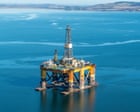
The North Sea oil lobby is panic-mongering again.
They are lining up to beg politicians like Andy Burnham and the Westminster cabinet to greenlight new drilling in UK waters. The narrative is always the same, polished to a mirror finish by public relations firms: “We need local drilling to secure our energy independence and protect British jobs during the transition.”
It sounds reasonable. It sounds patriotic.
It is also an absolute lie.
The belief that digging up more crude from the continental shelf will lower British energy bills or shield the UK from geopolitical shocks is a myth. The reality is far uglier, governed by international economics that no amount of flag-waving can change. If we want true energy security, the worst thing we can do is throw a lifeline to a dying domestic drilling industry.
The Great Export Lie: Why British Oil Doesn’t Power British Homes
Let's dissect the core argument of the offshore lobby: the domestic security blanket.
Advocates want you to picture a pipe running straight from a North Sea platform into your home boiler. It does not work that way.
Nearly 80% of the oil produced in the UK is exported immediately to the global market. Why? Because of refinery chemistry.
UK refineries are largely configured to process heavier crude oils, whereas the North Sea yields mostly light, sweet crude. To get the fuel mix we actually use, we sell our light oil to international buyers and import what we need.
[UK North Sea Drilling] -> Light Sweet Crude -> Exported to Global Markets (~80%)
                                                      |
                                             (Global Price Setters)
                                                      |
[UK Domestic Refineries] <- Heavy Crude Imported <- Global Market Purchases
When a drilling company extracts a barrel of oil from UK waters, they do not hand it to British citizens at a discount. They sell it to the highest bidder on the open market.
If a supply shock hits the Middle East or Eastern Europe, the price of oil spikes everywhere. A barrel of Brent crude extracted off the coast of Aberdeen costs the exact same market rate as a barrel extracted in Texas or Saudi Arabia.
Imagine running a bakery. You grow your own wheat, but by law, you must sell that wheat on a global exchange, then buy it back at whatever price global speculators dictate that morning. You have zero price protection. That is the exact setup of UK oil. Domestic extraction offers absolutely no insulation against global price volatility.
The Tax Subsidy Black Hole
The industry claims it is a massive boon to the taxpayer. Let’s look at the ledger.
For decades, the UK government has offered some of the most generous tax regimes for oil and gas extraction in the world. Tax relief on decommissioning old rigs means the British public is on the hook for billions of pounds to clean up the private sector's mess.
When windfall taxes were introduced to capture some of the obscene profits made during the recent energy crisis, the government quietly inserted an investment allowance loophole. For every pound an oil giant reinvested in extracting more fossil fuels, they got up to 91p back in tax relief.
This is not a free-market success story. It is state-sponsored life support for an industry that has peaked. We are actively subsidizing the extraction of a resource that we then have to buy back at market rates, while carrying the environmental and decommissioning liabilities on our national balance sheet. It is a terrible deal.
Dismantling the "Jobs vs. Green" False Dichotomy
Whenever a politician suggests pausing new licenses, the lobby plays their favorite card: jobs. They claim that stopping drilling will instantly devastate coastal communities in Scotland and the North of England.
I have spent years watching corporate restructurings and industrial shifts. The "sudden collapse" narrative is a scare tactic designed to freeze policy.
The North Sea is a mature basin. Production has been declining naturally since 1999. The jobs are already leaving because the oil is running out, not because of climate regulations.
North Sea Oil Production (1999 - Present)
[Peak: 1999] ======================================== 4.5M boepd
[Decay Phase] ==================== 1.5M boepd (and falling)
The real threat to these workers is the oil lobby's refusal to transition. By fighting to keep the old model alive, they are delaying the inevitable and ensuring that when the crash comes, it will be messy.
The skills of a North Sea offshore engineer are highly transferable to deep-water wind turbine installation, carbon capture storage, and tidal energy infrastructure. But those industries require capital. Every pound of capital expenditure and government subsidy funneled into drilling another dry or marginal well is a pound stolen from the infrastructure of the next fifty years.
The Geopolitical Reality: True Security is Built, Not Dug
What does real energy security look like?
It does not look like a depleting, volatile commodity traded on global exchanges. It looks like infrastructure that cannot be shut off by a foreign dictator or disrupted by a shipping lane blockade.
- Wind and Solar: Once a turbine or panel is built, the fuel is free. No cartel in Vienna can change the price of the wind blowing across the Dogger Bank.
- Grid Interconnection: Building massive subsea cables to trade clean power with Iceland, Norway, and continental Europe provides actual structural resilience.
- Insulation and Efficiency: The cheapest energy is the energy you do not use. The UK has some of the draftiest housing stock in Europe. retrofitting homes is not glamorous, but it reduces demand permanently.
The oil lobby wants you to believe that security is about extraction volume. It is not. Security is about systemic independence.
The Fatal Flaw in the "Transition Fuel" Argument
The industry loves the phrase "transition fuel." They argue we need gas and oil to bridge the gap until renewables are ready.
But there is a timeline mismatch here.
If a company receives a license to drill in the North Sea today, it takes an average of 28 years from the initial license award to the first commercial production.
Any field approved today will not deliver oil to the market until the 2050s—the exact target date for net-zero emissions. These are not transition assets. These are stranded assets in the making, or worse, carbon bombs that will lock the UK into high-emission energy profiles decades after we need to be clean.
Stop Asking the Wrong Questions
The public debate is stuck on a flawed premise: How do we produce more fossil fuels to keep prices low?
This is the wrong question.
The right question is: How do we accelerate the obsolescence of fossil fuels so that global price spikes no longer matter to the British public?
As long as our economy depends on a global commodity, we are vulnerable. The offshore lobby wants us to remain hostages to that vulnerability because it keeps them profitable.
It is time to stop listening to the desperate pleas of an industry looking for its next state handout. Stop the drilling. Build the grid. Let the North Sea transition, or watch the UK get left behind in the cold.