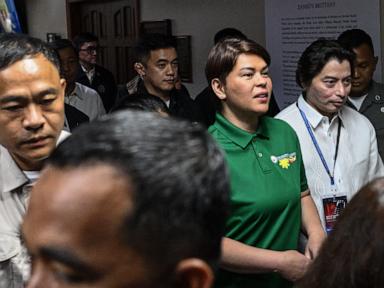
"In this bloodbath and bludgeoning, I will be bloodied but unbowed."
Vice President Sara Duterte dropped that dramatic one-liner—borrowing heavily from William Ernest Henley’s poem Invictus—during a fleeting media appearance at the Philippine Senate. It was Day 2 of her historic impeachment trial, and she didn't stick around to take questions. She didn't even enter the actual courtroom. Instead, she met with her 16-member defense team in a holding room, left the building before the 2 p.m. gavel fell, and left the country to dissect what this high-stakes political theater actually means.
If you're looking at this from afar, it looks like a high-profile politician in deep trouble. After all, she's facing serious allegations: grave threats against President Ferdinand Marcos Jr., the misuse of public funds, unexplained wealth, and bribery. The trial is scheduled to drag on for 92 days, potentially pushing into early 2027.
But if you think she's sweating, you don't know the Duterte playbook.
The Art of the Political Martyr
Duterte isn't running from the fight. She's leaning directly into it. Back in May 2025, she openly stated she wanted this trial to proceed because she wanted a "bloodbath." Calling her own trial a bloodbath isn't a confession of weakness. It's a calculated strategy to frame herself as the ultimate political martyr, fighting a corrupt, weaponized system run by the Marcos administration.
Her legal team, led by Shiela Sison, handles the actual legal technicalities inside the chamber. Meanwhile, Duterte plays to the court of public opinion. By showing up at the Senate building just to meet her lawyers—and skipping the actual proceedings—she signals that she doesn't respect the legitimacy of the process, yet she's not hiding either.
It's a delicate dance. Her absence is technically permitted because her counsel represents her, but her political opponents are already using it as ammunition. House impeachment prosecutors have publicly urged her to face the charges directly instead of snubbing the court.
What the Charges Actually Mean
The prosecution isn't throwing everything at the wall just yet. They're starting small. The first 11 days of the trial focus exclusively on Article I: the alleged grave threats Duterte made in November 2024.
Prosecution spokesperson Benjamin Tolosa explained that this is the least complicated charge to tackle. It doesn't require complex forensic accounting or mountains of financial documents. It relies on explicit statements she made.
The broader case, however, runs much deeper:
- Unexplained Wealth: Allegations regarding undisclosed assets in her Statements of Assets, Liabilities, and Net Worth (SALNs) from 2022 to 2024.
- DepEd Irregularities: Claims of bribery and procurement issues during her stint as the Secretary of the Department of Education.
- Public Fund Misuse: The controversial use of confidential funds that originally triggered the breakdown of the Marcos-Duterte alliance.
This trial didn't happen overnight. The House originally impeached her in February 2025, but the Supreme Court threw that out on a constitutional technicality regarding a one-year ban on multiple proceedings. As soon as that ban expired in early 2026, the opposition pounced. A consolidated complaint secured 257 votes in the House on May 11, 2026, sending the articles straight to the Senate.
The 2028 Presidential Equation
Let's be completely honest about what's happening here. This isn't just a legal proceeding. It's the opening salvo of the 2028 presidential race.
The alliance that won the 2022 election—the "UniTeam" of Marcos and Duterte—is dead and buried. This trial is a direct confrontation between two of the most powerful political dynasties in the country.
To convict Duterte, the prosecution needs the votes of at least two-thirds of the Senate. That means 16 out of 24 senator-judges must vote guilty. It's a high bar. The Senate is notoriously divided, and many senators are keeping their eyes on their own re-election prospects or future political alliances.
If she's convicted, she faces removal from office and a perpetual lifetime ban from holding public office. That completely wipes out her 2028 presidential ambitions.
If she's acquitted, the narrative changes completely. Public administration experts point out that if the public views the trial as a fair process and she comes out clean, it could supercharge her popularity. She becomes the survivor who beat the establishment.
What to Watch Next
Don't expect a quick resolution. This trial is a marathon, not a sprint.
If you're tracking this story, keep a close eye on how the public reacts to the initial "grave threats" phase. If the prosecution struggles to make a compelling case early on, momentum could swing back to Duterte. Also watch the defense tactics. On Day 1, Sison was called out twice for rule violations. If the defense adopts a purely obstructionist strategy, it might alienate the moderate senators who hold the swing votes.
The numbers don't lie. Ninety-two days of trial means three months of daily political drama broadcasted straight to the Filipino electorate. Duterte is betting that she can take the bludgeoning and walk away standing.