The incense had barely faded from the air of the Radhamadhab temple when the silence shattered.
Every evening in the village of Mahisbathan, located within the Chittagong division of Bangladesh, follows a predictable, ancient rhythm. The ringing of the prayer bell. The soft flicker of the ghee lamps. For 25-year-old Pranta Chakraborty, a Hindu priest dedicated to these quiet rituals, the temple was supposed to be the safest space in an increasingly turbulent world. It was a sanctuary not just of brick and mortar, but of spirit.
Then came the knock on the door. It was late. It was urgent.
What followed over the next several days was not just a localized crime, but a terrifying window into the escalating vulnerability of a minority community. When Pranta answered that door, he wasn't met with a villager seeking a blessing. He was met with the barrel of a gun, a blindfold, and a descent into a living nightmare.
The Price of Peace
They dragged him into the darkness. His abductors were not spectral phantoms; they were men driven by a cold, calculated motive. In the chaotic post-political transition currently gripping Bangladesh, lawlessness has found a foothold. Criminal factions have begun to view minority religious figures not as spiritual leaders, but as high-value targets. Soft targets.
The kidnappers threw Pranta into the back of an unmarked vehicle, speeding away from the familiar dirt roads of his community into an isolated hideout. Then, the psychological warfare began.
They wanted money. Specifically, they demanded a ransom of 300,000 Taka. To a wealthy urban merchant, that sum is a business expense. To a young priest living on the modest offerings of a rural congregation, it is an impossible fortune. It is a death sentence.
Consider the sheer terror of those hours. Tied to a chair in a damp, unfamiliar room, Pranta was subjected to systematic physical abuse. Every strike was designed to break his resolve, to force his family into a panicked frenzy of asset-liquidation. The kidnappers used his phone to call his family, letting his agonizing screams do the negotiating for them.
This is the brutal reality of extortion in the region today. It is a business model built on human agony.
A Fragile Geography
To understand why Pranta was targeted, we have to look closer at the map. The Chittagong division, particularly areas near Cox’s Bazar and the borderlands, has faced severe strain. Law enforcement resources are stretched thin. Political upheavals have left local police stations understaffed and hesitant to act.
When a community realizes that the state's protective umbrella has folded, panic spreads faster than fire.
For Bangladesh's Hindu population, which makes up roughly 8% of the nation, events like this feel less like isolated incidents and more like systemic erasure. When a priest is taken, the message sent to the entire village is clear: If we can take him from the altar, we can take you from your beds.
But the kidnappers miscalculated one crucial factor. They underestimated the desperation of a family with nothing left to lose, and the digital trail they were leaving behind.
The Trace in the Network
The breakthrough did not happen through grand cinematic heroism. It happened through tedious, gritty police work.
Under immense pressure from local community leaders who refused to let Pranta’s disappearance be swept under the rug, the local police department mobilized a specialized team. They began tracking the mobile SIM cards used to make the ransom calls.
Imagine the scene at the police headquarters: a map spread across a dented metal desk, glowing screens tracking tower pings across the rural landscape. Every hour that passed increased the likelihood of a tragic outcome. In kidnapping cases, the survival rate drops drastically after the 48-hour mark.
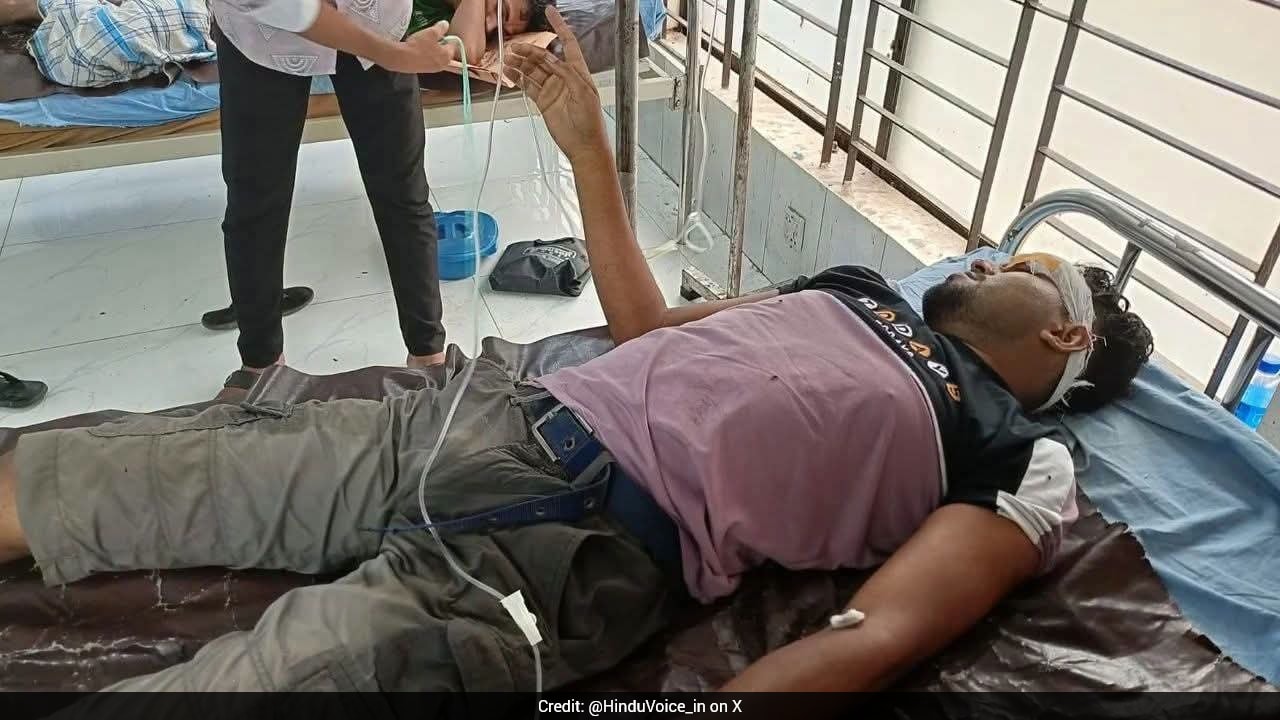
The digital footprints eventually converged on a remote location. A coordinated raid was launched. Officers breached the hideout, catching the captors off guard. Pranta was found bound, severely bruised, and deeply traumatized, but he was alive. Police arrested several individuals at the scene, recovering the weapons used in the abduction.
The physical rescue was a success. The deeper rescue, however, is far from over.
The Scars That Remain
You can heal broken bones. You can patch up lacerations. But how do you heal the psyche of a young man whose entire life was predicated on the assumption of divine and communal safety?
The village of Mahisbathan is quiet again, but it is a tense, hollow quiet. The temple bells still ring, but those who attend now look over their shoulders. The doors are locked earlier. The shadows look a bit longer, a bit darker.
This isn't just a story about a kidnapping in a faraway district. It is a cautionary tale about what happens when the social fabric of a nation begins to fray at the edges, leaving its most exposed citizens to fend for themselves against the wolves.
Pranta Chakraborty survived his ordeal. He returned to his family, his face etched with the exhaustion of a man who has looked into the abyss. He will likely return to his altar, lighting the incense and reciting the ancient verses. But the smoke will rise against walls that no longer feel thick enough to keep the outside world away.