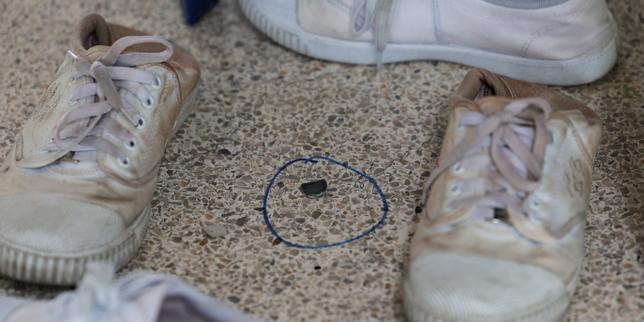
The siren of a Bangkok emergency response unit cuts through the heavy tropical humidity, carrying a sound that feels entirely out of place in a society built on quiet social consensus and public deference. When an armed teenager opened fire, killing eight people including six inside a local school, the nation experienced a rupture in its collective self-image. This was not a statistic imported from another hemisphere. It happened right here, turning routine corridors into crime scenes and shattering the assumption that geographical distance offers immunity against modern systemic failures.
Security protocols failed. Public authorities scrambled. The immediate aftermath produced the usual cycle of shock, press briefings, and political promises regarding tighter firearm regulations. Yet behind the official rhetoric lies a much deeper, more uncomfortable reality about institutional blind spots, neglected mental health infrastructures, and the quiet fracturing of social safety nets that once kept communities tightly bound.
The Illusion of Absolute Safety
For decades, the cultural narrative surrounding local youth violence maintained a comforting distance from Western realities. Incidents involving firearms were treated as isolated anomalies, often linked to distinct criminal networks or remote fringe groups rather than institutional spaces. Classrooms and campuses stood as protected environments where external pressures could not penetrate.
That illusion evaporated the moment the first round was fired.
The attacker was an adolescent. The setting was a secondary school. These two facts alone forced a painful reckoning with how vulnerability is managed within modern academic institutions. Schools are expected to double as fortresses without losing their character as places of learning. When protection fails, the blame usually falls on physical security measures, metal detectors, guards, and perimeter walls.
Focusing solely on physical hardening misses the broader systemic breakdown. A gun does not fire itself, and an adolescent does not wake up one morning transformed into a mass assailant without a long, escalating sequence of ignored warnings, untreated psychological distress, and social alienation.
Unraveling the Pressure Cooker
Modern academic environments in rapidly developing Southeast Asian economies place extraordinary demands on young people. The push for academic excellence, coupled with strict hierarchical expectations within families and schools, creates a high-pressure ecosystem. When a student struggles to cope, the available avenues for relief are often narrow or stigmatized.
Mental health support remains severely underfunded and culturally misunderstood across much of the region. Seeking professional psychological help is frequently viewed as a personal weakness rather than a medical necessity. Consequently, distress festers inward.
- Academic competition intensifies parental and peer pressure during critical developmental years.
- Institutional rigidity leaves little room for individualized counseling or early behavioral intervention.
- Stigma surrounding mental health prevents adolescents from voicing distress before it turns catastrophic.
When isolation meets easy access to lethal means, the risk profile changes drastically. While strict laws govern firearm ownership on paper, the underground market and unregulated supply chains make it alarmingly simple for determined individuals to acquire weapons. The administrative hurdles that hinder law-abiding citizens do little to deter someone intent on bypassing the system.
The Media Cycle and Copycat Risks
In the hours following the tragedy, media outlets rushed to feed an insatiable public appetite for details. Screens filled with rolling coverage, perpetrator profiles, and speculative timelines. This hyper-saturation carries a heavy hidden cost. Criminologists have long warned about the contagion effect inherent in high-profile acts of violence.
When an alienated youth sees an attacker achieve instant, catastrophic notoriety, the spectacle can act as a perverse blueprint. The narrative shifts from a tragedy to be mourned to a script to be replicated by others seeking ultimate visibility.
Responsible journalism requires balancing the public right to know with the imperative to avoid sensationalism. Yet, the commercial incentives of modern news cycles frequently override caution. Sensational headlines generate clicks, and graphic descriptions drive engagement, turning human trauma into digital currency.
Institutional Blind Spots and Bureaucratic Inertia
Following major security breaches, political leaders invariably promise comprehensive reviews and legislative overhauls. Bureaucracies move with deliberate slowness, prioritizing damage control and public relations over structural reform.
Teachers and administrators find themselves caught in the middle. They are asked to act as frontline mental health assessors, security monitors, and academic instructors all at once, without receiving adequate training or resources. Expecting overworked educators to spot every early indicator of lethal potential is a recipe for further failure.
Furthermore, law enforcement agencies often operate in silos, disconnected from social service departments and school boards. Information sharing between local police, medical providers, and educational institutions is fragmented by privacy laws and institutional rivalries. If warning signs are documented in one department, they rarely trigger alarms in another until it is too late.
Re-evaluating the Social Contract
The events that unfolded in that Thai school demand a hard look at the unwritten social contract binding communities together. Safety is not maintained simply through police presence or harsher penal codes. It requires active investment in the social fabric, rebuilding trust between youth and authority figures, and dismantling the stigma that isolates vulnerable individuals.
Blaming individual moral failure or purely technological fixes offers an easy escape for institutions unwilling to confront their own shortcomings. Until society is willing to address the structural pressures placed on the rising generation, the danger will remain, simmering quietly behind closed doors until the next warning sign is missed.