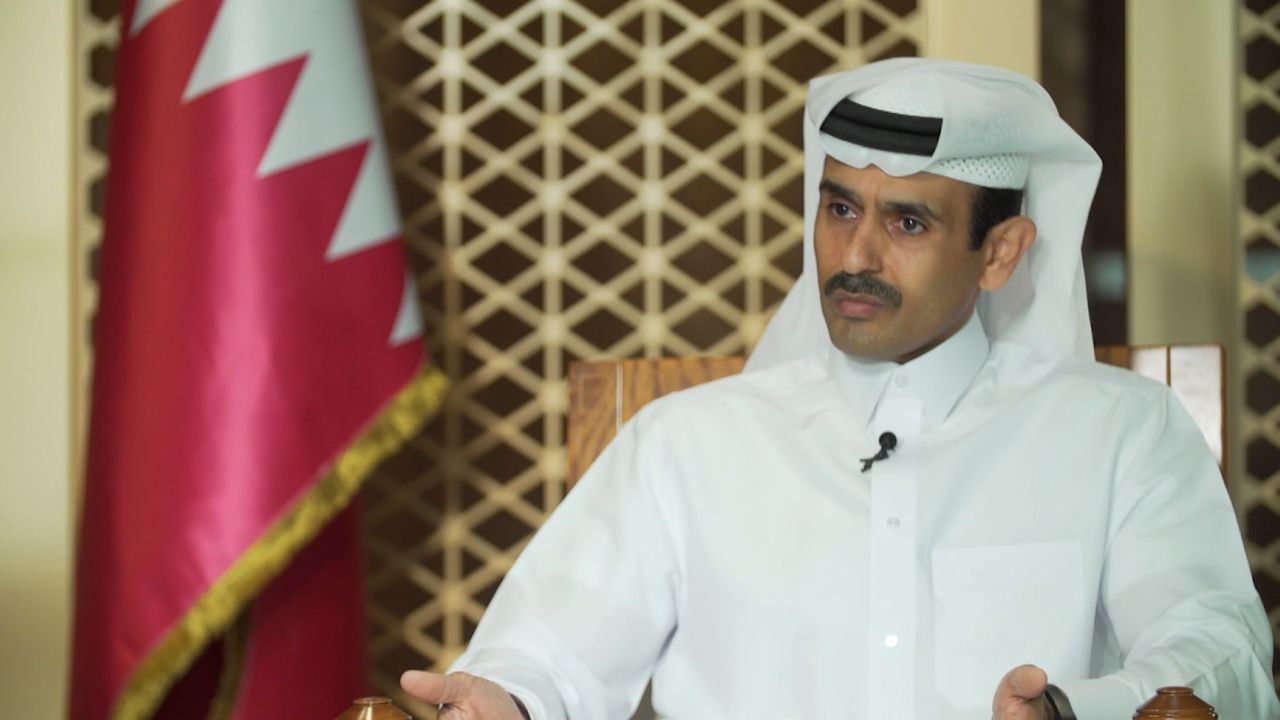
Energy markets hate a vacuum, but they hate uncertainty even more. For years, the West played a dangerous game of chicken with Iran, assuming the global oil and gas flow would just keep humming along regardless of the political friction. They were wrong. Saad al-Kaabi, the man steering the massive ship that is QatarEnergy, didn't just see the cracks forming; he explicitly shouted about them before the floor fell out.
When you're sitting on the world's largest non-associated gas field, your perspective on regional stability isn't academic. It's existential. Kaabi's warnings about the risks of provoking Iran weren't about taking sides in a Middle Eastern Cold War. They were about the cold, hard math of energy security. If you poke a neighbor who sits on the other half of your primary resource, you're not just playing politics. You're gambling with the world's heating and electricity bills.
The North Field and the Shared Border Reality
Qatar and Iran share the world's largest natural gas field. Qatar calls its side the North Field, while Iran calls its portion South Pars. This isn't just a fun geographical fact. It means the two nations are literal roommates in a house built of high-pressure methane.
Kaabi understood that any escalation in the Persian Gulf wouldn't just stay in the headlines. It would manifest as physical threats to infrastructure, tankers, and processing plants. He argued that isolating Iran through heavy-handed sanctions and provocative rhetoric would eventually force a cornered animal to bite. We saw exactly that with the attacks on tankers in the Strait of Hormuz and the strikes on Saudi Aramco's facilities. These weren't random acts of aggression. They were the predictable results of a strategy that ignored the interconnected nature of Gulf energy.
Why the West Miscalculated the Ripple Effect
The United States and its allies often operate on a four-year election cycle. Qatar operates on a fifty-year infrastructure cycle. This disconnect is where the trouble starts. Western policy toward Iran often relies on the idea that "maximum pressure" will lead to a better deal or a change in behavior. Kaabi’s insight was simpler: pressure without an exit ramp leads to explosions.
When the U.S. pulled out of the JCPOA (the Iran nuclear deal), it didn't just annoy Tehran. It destabilized the entire logistical framework of the Middle East. For a company like QatarEnergy, which was in the middle of a massive expansion to reach 126 million tons of LNG per year, this was a nightmare. You can't build multi-billion dollar liquefaction trains if there’s a non-zero chance of a missile landing on them because a diplomatic bridge was burned 5,000 miles away.
Energy as a Weapon vs Energy as a Bridge
There's a common misconception that energy exporters love high prices driven by conflict. That's a myth. Reliable, long-term suppliers like Qatar want stability. They want 20-year contracts with predictable delivery schedules. Conflict-driven price spikes might look good on a quarterly report, but they destroy long-term demand by forcing countries to accelerate their shift to alternatives or find other, more stable suppliers.
Kaabi pointed out that by pushing Iran to the brink, the West was effectively weaponizing the global energy market against itself. It forced Iran to look for "gray market" buyers and deepened their ties with China and Russia. This didn't make the world safer. It just made the energy supply chain more opaque and harder to manage.
The Strait of Hormuz Bottleneck
Almost a third of the world's liquefied natural gas passes through the Strait of Hormuz. It's a tiny strip of water that Iran can effectively shut down with a few well-placed mines or a swarm of fast boats. Kaabi's warnings were a reminder that the world's transition to "cleaner" gas is entirely dependent on this one geographical chink in the armor.
- 20% of global oil flows through this point.
- Qatar's entire LNG export capacity relies on it.
- Alternative pipelines exist, but they can't handle the sheer volume required to keep Europe and Asia running.
The Cost of Ignoring the Man on the Ground
We see the fallout now. Energy prices in Europe became a political wrecking ball. While the Russia-Ukraine conflict was the primary catalyst, the underlying fragility of the market was already there because of the tensions in the Gulf. If the Middle East was stable and Iran was integrated into the global economy—or at least not actively trying to sabotage it—the global cushion against the Russian shock would have been much thicker.
Kaabi wasn't asking for the world to love Iran. He was asking for a pragmatic recognition that you can't have a stable global economy while trying to delete one of the world's largest energy producers from the map. It's a lesson in "Energy Realism" that many Western capitals are only now starting to learn the hard way.
Practical Steps for Navigating Future Volatility
If you're an investor or a policy wonk, the takeaway from Kaabi's warnings is clear. You have to look past the political theater and focus on the physical infrastructure.
- Watch the shared fields. Any time a resource is shared between two rivals, the risk of "drainage" disputes or sabotage is high. Keep an eye on the North Field/South Pars development parity.
- Diversify your transit routes. Don't rely on a single chokepoint. The rise of East Coast African LNG and North American exports are the only real hedges against a Gulf blow-up.
- Prioritize long-term volume over spot-market gambling. The "Qatar Model" of long-term deals is coming back into fashion because it buys a certain level of political protection that the open market can't provide.
Stop treating energy policy like a moral crusade. It's a logistics problem. When people like Saad al-Kaabi speak, they aren't talking about "fairness" or "justice." They are talking about whether or not the lights stay on. It’s time we started listening to the people who actually own the switches.
Move your focus away from the daily price tickers and start looking at the 10-year infrastructure maps. That’s where the real story is written. Check the shipping lanes, monitor the joint-venture announcements in Doha, and stop assuming the status quo is permanent. The next time a major energy CEO warns of regional instability, believe them. They have more to lose than the politicians do.