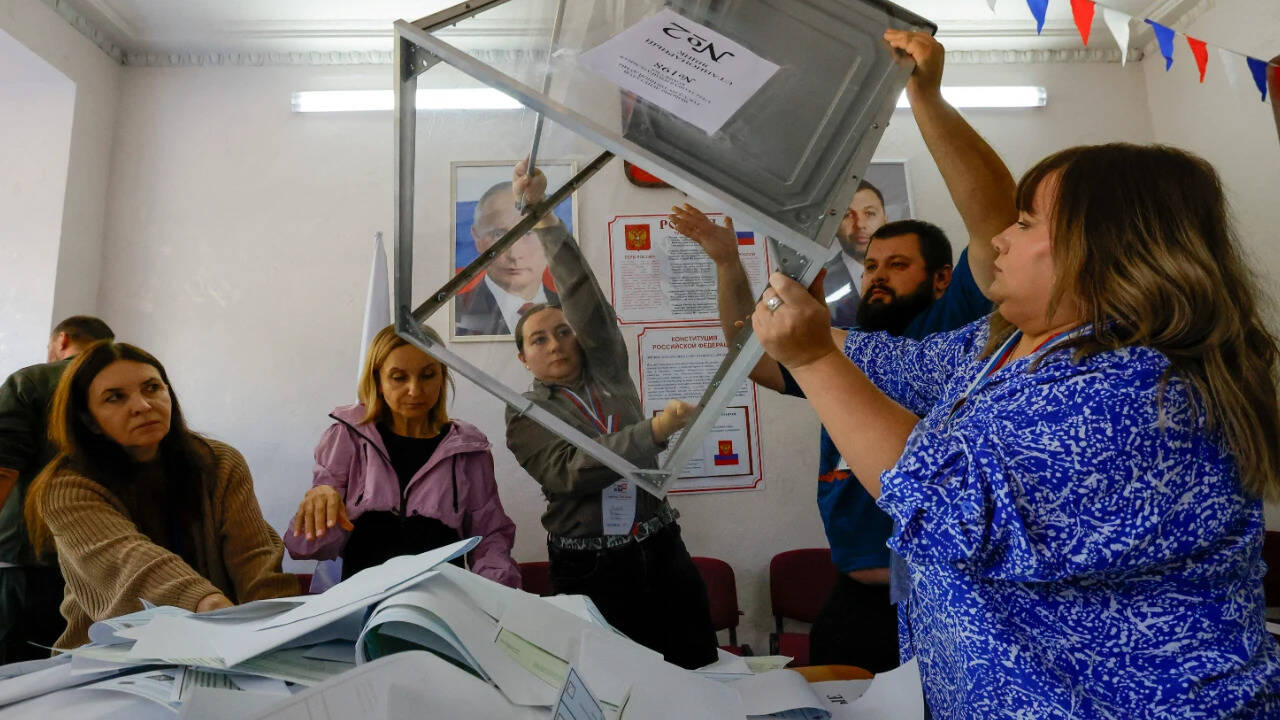
Every western newsroom treats a Russian election cycle like a sporting event. They stare at the board, parse the state-sanctioned percentages, and gasp when United Russia posts another blowout number. They write breathless dispatches about public compliance, wartime mobilization, and the crushing machinery of the Kremlin. They miss the entire point. Focusing on a fifty-seven percent poll figure in a managed political ecosystem is like analyzing the aerodynamics of a falling anvil. It tells you nothing about the velocity, the physics, or what happens when it hits the floor.
I have watched western analysts chase these statistical ghosts for a decade, burning hours trying to decouple real sentiment from manufactured consent. It is a waste of bandwidth. The numbers are an output, not an input. They reflect structural inertia, administrative control, and the complete absence of a viable alternative apparatus. When the outcome is baked into the architecture of the state, tracking the shifting decimal points of a rubber-stamp parliament is performance art for people who refuse to look at underlying balance sheets.
The Lazy Consensus of Authoritarian Math
The standard narrative goes like this: war breaks out, the regime consolidates, patriotic fervor surges, and the electorate falls in line behind the party in power. It is a comforting narrative because it implies a rational public reacting predictably to existential external pressure.
It is also fundamentally wrong.
The high approval and poll metrics do not stem from a sudden wave of ideological fervor or deep-seated enthusiasm for legislative programs. They stem from atomization. Decades of institutional pruning have left the political landscape devoid of organized opposition that can survive vetting, funding restrictions, and legal annihilation. When a system strips the board of every competitive piece, declaring a winner is a clerical error, not a democratic exercise.
Treating these polls as a measure of popular mandate misunderstands how contemporary autocracies actually maintain equilibrium. They do not run on love; they run on fatigue. The average citizen is not weighing the merits of the economic platform against the backdrop of geopolitical friction. They are calculating the transaction costs of resistance versus the safety of quiet acquiescence.
What the Pundits Miss About Wartime Economics
When headlines tie these electoral markers directly to the ongoing conflict in Ukraine, the commentary usually devolves into simple tropes about nationalistic mobilization. The reality is far more transactional and far more fragile.
State spending is keeping domestic demand artificially inflated through heavy defense procurement and inflated public sector wages. This creates a bizarre economic distortion: a booming manufacturing sector tied entirely to destruction, masking structural stagnation everywhere else. People are responding to immediate cash injections in their bank accounts, not abstract geopolitical ambitions.
Call it the wartime Keynesian illusion. Flush the economy with petrodollars and military budgets, and you buy a temporary buffer against political volatility. But treating this as organic political support is a category error. It is a subsidy, not a mandate. The moment those fiscal sputters hit supply chain realities or labor shortages bite harder into non-military sectors, the equation shifts. Voters do not care about Duma seats when the cost of imported goods climbs thirty percent year-over-year. They care about purchasing power. The polls measure today's cash flow, not tomorrow's resilience.
Dismantling the Opposition Fallacy
Another favorite pastime of foreign correspondents is asking why the domestic resistance cannot organize a coherent electoral threat. This question reveals a profound ignorance of modern internal security architecture.
An opposition requires oxygen: independent media, secure communication channels, untraceable funding sources, and physical spaces for congregation. None of these exist in a vacuum where regulatory frameworks treat dissent as national treason. Expecting an underground movement to mobilize millions through Telegram chats while surveillance algorithms sweep metadata in real-time is like expecting someone to win a chess match after you have removed their queen, rooks, and knights from the board.
The failure of opposition isn't a failure of imagination or courage among the populace. It is an engineering problem. The state has engineered a monopoly on force, finance, and visibility. Until analysts stop treating authoritarian politics as a broken version of western democracy and start treating it as a corporate monopoly protecting its market share, they will keep misreading every data point that crosses their desk.
Stop looking at the ballot tallies to understand where Russia is heading. Look at the logistics chains, the demographic cliffs, the central bank interest rates, and the silent brain drain of engineers and technicians. Those are the metrics that actually matter. The rest is just theater designed to keep you looking at the wrong hand while the cards are being dealt elsewhere.